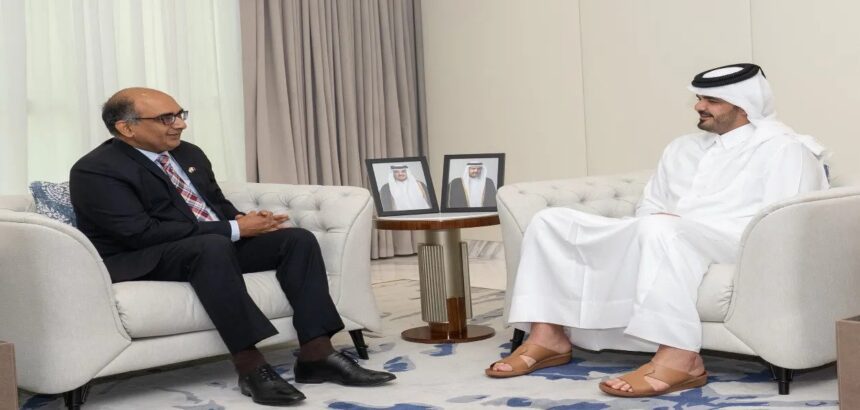

India’s appointment of senior diplomat Vipul as its next ambassador to Saudi Arabia represents not only a significant diplomatic engagement with the Gulf region but also highlights evolving narratives around representation and inclusivity in Indian foreign policy. Vipul’s selection is marked by historical significance, as he becomes the first non-Muslim Indian diplomat to assume this role in the kingdom since relations were established in 1948.
Historical Context of Diplomatic Relations
The appointment of Vipul comes at a time when India’s foreign relations are scrutinized under the current government led by the Bharatiya Janata Party (BJP) and its ideological affiliate, the Rashtriya Swayamsevak Sangh (RSS). Historical context is crucial in understanding why Vipul’s appointment is pivotal; it reflects a shift in the long-standing diplomatic practices concerning representation in predominantly Muslim countries. The BJP’s tenure has often faced criticism for perceived social exclusion and discrimination against minorities, particularly Indian Muslims, which adds layers of complexity to Vipul’s role in a nation like Saudi Arabia.
Since 1948, India’s relationship with Saudi Arabia has been characterized mainly by energy dependency and economic ties, but as both nations increasingly pursue strategic partnerships, it will be essential to reflect on how changing diplomatic leadership influences perceptions at home and abroad.
Vipul’s Diplomatic Credentials
Vipul’s extensive background in Gulf affairs positions him well to navigate the intricacies of Indian-Saudi relations. A 1998-batch Indian Foreign Service officer, he has previously served as India’s ambassador to Qatar and held various diplomatic roles across Cairo, Colombo, Geneva, and Dubai. His career spans significant areas like political relations, development cooperation, and international security, crucial for fostering a multidimensional partnership amid a diverse socio-political landscape.
During his tenure in the Ministry of External Affairs, he worked closely with the External Affairs Minister, showcasing a commitment to engaging with complex international challenges, which he will carry into his new role in Riyadh. Nevertheless, it remains to be seen how his non-Muslim identity will be perceived in the context of Saudi diplomacy and how it may resonate with the Indian Muslim community at home, particularly amid ongoing narratives of marginalization under the present government.
Shifting Dynamics in Saudi-India Relations
Current geopolitical trends indicate an expansion of the India-Saudi Arabia relationship beyond traditional oil-based cooperation, marking a transition towards a strategic partnership encompassing defense, investment, and regional security. Recognizing Saudi Arabia’s emergence as an economic and investment hub under its Vision 2030 initiative, India is looking to leverage this evolution to diversify its foreign relations. Notably, millions of Indian expatriates reside in Saudi Arabia, influencing remittances and cultural exchange between the two nations.
This broader scope of connection is essential for the Indian government’s foreign policy, especially as the nation grapples with domestic challenges tied to inter-community relations. How these ties evolve and the role Vipul will play could potentially shift internal narratives concerning representation, thereby either improving or complicating the story of discrimination against Indian Muslims.
Why It Matters
The significance of Vipul’s appointment extends beyond diplomatic relations; it embodies questions related to inclusivity and representation within Indian foreign policy. As the global landscape demands cooperation over isolationist tendencies, inclusive representation could enhance bilateral relationships and inspire marginalized communities in India—especially Muslims—by showing that engagement can transcend ideological boundaries. Vipul’s expertise offers a potential pathway to better relations, but it also raises questions on whether this marks a true shift in policy or simply a new narrative to placate dissenting voices at home.
Frequently Asked Questions
What does Vipul’s appointment signify for Indian Muslims in the context of diplomatic representation?
Vipul’s appointment as the first non-Muslim ambassador to Saudi Arabia since 1948 can be interpreted as a potential shift in how India’s diplomatic missions represent diverse identities, raising questions about inclusivity and social cohesion amidst ongoing debates regarding discrimination against Indian Muslims.
How has India-Saudi Arabia’s relationship evolved over time?
India and Saudi Arabia’s relationship has grown from a primarily oil-based partnership into a more comprehensive strategic alliance, focusing on areas like defense, investments, and regional cooperation, particularly under Saudi Arabia’s Vision 2030.
What challenges does Vipul face in his new role?
Vipul will navigate complex political waters influenced by India’s internal narratives around citizenship, identity, and the treatment of minorities, particularly in light of ongoing discourse regarding the BJP government’s policies.
Why is the focus on Gulf relations important for India?
The Gulf region is vital for India due to energy supplies, significant remittances from Indian expatriates, and emerging economic opportunities, which collectively provide impetus for strengthening foreign policy and regional security efforts.