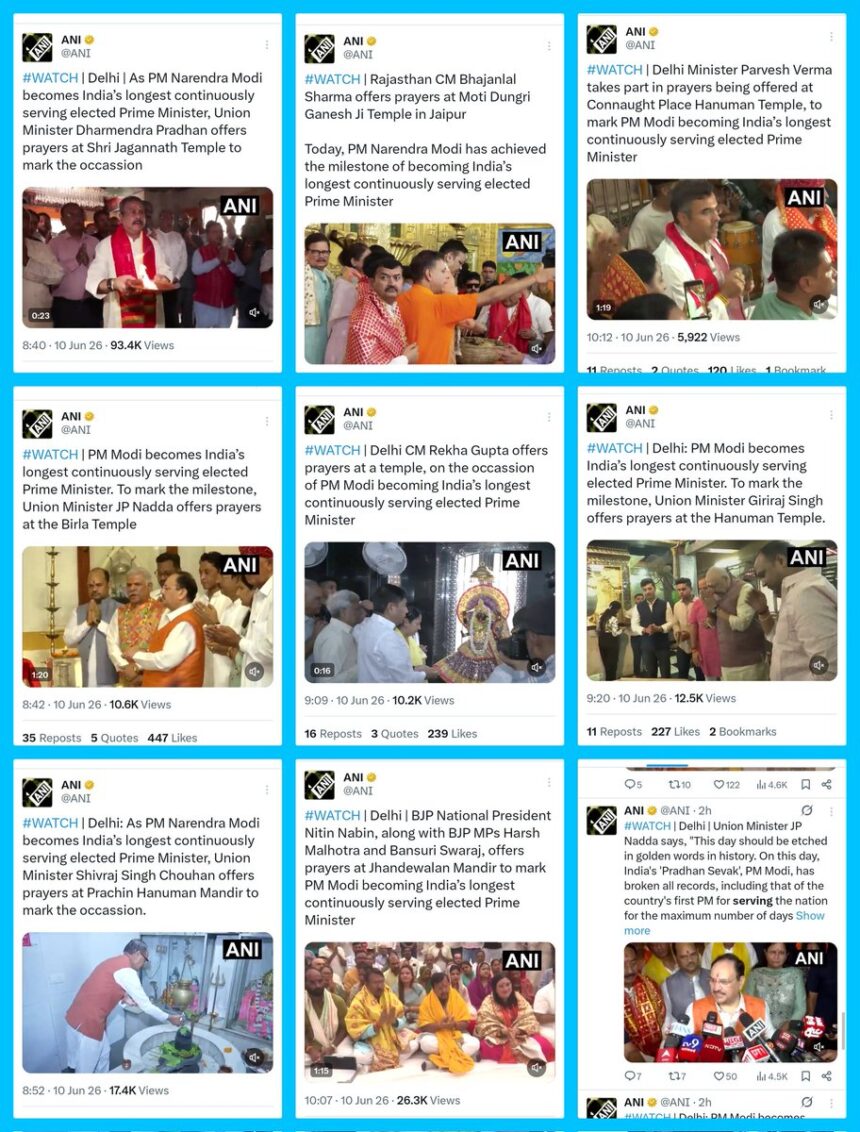

Political commentator Mohammed Zubair, known as @zoo_bear, has critiqued Indian Union Ministers and BJP leaders for their recent actions, which he describes as a diversionary tactic involving temple visits to celebrate Prime Minister Narendra Modi’s record-breaking tenure. Zubair highlights the emphasis placed on these religious activities rather than substantive governance, raising concerns over the proper use of taxpayer money.
Context of the Critique
The tweet by Zubair comes in the backdrop of Prime Minister Modi becoming the longest-serving Prime Minister of India in terms of continuous service. This milestone has been marked by a series of events and statements from BJP leaders, emphasizing their allegiance to tradition and religious practices. In response, Zubair argues that these actions seem superficial and cater more to public relations than serious policy discussions or governance challenges the country faces.
Political Spectacle or Genuine Devotion?
Zubair points out that the focus on temple visits by Union Ministers and BJP leaders appears orchestrated, aiming to create a narrative of devotion and connection with the masses. This approach has included extensive media coverage of these religious activities, prompting questions about the priorities of these public figures. Zubair’s critique suggests that such actions may be less a reflection of genuine faith and more a calculated strategy to bolster a political image.
Media’s Role in Shaping the Narrative
The role of news agencies in covering these temple visits has also come under scrutiny. Zubair asserts that the media’s involvement seems to be an extension of the government’s efforts to shape a narrative that favors Modi’s leadership. The conspicuous coverage of religious activities provides a platform for the government to communicate a sense of achievement and cultural commitment, despite pressing socio-economic issues that demand urgent attention.
Why This Matters
This discussion is significant because it reflects a broader trend in Indian politics where spectacle often overshadows substantive policy-making. The focus on religious observances and symbolic gestures can distract from pressing issues such as unemployment, inflation, and social inequality. Additionally, taxpayers deserve to see their money utilized for constructive governance rather than activities that serve primarily for political gain. Zubair’s observations urge citizens to remain vigilant about the actions of their leaders and hold them accountable for genuine progress rather than merely performative displays.
Frequently Asked Questions
What specific actions have Union Ministers taken to mark Modi’s milestone?
Union Ministers and BJP leaders have made numerous temple visits to offer prayers as a way to commemorate Prime Minister Modi’s record-breaking tenure.
Why is there criticism over the temple visits?
The criticism centers on the notion that these visits are superficial and serve more as a political spectacle rather than a sincere expression of faith, diverting attention from more pressing governance issues.
What is the significance of media coverage in this context?
The extensive media coverage of these temple visits is viewed as an extension of government propaganda, helping to craft a favorable public image of Modi’s leadership while potentially neglecting critical socio-economic challenges.
What does this reveal about the current state of Indian politics?
This situation highlights a trend where symbolic gestures can overshadow actual governance, raising concern among citizens about accountability and the efficient use of taxpayer money in the political landscape.