
Controversial Call for Economic and Social Boycott of Muslims
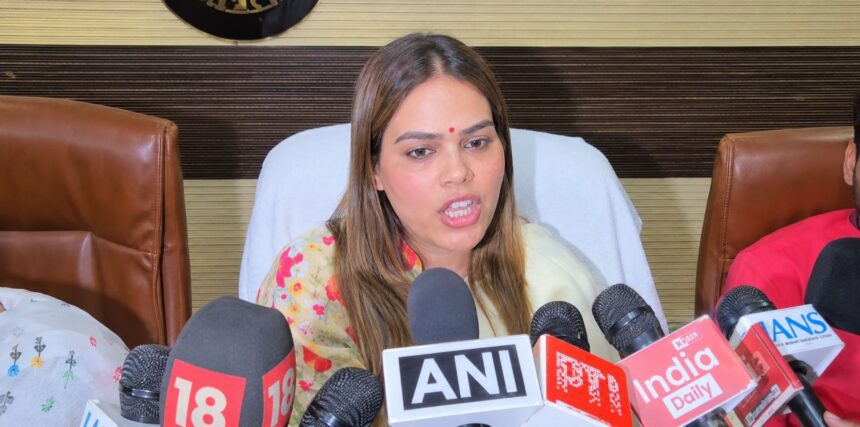
Nazia Elahi Khan, a leader within the BJP Minority Morcha, has sparked widespread outrage after advocating for a social and economic boycott of Muslims in India. Her comments, perceived as divisive and discriminatory, have been condemned by political leaders, journalists, and activists, highlighting ongoing tensions regarding religious identity and employment practices in the country.
Khan’s Remarks: A Blow to Secular Values
During a press conference, Khan urged members of the Hindu community to actively exclude Muslims from both public and private employment for a period of two to three years. She rationalized her position by alleging that India is threatened not only by external forces like Pakistan but also by individuals within the country whom she accused of having a “Pakistani mentality.” Khan’s stance suggests a broader conspiracy against national integrity by questioning the patriotism of Indian Muslims and alleging various forms of “jihad” being waged domestically.
This rhetoric has led to severe backlash from various quarters. Congress Rajya Sabha MP Syed Naseer Hussain called Khan’s remarks a direct assault on India’s constitutional values and secular principles. He criticized her for misusing religious scripture to stigmatize a vast segment of the population and asserted that such statements dangerously normalize social exclusion and religious discrimination.
Media and Public Reaction
The media response to Khan’s comments has been scrutinized, with several journalists indicating a lack of sufficient challenge to what they term open hate speech. Journalist Mohammed Zubair expressed disappointment at mainstream news organizations for failing to adequately highlight the implications of such statements. Vaishna Roy and Zeba Warsi both condemned the remarks, with Warsi categorizing the call for exclusion as “apartheid-style,” drawing stark parallels between these sentiments and institutionalized forms of discrimination.
Khan’s history of controversial remarks targeting Muslims has raised alarms among critics, who contend that her public interventions contribute to heightened anti-Muslim sentiment and reinforce harmful stereotypes. As a self-identified “Sanatani Muslim,” her identity complicates an already intricate narrative surrounding religious identity in India, further polarizing public discourse.
Political Implications and Broader Discourse
This incident raises significant concerns regarding the political climate in India, particularly under the governance of the BJP and affiliated groups. Criticism from lawmakers such as Hussain underscores fears that the statements reflect a broader strategy to target Muslims for political gains, particularly as communal polarization becomes a tool in electoral politics. The ongoing trend of using religion as a political weapon poses challenges to the unity and secular framework enshrined in the Constitution.
Moreover, the backlash against Khan’s remarks indicates a growing resistance among opposition leaders and civil society against perceived attempts to marginalize Muslims. The political discourse surrounding Khan’s comments could signal a potential mobilization against narratives that perpetuate social divide and discrimination. The implications extend beyond politics, touching on social cohesion and equality in a religiously diverse nation.
Why It Matters
The ongoing discrimination against Muslims in India, as evidenced by the remarks of Nazia Elahi Khan, highlights significant socio-political issues that can impact various sectors, including technology and business. In an increasingly digital and interconnected world, businesses that foster inclusive practices tend to thrive, while those that engage in discriminatory practices risk backlash and loss of reputation. The sentiments expressed by Khan may serve as a litmus test, indicating the extent to which societal exclusion can manifest in workplace policies and community engagement. For developers and users in global industries, understanding these dynamics is crucial for navigating ethical considerations and corporate social responsibility.
Frequently Asked Questions
What did Nazia Elahi Khan say regarding Muslims in India?
Nazia Elahi Khan called for a social and economic boycott of Muslims, urging Hindus to exclude them from employment in both government and private sectors for two to three years.
How have political leaders responded to Khan’s comments?
Political leaders, including Congress MP Syed Naseer Hussain, condemned Khan’s remarks as a direct assault on India’s constitutional values and an encouragement of religious discrimination.
What are the implications of Khan’s statements for the Muslim community in India?
Khan’s statements could foster further marginalization and discrimination against Muslims in various sectors, potentially affecting their opportunities for employment and social inclusion.
Why is this incident significant in the broader context of Indian politics?
This incident reflects a troubling trend of communal polarization in Indian politics, where religious identities are increasingly used as tools for politicization, posing risks to the secular framework of the nation.