
Adivasi Communities in South India Fight Back Against Tiger Reserve Expansion
TOI correspondent from London: Adivasi communities across Karnataka, Kerala, and Tamil Nadu are pushing back against the expansion of wildlife tourism and tiger reserves, alleging that forest authorities and conservation organizations are transforming ancestral homelands into commercial safari ventures, displacing indigenous families in the process.
Representatives from over 35 Adivasi villages, part of the Nagarahole Adivasi Jamma Paale Hakku Sthapana Samiti in Kodagu and Mysuru—approximately 220 kilometers southwest of Bengaluru—issued a joint statement, termed the “Nagarhole Declaration,” demanding an immediate halt to all relocations from forests, asserting that none have been voluntary.
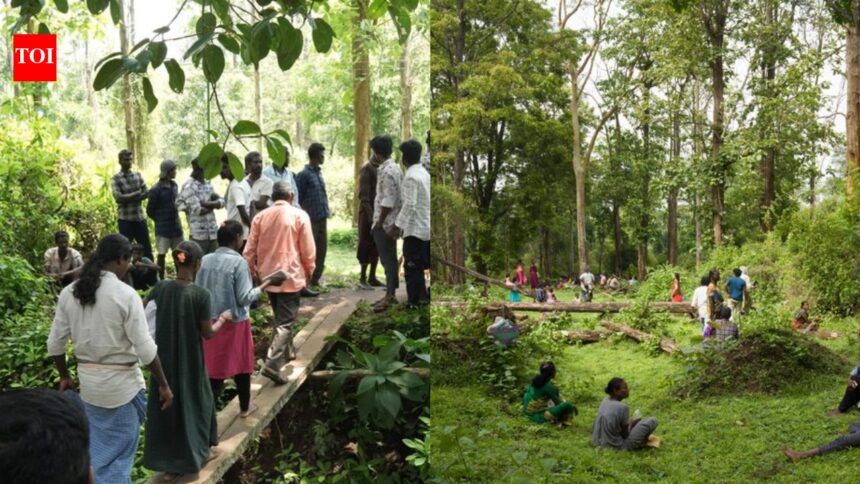
This declaration followed extensive community discussions held from May 5 to 7 at Balekavu village within the Nagarahole forests, where Adivasi activists from Wayanad, the Muthanga wildlife region near the Kerala-Karnataka border, the Sathyamangalam tiger landscape in Tamil Nadu, and the Mudumalai reserve in Nilgiris came together to establish a unified front across the Western Ghats tiger territory.
The declaration argues that the areas traditionally inhabited, hunted, honored, and used for burial by indigenous communities have been cordoned off and monetized through tiger safaris and conservation initiatives enacted without the consent of local forest dwellers. It accuses forest departments and the National Tiger Conservation Authority of appropriating customary lands and transforming them into what it describes as a “commercial spectacle.” The document emphasizes that what is referred to as “core areas” or “critical tiger habitats” by forest authorities are in fact sacred ancestral lands.
It further claims that the Forest Rights Act of 2006, designed to rectify historical injustices against forest-dwelling communities, has failed to provide adequate protection. Instead, it asserts, “injustice continues” through safari vehicles traversing lands of ancestral significance and through conservation plans imposed on these communities, which remain entangled in bonded labor on tea and coffee estates.
“The fact that states like Karnataka, Kerala, and Tamil Nadu claim to be champions of social justice while thousands of Adivasi families live in conditions best described as servitude is unconscionable,” the declaration states.
The document presents the conservation struggle in stark historical terms, suggesting that the violence initiated under colonial forest regulations never truly ceased after Independence but simply adopted a new guise under the pretense of conservation. Adivasi representatives argue that notifications declaring national parks and tiger reserves were issued without adhering to legal procedures, urging the recognition of their ancestral territories as “scheduled areas” under the Constitution to enhance tribal self-governance.
The declaration contends that the forest and tourism departments in the three states have no lawful authority to operate, license, or commercialize wildlife safaris on customary Adivasi lands without informed consent from local Gram Sabhas. It demands an immediate suspension of all safari activities until such consent is duly obtained.
Particularly pointed critiques were directed at wildlife NGOs that support fortress-style conservation models. “Conservation that requires the eviction of indigenous people from their lands is not conservation; it is colonization,” the declaration asserts.
Activists emphasize that the struggle over forests transcends wildlife protection; it also concerns whether the ancient footprints of indigenous people will survive amid the growing boom in safari tourism. “We are the first people of this land. We are not trespassers,” asserted JK Thimma, a Jenu Kuruba activist. “There is no conflict between us and animals in the forest.”
The declaration further claims that rights guaranteed under the Forest Rights Act, which acknowledges forest dwellers as custodians of forest resources, have been reportedly overlooked, rendering many Adivasi communities “constitutionally invisible.”