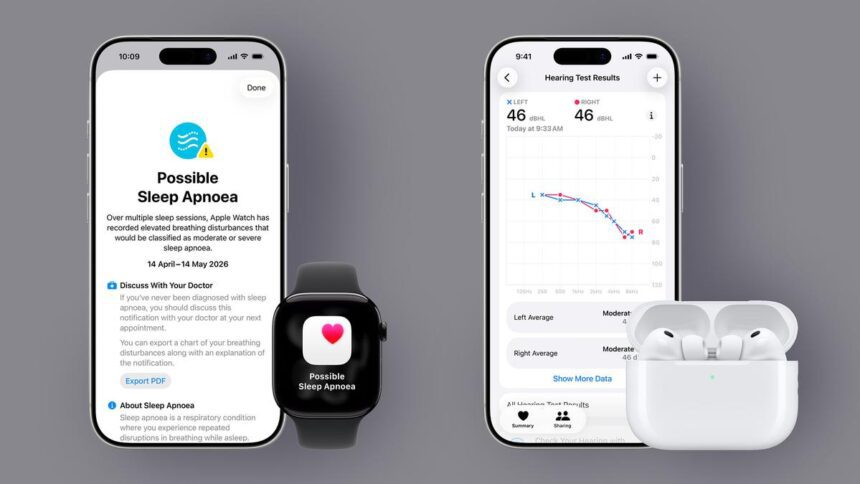

Apple Watch Sleep Apnoea test
Apple has introduced significant health features for the Apple Watch and AirPods Pro, including sleep apnea notifications for the watch and a clinically validated Hearing Test for users in India via the AirPods Pro. The Hearing Test employs the standard clinical method known as pure-tone audiometry, allowing users to conduct this test themselves with compatible iPhones or iPads.
The timing of the sleep apnea notifications is notable, given the growing emphasis on sleep tracking among technology firms, healthcare providers, and health-conscious consumers.
The Importance of Sleep
Global consumer research indicates that factors such as health and fitness tracking, convenience, and seamless connectivity are the leading purchase drivers for smartwatches. Sleep tracking has gained popularity, with options beyond smartwatches, including fitness rings and other activity trackers. According to a study by Healthcare Foresights, the Sleep Tech Devices Market is currently valued around $29.3 billion and is projected to exceed $134 billion by 2035, growing at a compound annual growth rate (CAGR) of over 18 percent.
Addressing Sleep Apnea
Sleep apnea is a widespread condition affecting more than 1 billion people worldwide, with a significant portion remaining undiagnosed. A recent study from AIIMS in 2023 estimated that over 104 million people in India could be suffering from obstructive sleep apnea (OSA), which poses risks such as hypertension and cardiovascular diseases.
OSA, the most common type of sleep apnea, occurs when throat narrowing obstructs air flow to the lungs. Common symptoms, which should be confirmed by medical professionals, include loud snoring, gasping for air during sleep, morning headaches, and waking with a dry mouth. Insomnia and excessive daytime sleepiness (hypersomnia) have also been linked to OSA.
Enhancements to Apple Watch Sleep Tracking
The Apple Watch, first launched in 2015, has evolved from a lifestyle accessory to what Apple describes as a proactive wellness hub. In recent years, the wearable technology sector has shifted focus toward health and wellness, integrating devices such as activity trackers, smartwatches, and fitness rings. Apple has enhanced its sleep tracking features from basic metrics to a more comprehensive suite that includes vital signs and respiratory tracking. Rajiv Kumar, a clinician researcher at Apple, stated that the new sleep apnea notification feature is part of Apple’s broader commitment to delivering meaningful and actionable insights about sleep.
Operational Mechanism
The newly introduced Breathing Disturbances metric employs the accelerometer to detect small wrist movements associated with breaks in normal respiratory patterns during sleep. The Apple Watch analyzes this data every 30 days and alerts users if it detects consistent moderate to severe sleep apnea signs, prompting them to consult healthcare providers. Users can export a PDF report that includes data on sleep apnea occurrences, three months of breathing disturbance history, and additional insights for discussions with their healthcare professionals.
The algorithm for notifications was developed using advanced machine learning and a robust dataset from clinical-grade sleep apnea tests. Clinical validation confirmed that all participants identified by the algorithm exhibited at least mild forms of sleep apnea. Additionally, the Breathing Disturbances metric allows users to assess the overall quality of their sleep, taking into account factors such as alcohol consumption, medications, and sleep position. Users can track their nightly breathing disturbances through the Health app, categorized as elevated or not elevated, with trends viewable over one month, six months, or one year.
Setting Up Notifications
Users can configure sleep apnea notifications through the Health App on their iPhone. A compatible device, such as the Apple Watch Series 9 or later, Apple Watch Ultra 2, or Apple Watch SE 3 with the latest version of watchOS, is required. The Track Sleep feature must be enabled, though users have the option to disable sleep apnea notifications. To gather sufficient data, users must wear their Apple Watch while sleeping for at least 10 nights within a 30-day period; their data will then be analyzed monthly.
Published on May 27, 2026