
Understanding Dowry Deaths: A Grim Reality in India
“Humaari ladki toh gai hai… muh se awaaz nahi nikalti… sehmi sehmi si rehti hai,” joke Twisha Sharma’s relatives during a wedding ceremony, humorously implying that she is quiet, adjusting, and not troublesome. Such banter is common at Indian weddings, intended to reassure the groom’s family. However, this light-hearted commentary would take on a far darker meaning as silence transformed into a permanent absence in the months that followed.
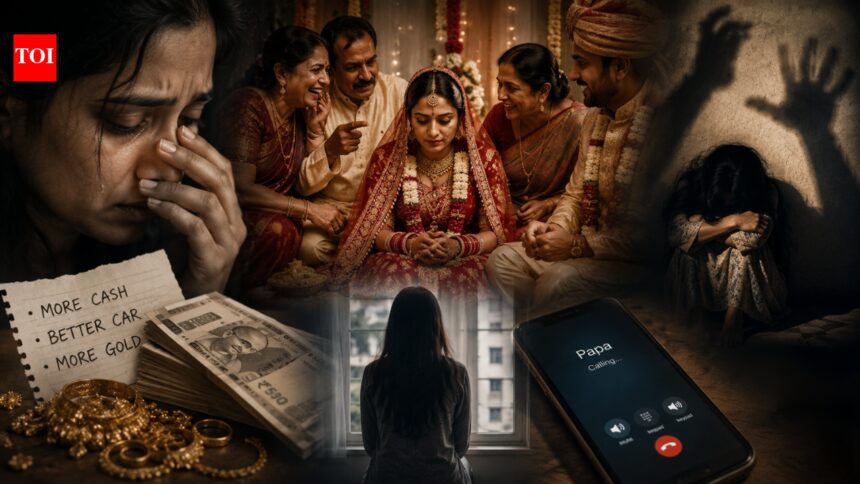
Twisha’s husband, Samarth Singh, demanded more cash after their marriage. Other relatives, including Ritik Nagar and Ompal, expressed dissatisfaction with what they received and also sought better compensation. Ankur Chaudhary, despite already receiving a motorcycle and gold, wanted further financial gain. Tragically, Twisha, along with Deepika Nagar, Pushpendri Devi, Kajal Chaudhary, and many other women, reportedly lost their lives due to the relentless greed for more than just a partner.
This pattern mirrors a broader crisis, where persistent abuse and a dire need for help become common threads in numerous cases. Questions arise: why do women remain in perilous marriages? Why do families endure violent environments rather than sever ties? At what point does the expectation of “adjustment” turn into abandonment? And why are women still expected to endure until someone else intervenes on their behalf?
The Anatomy of a Dowry Death
Often, dowry deaths are reported as tragedies that culminate in a woman’s death—often by hanging, burning, or under dubious circumstances. However, experts assert that the violence typically begins long before this catastrophic end. According to advocate Aditi Verma, who has worked on various dowry and domestic violence cases, the cycle of emotional abuse, financial pressure, and social isolation starts shortly after marriage.
Husbands and in-laws often initiate trivial demands, leading to an escalation of harassment, temporary reconciliations, and renewed abuse. This disturbing trend transcends class and education, with women subjected to controls and criticisms that often become routine. In Twisha’s case, her family alleged that she faced personal accusations regarding her character.
Verma emphasizes that the normalization of such abuse can delay intervention, allowing violence to escalate to lethal levels.
Calls for Help Before Death
Hours before her death, Deepika Nagar called her father, distressed over ongoing assaults related to dowry demands. When her family arrived, they later received the tragic news that Deepika had reportedly fallen from the terrace. Similarly, Pushpendri Devi, just 19, warned her father, saying, “Papa, they will kill me.” By the time he reached her, it was too late. Kajal Chaudhary’s case involved an alarming call where her husband allegedly threatened her life.
These accounts reveal a distressing trend: women often attempt to communicate their danger before it becomes fatal. Relatives receive warning signs, including distress calls and complaints of harassment, but abusive dynamics persist. Verma notes that such warnings are often erased from consideration, mischaracterized as routine marital disputes.
Why Women Stay
A common question surrounding dowry deaths is why women do not simply leave abusive relationships. Experts note that women often stay not because they are unaware of the violence, but because leaving carries significant social consequences. Rather than a lack of understanding, many women recognize the stigma they would face and return to unsafe conditions, believing that the blame for their departure would fall on them rather than their abuser.
Dr. Sapare Rohit of SPARSH Hospital highlights that a false hope often remains alive, fueled by temporary affection and promises of change. The deep-rooted cultural connection between marriage and family honor often causes women to prioritize familial stability over their own safety. This mentality is further reinforced by well-meaning but misguided advice from parents and society.
Class Disparities in Abuse
Cases such as those of Twisha and Deepika challenge the notion that dowry violence is confined to rural or economically disadvantaged communities. Both women came from educated and financially stable backgrounds, yet they reportedly endured significant abuse. Verma points out that even well-educated women face emotional conditioning that keeps them from leaving abusive relationships.
Contrary to traditional assumptions, violence within marriages often manifests through psychological means—such as isolation and ongoing emotional degradation. Rohit reflects that the social reward for women enduring suffering continues to overshadow the promotion of healthy relationships.
Statistical Insights
The gravity of the situation becomes evident through statistics. According to the latest National Crime Records Bureau (NCRB) report, India saw 5,737 dowry deaths in a single year—approximately 16 women daily. Uttar Pradesh leads with 2,038 cases, followed by Bihar and Madhya Pradesh, among others. These figures not only reflect the prevalence of dowry-related violence but also reveal its persistence amid changing societal norms.
The Waiting Game
Statistics fail to capture the emotional toil within these marriages—waiting, bargaining, and hoping for change. Women often wait for their husbands to alter their behavior, while families delay intervention in the hope that tensions will ease. Society frequently turns a blind eye until violence becomes undeniable, typically when it is too late.
Verma notes that many women endure violence not due to ignorance but because they fear the aftermath of leaving. Tragically, many of these women voiced warnings, sought assistance, and expressed their desperation, only to have their cries overlooked in the landscape of marital expectations.
Leading up to her death, Twisha reportedly articulated her entrapment succinctly: “I am trapped bro. Bas tu mat phansna.” This plea encapsulates not just her predicament but the grim reality faced by countless women caught in the web of societal pressures and domestic violence.