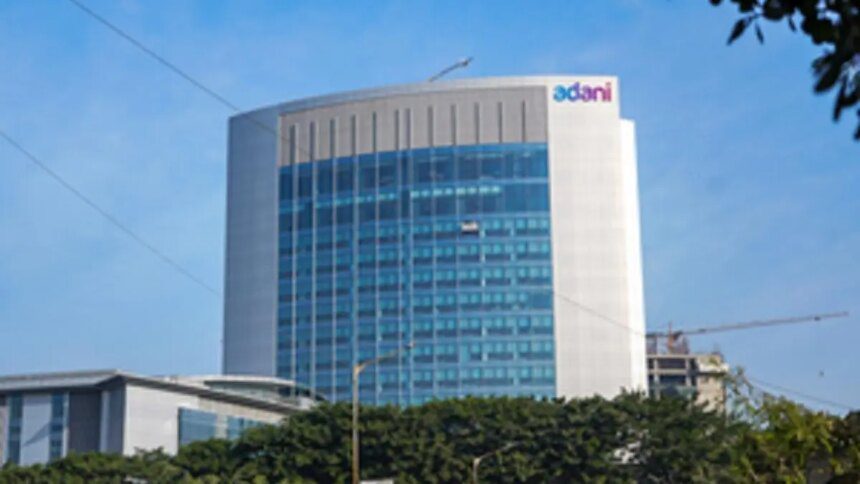

Global brokerage Bernstein has indicated that the Adani Group may have turned a corner, as concerns regarding leverage, promoter share pledges, and access to overseas capital have significantly diminished following recent developments in U.S. legal cases involving the conglomerate.
According to Bernstein, the group has navigated two substantial crises in the past four years: the Hindenburg short-seller report in January 2023 and U.S. Securities and Exchange Commission (SEC) and Department of Justice (DoJ) investigations that commenced in November 2024. The report suggests that “with the latest news from the U.S., both seem to be behind” the group, noting that a significant overhang has been lifted following the settlement of the SEC case and the dismissal of charges by U.S. prosecutors.
Fund Hesitation
The brokerage pointed out that many global funds have refrained from investing in Adani stocks while clarity was sought regarding the U.S. proceedings, resulting in most of the group’s companies being under-owned, despite considerable recoveries from their lows. Bernstein emphasized that the group’s “execution prowess” and capacity to develop large-scale infrastructure projects have remained unquestioned, attributing this to their ability to outperform inefficient government-run enterprises.
The report highlights three structural advantages for the Adani Group: access to substantial land parcels, the capability to capture market share from government-operated businesses, and efficiency in executing large-scale projects. Examples include Adani Green Energy’s extensive 250,000-acre renewable energy land bank, which is connected to transmission networks, and Adani Ports and Special Economic Zone’s leading position in container traffic.
Operating metrics for the group’s businesses remain robust due to scale and efficiency; Bernstein noted that most group enterprises enjoy high margins, such as Ports at 70%, Power at 40%, and Green initiatives at 80%. The firm maintained an “Outperform” rating for Adani Ports and Special Economic Zone as well as Adani Power, citing strong market positioning and growth potential. However, Bernstein assigned a “Market-Perform” rating to Ambuja Cements, indicating that its operational performance lags behind competitors despite being attractively priced. Additionally, Adani Green Energy was rated “Underperform,” with the report stating that valuations remain high even after a decline from pre-Hindenburg levels.
Debt Expansion
Turning to debt, Bernstein noted that the Adani Group’s net debt has surged by approximately ₹1 trillion since September 2024 due to aggressive capital expenditures, predominantly in renewables and infrastructure. Nevertheless, earnings growth has remained robust, with the group’s EBITDA projected to increase at a 22% compounded annual growth rate (CAGR) between FY23 and FY26, bolstered by capacity enhancements across various sectors.
The report detailed that the group’s net debt-to-EBITDA ratio, previously peaking at 4.4 times during the Hindenburg incident, fell to 2.7 times by September 2024 but has since risen to 3.9 times by March 2026. Bernstein remarked that, while this ratio is lower than during the short-seller scrutiny, it has increased in light of the U.S. legal events.
Concerns regarding pledged promoter shares, which were critical during the Hindenburg crisis, have significantly abated. The report noted a marked reduction in pledges across the group since 2022, stating that they are now nearly negligible.
Moreover, opportunities for overseas fundraising may reopen as legal uncertainties dissipate. Following the Hindenburg report and U.S. legal developments, the group relied more on public sector banks and non-banking financial companies for financing, raising minimal dollar-denominated debt. Bernstein anticipates a resurgence in the share of dollar funding moving forward, as legal challenges recede. Bond yields for several Adani entities have plummeted and are now below India’s five-year government bond yield levels.
Published on May 22, 2026.