
The government announced on Wednesday that there have been no reported cases of Ebola in India, as per sources cited by ANI. The Ministry of Health and Family Welfare confirmed that no instances of the Ebola Virus Disease (EVD) have been detected in the country thus far. Following the World Health Organization’s (WHO) declaration of Ebola as a public health emergency of international concern, the government has enhanced surveillance and preparedness measures nationwide.
A high-level review meeting, chaired by Union Health Secretary Punya Salila Srivastava, was held with health secretaries from all states and Union Territories to evaluate the response to Ebola. During this meeting, the states and UTs were advised to maintain readiness at all levels. The Centre has distributed detailed Standard Operating Procedures (SOPs) addressing pre-arrival and post-arrival screening, quarantine protocols, case management, referral systems, and laboratory testing to all states and UTs.
Srivastava underscored the importance of coordinated surveillance, prompt reporting, and preparedness at designated healthcare facilities during the review session. The government reported that all relevant ministries and departments have been informed and are actively coordinating preventive and surveillance measures alongside the health ministry.
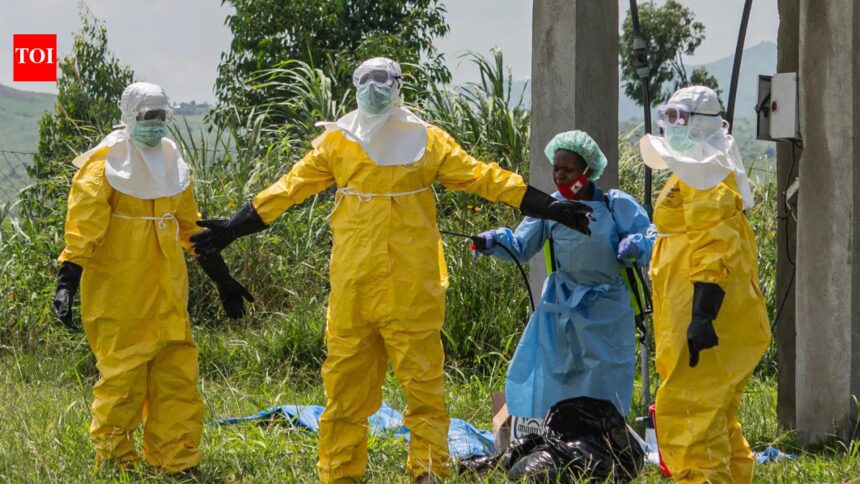
The Ministry also pointed out that India has a track record of effectively managing such health crises, recalling the measures implemented during the 2014 Ebola outbreak in Africa. The Ebola virus is highly infectious, transmitting through contact with bodily fluids, including blood, vomit, and semen. Symptoms may include fever, vomiting, diarrhea, muscle pain, and in severe cases, bleeding both internally and externally.
The WHO has raised alarms regarding the current outbreak, describing it as a Public Health Emergency of International Concern due to its “scale and speed.” The WHO representative in the Democratic Republic of Congo has indicated that the outbreak could persist for at least another two months. Health officials noted that the outbreak involves the rare Bundibugyo strain of Ebola, which spread undetected for several weeks, as initial tests for a more common strain returned negative results.
Investigations are ongoing to establish the origin of the outbreak. “Given the scale, we are presuming it likely started a couple of months ago,” stated Anaïs Legand, a technical officer in the WHO emergencies program, as reported by AP. Currently, 51 cases have been confirmed in the northern provinces of Ituri and North Kivu in Congo, alongside two confirmed cases in Uganda. Authorities are also monitoring 139 suspected deaths and nearly 600 suspected cases connected to this outbreak.