
As Prime Minister Narendra Modi has called for austerity measures amid escalating tensions in West Asia, India’s increasing gold imports are coming under scrutiny.
Modi emphasized on Sunday that the government aims to protect citizens from the negative consequences of the conflict in the region. He encouraged citizens to use fuel judiciously and to postpone purchases of gold and foreign travel, among other measures, to strengthen the economy.
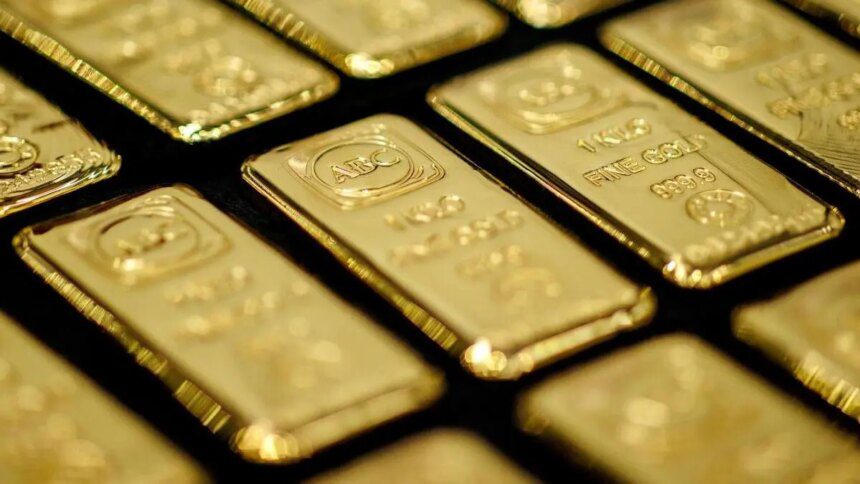
In terms of import data, India’s gold imports surged over 24 percent to a record $71.98 billion in the fiscal year 2025-26, up from $58 billion in 2024-25. The figures for previous years include $45.54 billion in 2023-24, $35 billion in 2022-23, $46.14 billion in 2021-22, $34.62 billion in 2020-21, and $28.2 billion in 2019-20. However, in volume terms, gold imports declined by 4.76 percent to 721.03 tonnes in 2025-26 from 757.09 tonnes in 2024-25. The volume was 795.2 tonnes in 2023-24 and 678.3 tonnes in 2022-23.
India holds the position of the world’s second-largest gold consumer after China, with demand largely driven by the jewellery industry. Typically regarded as a safe-haven asset during times of geopolitical uncertainty, gold demand in India tends to spike when global risks escalate.
The rise in gold imports can be attributed to increasing prices, which have surged from $76,617.48 per kg in the fiscal year 2025 to $99,825.38 per kg in 2026. Presently, gold prices in the national capital are approximately ₹1.5 lakh per 10 grams, a significant increase since prices crossed ₹1 lakh for the first time in April of last year.
The high volume of imports poses challenges for India’s trade deficit and foreign exchange outflow. The trade deficit swelled to $333.2 billion during the fiscal year 2025-26. Additionally, India’s current account deficit (CAD) increased to $13.2 billion, or 1.3 percent of GDP, in the December quarter, up from $11.3 billion in the same period the previous year. This rise was primarily caused by a growing trade deficit amid declining exports to the United States, as per RBI data released on March 2. Gold imports account for over 9 percent of the country’s total imports, which were $775 billion in 2025-26.
Switzerland stands as the largest source of gold imports for India, with a nearly 40 percent share, followed by the UAE at over 16 percent and South Africa at about 10 percent. Total merchandise imports from Switzerland, including gold, rose by 11.36 percent to $24.27 billion during 2025-26.
To mitigate the influx of imports, the government has implemented curbs on all forms of gold, silver, and platinum articles, targeting the prevention of abuse of free trade agreements and curtailing imports disguised as jewellery from countries like Thailand.
In 2022, India raised the gold import duty to 15 percent from 10.75 percent to address the current account deficit and the escalating imports of gold. Later, in the Budget for 2024-25, the duty was reduced to 6 percent to support the domestic gems and jewellery industry, curb illegal smuggling, and lower local prices.
Experts from the think tank GTRI have suggested that the government reassess its FTA policies, particularly regarding tariff concessions on precious metals under the India-UAE trade deal, which has significantly fueled the recent uptick in gold imports.
The India-UAE Comprehensive Economic Partnership Agreement (CEPA), which took effect in May 2022, allows lower tariffs on gold imports from the UAE via a Tariff Rate Quota (TRQ) system, starting at 120 tonnes annually and expected to rise to 200 tonnes by 2027, encompassing nearly 25 percent of India’s gold imports.
“This benefit intensified following the cut in the general gold import duty from 15 percent to 6 percent in the 2024 Budget,” noted GTRI Founder Ajay Srivastava. Subsequently, gold bar imports from Dubai jumped from $2.9 billion in 2022 to $6.7 billion in 2023, reaching $16.5 billion in 2025. Furthermore, Dubai’s share of India’s gold imports rose to 28 percent in 2025 from 7.9 percent prior to the FTA.
The trend has raised concerns, especially since the UAE does not mine gold or engage in substantial processing activities, suggesting that much of the trade involves routing gold from third countries to benefit from lower tariffs in India. GTRI has recommended stricter origin rules, a reevaluation of precious metal concessions in FTAs, and the exclusion of gold, silver, platinum, and diamonds from future trade agreements to safeguard India’s trade balance and foreign exchange reserves.
Published on May 12, 2026.