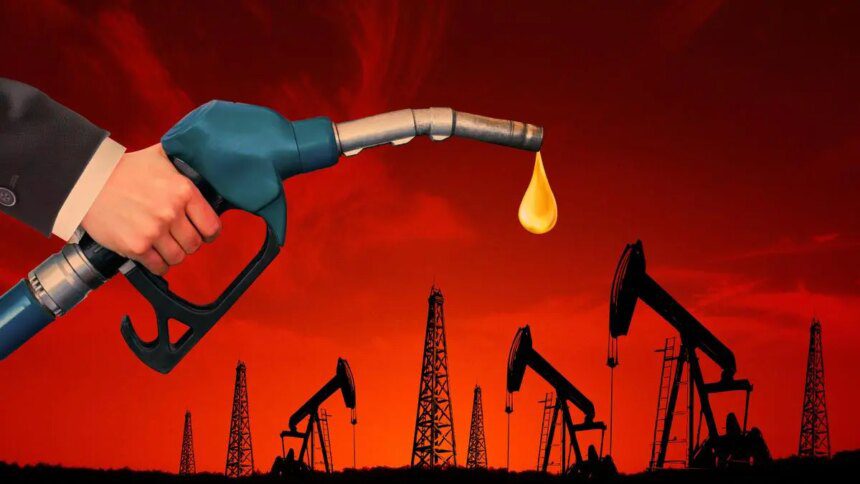

The world is rapidly depleting oil inventories, a situation exacerbated by the ongoing conflict in Iran, which has significantly hampered oil flows from the Persian Gulf. This depletion threatens to erode the buffer against supply disruptions, increasing the possibility of severe price spikes and shortages.
As inventories decline, global markets are becoming increasingly vulnerable to future disruptions, even after the conflict ceases. Morgan Stanley has reported a drop in global oil stockpiles of approximately 4.8 million barrels daily from March 1 to April 25, marking a historic drawdown according to data from the International Energy Agency. Crude oil represents about 60% of this decline, with refined fuels accounting for the rest.
Natasha Kaneva, head of global commodities research at JPMorgan Chase & Co., emphasized that a minimum level of oil is necessary for the global oil system to function effectively, meaning the “operational minimum” is reached well before inventories hit zero. She noted, “Inventories are acting as the shock absorber of the global oil system,” but cautioned that “not every barrel can be drawn.”
Goldman Sachs has observed signs that the rate of depletion may have slightly slowed recently, attributing this to lower demand from China, the largest oil importer. However, global visible oil stocks are nearing their lowest levels since 2018, according to the bank.
Assessing global inventories involves both qualitative and quantitative methods. Strategic reserves maintained by governments, along with commercial stockpiles from producers, refiners, and traders, form a significant part of this assessment.
Immediate concerns lie primarily in a few fuel-import-dependent Asian countries, with Indonesia, Vietnam, Pakistan, and the Philippines identified as the most at risk of reaching critical supply levels within a month. Countries like China are currently better positioned regarding their oil stockpiles.
European jet fuel stocks are also diminishing rapidly as summer approaches, with analysts predicting potential shortages by June. JPMorgan’s Kaneva has warned that inventories in the Organisation for Economic Co-operation and Development could hit “operational stress levels” early next month if the Strait of Hormuz remains closed, potentially reaching “operational minimum” levels by September.
In the United States, domestic crude and fuel inventories have fallen below historical averages; U.S. crude stocks, including the Strategic Petroleum Reserve, have dropped for four consecutive weeks. Distillate stockpiles are at their lowest since 2005, while gasoline levels are near their lowest seasonal figures since 2014. While U.S. oil production has begun ramping up, executives caution that inventories are likely to continue decreasing in the short term.
Even if the Strait of Hormuz reopens, it is unlikely that oil output and transportation will swiftly return to normal, compelling consumers to draw deeper from their reserves. The ongoing conflict has already led to rising prices for crude and essential fuels, heightening inflation and increasing the threat of a global recession.
Global oil consumption has decreased sharply, driven by supply disruptions and escalating prices. As stocks approach critical levels, analysts indicate that significant price hikes may be necessary to curtail demand and balance the market.
Chevron’s Chief Financial Officer Eimear Bonner noted, “A lot of the inventory and spare capacity has been depleted already. We are going to start to see some import-dependent countries potentially start to face critical shortages as we get into the June-July time-frame.”
Frederic Lasserre, head of research at energy trader Gunvor Group, identified gasoline shortages in Asia, particularly in countries like Pakistan, Indonesia, and the Philippines, as imminent threats. Should the Strait of Hormuz remain closed past early June, he warned of macroeconomic shocks in Asian nations due to gasoil shortages, while suggesting that Europe may have another month before facing significant challenges.
Some analysts consider the stress points to be less severe than JPMorgan’s estimates, suggesting more buffer exists within the industry. Further demand reductions could also relieve some pressure on the system, with JPMorgan estimating a demand destruction of 5.6 million barrels daily from June to September.
In terms of the Asian situation, while key economies like China and South Korea have retained their stockpiles, those in the wider Asia-Pacific region, excluding China, have been significantly affected, with declines of about 70 million barrels since the conflict commenced. Kayrros reported that Japan and India are experiencing their lowest oil inventories in at least a decade.
Despite some regional reassurances regarding stockpiles, such as statements from Pakistan’s petroleum minister and India’s oil ministry, the situation for diesel, essential for the global economy, remains precarious, particularly for countries with limited domestic production.
In Europe, the focus is on jet fuel, where independent inventories at the Amsterdam-Rotterdam-Antwerp hub have decreased by a third since the onset of the conflict, reaching a six-year low. Lars van Wageningen from Insights Global indicated that while short-term supply is sufficient, summer demand may lead to significant shortages.
Governments have pledged to release a record 400 million barrels from emergency reserves as coordinated by the International Energy Agency. However, the U.S. has only tapped about 79.7 million of the 172 million barrels it promised, balancing between providing sufficient supply and depleting its reserves further. Similarly, Germany has reconsidered previous offers of crude and jet fuel and plans additional measures if shortages emerge.
Looking forward, the considerable reduction in global stockpiles could impose further pressure on the market when the strait reopens, as nations and companies scramble to replenish their reserves. Willie Chiang, CEO of Plains All American Pipeline LP, noted, “We expect this destocking environment to continue over the next number of months and ultimately drive a restocking phenomenon longer-term.”