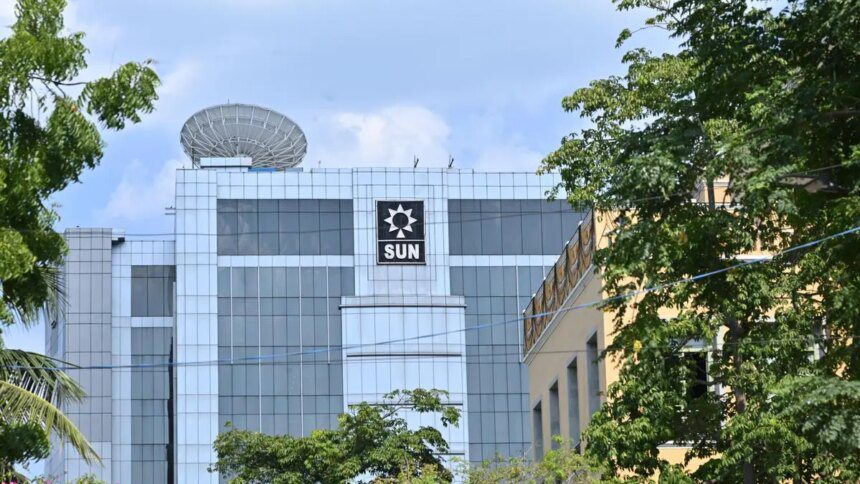

Shares of Sun TV Network fell by 9.4% on Monday, making it one of the top mid-cap losers, as early results from the Tamil Nadu Assembly elections indicated that the ruling Dravida Munnetra Kazhagam (DMK) was trailing behind its rivals. This trend raised investor concerns regarding the broadcaster’s perceived political connections.
At approximately 1 PM, the stock was trading at ₹563.80 after hitting a low of ₹548.10, compared to the previous close of ₹605.60.
Kunal Kamble of Bonanza noted that the stock has broken below its short-term uptrend and key moving averages (20 & 50 DMA), signaling a loss of bullish momentum. A significant bearish breakdown and a Relative Strength Index (RSI) nearing 40 portray weakening strength, although the stock is not yet considered oversold.
The stock’s performance reflects a repeated rejection in the ₹650–670 range, resulting in a lower-high pattern that has shifted the outlook to bearish-to-sideways. Further decline or consolidation is anticipated unless the stock can reclaim its moving averages.
The decline coincides with counting trends that show a strong performance from the newly formed Tamilaga Vettri Kazhagam (TVK), led by actor-politician Vijay, who is leading in over 100 constituencies. The AIADMK is positioned in second place, while the DMK trails in the contest.
As of 12:35 PM, trends indicated that TVK was leading in 106 seats, AIADMK in 63, and DMK in 44, signifying a potential political shift within the state.
Historically, Sun TV Network, founded by Kalanithi Maran, has connections to the DMK as the Maran family maintains close ties with party leadership. This association has typically caused the stock to react to political developments in Tamil Nadu, particularly during election seasons.
The notable decline in stock price underscores investor worries that a weaker performance by the DMK may adversely impact the company’s influence and operational landscape in its primary regional market. As counting continues, market participants are closely observing further trends, with stock volatility likely to persist in response to political developments.
Published on May 4, 2026.