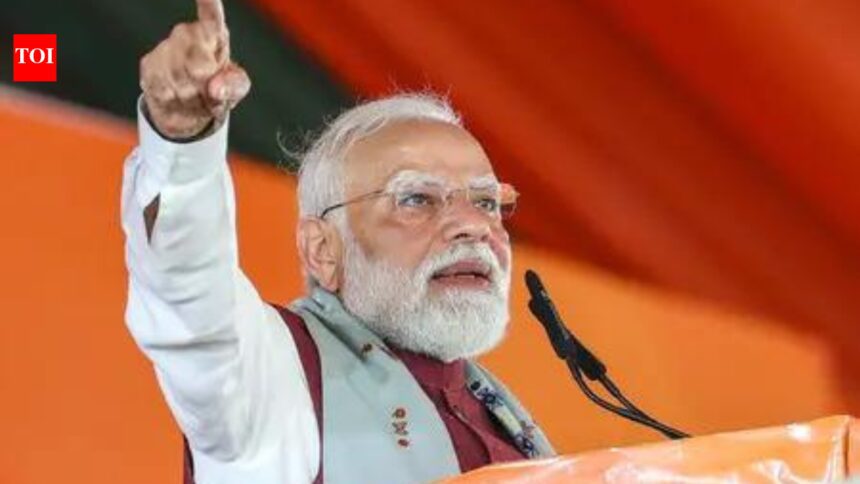

Prime Minister Narendra Modi called for a robust turnout as Phase-2 polling of the West Bengal assembly elections in 2026 commenced on Wednesday. In a message on X, he made a particular appeal to women and young voters, emphasizing their vital role in enhancing the democratic process.
“Today is Phase-2 of the West Bengal Assembly Elections 2026. Urging all those voting today to do so in record numbers and make our democracy more vibrant as well as participative. It is important that the women and youth of West Bengal, in particular, turnout in large numbers and exercise their franchise,” PM Modi stated in his post.
The polling began at 7:00 am across 142 constituencies, with extensive security measures in place amidst a significant contest between the ruling Trinamool Congress (TMC) and the Bharatiya Janata Party (BJP). The results of this phase are expected to be pivotal in determining whether the TMC will maintain its control in the southern districts or if the BJP can gain substantial ground in the state’s political landscape.
Voters lined up outside booths in key areas including Kolkata, Howrah, North 24 Parganas, South 24 Parganas, Nadia, Hooghly, and Purba Bardhaman, regions that are politically significant in West Bengal. This final phase marks a decisive shift in the electoral focus from defending gains in northern Bengal to contesting TMC’s stronghold areas.
In the 2021 Assembly elections, the TMC won 123 of these 142 seats, compared to the BJP’s 18 seats and one seat won by the Indian Secular Front. Key among the contests is Bhabanipur, Chief Minister Mamata Banerjee’s electoral stronghold, where she faces a high-profile challenge from Leader of Opposition Suvendu Adhikari. This contest is regarded as a symbolic rematch of the Nandigram election, where Adhikari had previously unseated Banerjee.
A total of 3.21 crore voters are eligible to participate in this phase, including 1.57 crore women and 792 individuals from the third gender category. Voting is occurring at 41,001 polling stations, all of which are under webcasting surveillance to ensure transparency. The Election Commission of India has dispatched 2,321 companies of central forces across seven districts, with Kolkata receiving the highest deployment of 273 companies.