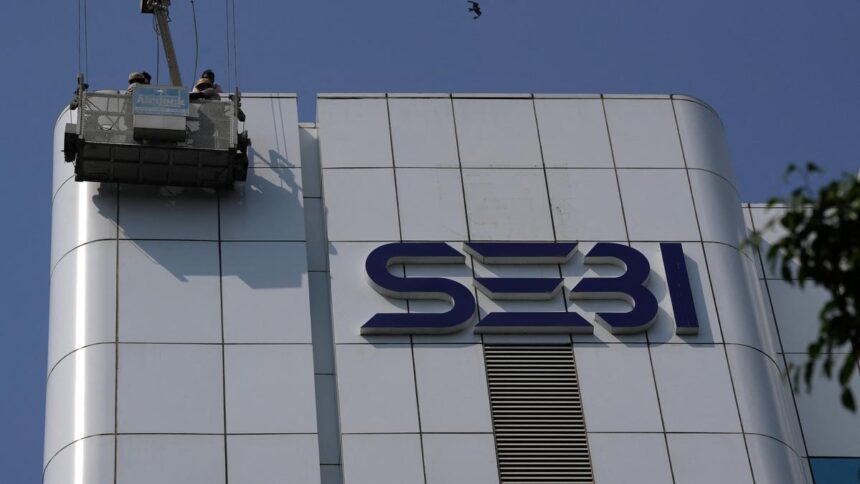

The Securities and Exchange Board of India (SEBI) is considering the implementation of dynamic price bands for stocks in the derivatives segment across all exchanges to enhance trading consistency and price discovery, according to sources familiar with the discussions.
Currently, if a stock is included in the futures and options (F&O) segment on one exchange, it does not automatically transition to dynamic price bands on other exchanges, creating potential discrepancies. For example, if the National Stock Exchange (NSE) adds a stock to the F&O segment on a Wednesday, that stock immediately adopts dynamic price bands on NSE. However, on the Bombay Stock Exchange (BSE), it may remain under a fixed 20% price band until Friday, when its derivatives contracts commence. Conversely, if a stock is removed from derivatives trading by NSE on Wednesday, it reverts to fixed price bands immediately, while BSE may still treat it as a derivatives stock until Friday. Such timing differences can lead to temporary divergences in regulation across exchanges.
Sources indicate that SEBI views these inconsistencies as a regulatory gap that needs addressing. “The proposal aims to eliminate temporary mismatches during entry and exit phases, ensure uniform trading conditions, and prevent price distortions,” noted one source.
Dynamic price bands permit incremental price movement, typically commencing at 10%, before expanding to 15% and 20%, with further relaxations possible in strong market conditions. In contrast, fixed bands generally restrict daily movement to 20%. When one exchange employs dynamic bands while another maintains fixed limits on the same stock, it can distort the trading landscape, create arbitrage opportunities, and confuse investors, market participants explained.
SEBI is expected to issue a circular regarding these changes in the near future.
Published on April 24, 2026.