
Classic Legends, the Mahindra-backed manufacturer of Jawa, Yezdi, and BSA motorcycles, aims for a public listing by 2028. Co-founder Anupam Thareja stated that the company’s strategy for global expansion would be sufficiently developed by then to warrant seeking capital from public markets.
The planned IPO is not intended as an exit strategy for founders or investors but rather as a mechanism for funding international growth. Classic Legends plans to push BSA into Western markets, Jawa into Eastern Europe and South America, and Yezdi across India.
“There is no need right now,” Thareja told BusinessLine during the launch of two new scramblers in Mumbai. He emphasized the importance of having a currency that can be leveraged when the time is right for substantial global expansion.
Having taken 11 companies public, Thareja was clear in differentiating the rationale for listing from liquidity concerns. The company’s balance sheet is healthy for its near-term strategies, with annual capital expenditures ranging between ₹300 to ₹500 crore.
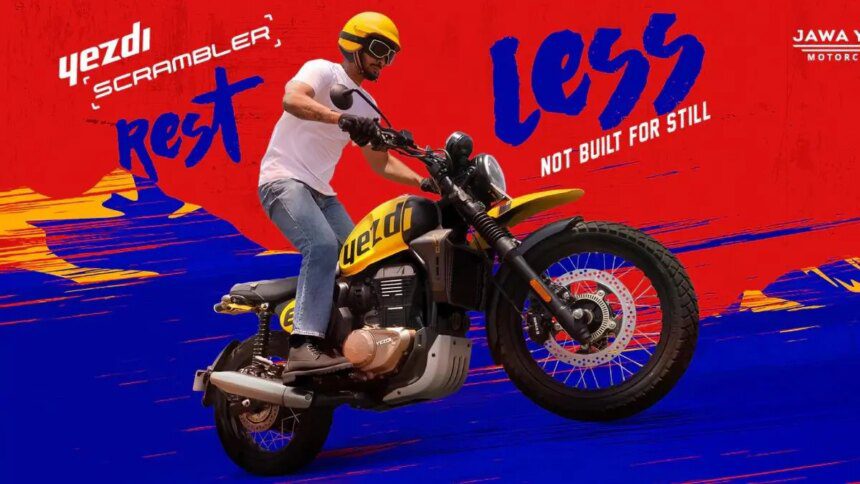
The unveiling of the two new scramblers reflects the global strategy being developed. The Yezdi Scrambler, equipped with a new liquid-cooled 350 CC engine called Katar and weighing just 174 kg, is priced starting at ₹1,99,950, just below the ₹2 lakh benchmark occupied by its main competitors. The BSA Scrambler 650 features India’s only 650 CC single-cylinder engine in the segment and is inspired by designs from the Gold Star Catalina and A10 Spitfire; it starts at ₹3,24,950 and is produced through a joint venture with Tube Investments. “Scramblers are the SUVs of motorcycling,” Thareja remarked, highlighting their adaptability for urban riding and weekend adventures off-road.
The three-brand architecture operates on a shared global platform: BSA will serve as the authentically British brand in Western markets, Jawa will target Eastern Europe and Latin America, and Yezdi will function as the flagship in India. “I will proudly sell this as Indians not being taken for granted anymore,” Thareja emphasized, noting that the same platform will be marketed as Yezdi in India, BSA in London, and Jawa in Eastern Europe.
The financial status of Classic Legends has notably improved. In fiscal year 2026 (FY26), the company sold approximately 57,000 motorcycles, nearly doubling the sales from about 32,000 units in fiscal year 2025 (FY25), with profitability confirmed across all cash metrics despite historical commodity cost pressures, particularly in aluminum. The company also has no depreciation or interest obligations on its manufacturing facility, which was acquired from the Mahindra Group free of charge. “The return on capital is going to be infinite,” Thareja stated.
However, challenges remain in the domestic market. Classic Legends operates in India’s mass-premium motorcycle segment, which is dominated by Royal Enfield, selling over 1.2 million motorcycles annually and capturing more than 80% of the market. With around 57,000 units sold, Classic Legends has a roughly 5% market share.
Even with internal targets of reaching 80,000–100,000 units in FY27, the company would still only achieve a 6-8% share, underscoring the difficulty of scaling in a market with entrenched leadership. Thareja, however, framed the situation as an opportunity. “This segment is 5% by volume, 20% by revenue, and 40% by profit. I am competing in the 40% profit pool,” he remarked, emphasizing a shift towards pricing power rather than sheer volume.
Thareja also pointed to a transformation in the category, comparing scramblers to SUVs by combining everyday usability with aspirational experiences. He noted that these motorcycles tend to be held for longer periods, often passed down through generations, suggesting an emotional investment that goes beyond mere utility.
While global expansion is still in its early stages, it is gaining momentum. Exports increased to approximately 6,000 units from about 1,000 a year prior, with several key markets yet to be tapped. The U.S. market has not yet seen shipments, while Brazil and other South American markets are set to be targeted this year, alongside Southeast Asia and Eastern Europe. Additionally, the company has expanded into markets such as Australia, New Zealand, Japan, and Korea, and is increasing its global dealer network from 360 to 500 touchpoints.
Early signs of success have emerged in the UK, where BSA quickly became a leading player in its segment after relaunch. “If I’d launched a bike called Anupam in London with the same looks and price, it would have taken 100 years,” Thareja noted, underscoring the role that brand equity plays in accelerating market acceptance.
The 2028 IPO timeline provides the company with roughly two financial years to expand into critical export markets, develop its three-brand global platform, and enhance its standing in India beyond a mid-single-digit market share.
Published on April 23, 2026.