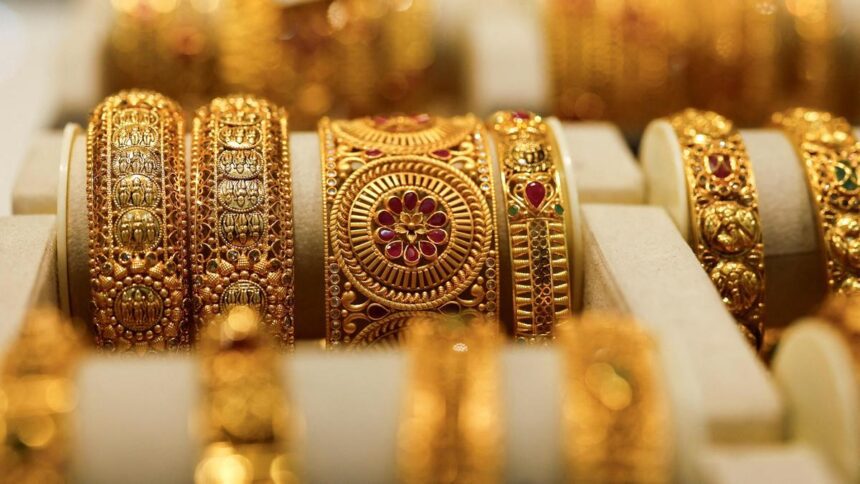

Every Akshaya Tritiya, a festival deeply rooted in Indian culture, prompts families across the nation to purchase gold, symbolizing prosperity, continuity, and security. While this tradition thrives, the year 2026 presents an opportunity for India to transform this instinct into a robust economic strategy.
India is already one of the world’s largest gold consumers, yet a significant portion of this demand is satisfied through imports. The country also heavily relies on imported oil. This dual dependence complicates the current account, especially during geopolitical tensions that can simultaneously drive up gold and oil prices.
Electronic Gold Receipts
Ironically, India does not lack gold; a substantial amount is held privately across homes, lockers, and institutions. Despite its value and being integral to household wealth, much of this gold remains idle, outside of formal markets and transparent settlement systems. As a result, gold continues to be imported, even with considerable domestic stock available.
To change this dynamic, India requires a system akin to the Unified Payments Interface (UPI) for gold. UPI streamlined transactions without creating the need for them; it merely offered a simplified, trusted platform. Gold needs a similar transformation.
Imagine a typical customer journey: an individual enters a jeweler’s store with old gold. After transparent testing, both parties agree on its value, which is then credited instantly as Electronic Gold Receipts (EGRs) or regulated digital gold into the customer’s demat account or digital wallet. This swift credit process can fundamentally alter the landscape.
Addressing Pain Points
Such a system would replace the current fragmented and opaque process with one that is transparent, standardized, and trustworthy. The customer receives immediate recognition of value, while the physical gold is refined and settled through established systems behind the scenes.
This streamlined approach does not require a significant change in consumer behavior; it simply removes existing barriers. Many households express willingness to sell or restructure old gold but are hampered by distrust, inconsistent evaluations, and delayed settlements. Currently, some provide idle gold informally, hoping for returns without proper safeguards. If these challenges are addressed, a substantial portion of household gold can enter the formal economy.
Once converted into EGRs or regulated digital gold, this wealth can be held, traded, or pledged. With an adequate framework, it can even be lent to manufacturers through regulated platforms, facilitating a more efficient circulation of domestic gold instead of an overreliance on imports.
Self-reliance in gold should focus on integrating existing holdings into a formal and productive system rather than merely reducing demand for imports.
For this initiative to succeed at scale, essential enablers are required, including clear and consistent Goods and Services Tax (GST) treatment across the value chain. A regulated framework for lending against EGRs or digital gold, complete with standardized contracts and risk controls, will also be vital.
Following the Same Path
Refineries will play a critical role in this system, responsible for assaying, refining, and standardizing purity, ensuring credible and scalable conversions into market-acceptable gold. The government’s role should be one of facilitation rather than direct operation.
UPI’s success derives from the state’s establishment of a reliable architecture and trust framework, while the fintech sector built user adoption. Gold can undergo a similar progression, with clearly defined protocols, regulatory certainty, and standardized infrastructure backed by market players.
India has demonstrated capability in constructing scalable digital public infrastructure. Therefore, there is no reason that it cannot apply the same principles to gold.
The occasion of Akshaya Tritiya may present an ideal moment to initiate this transition. The focus has long been on the simple act of buying and holding gold, but a more pressing question now arises: why should a nation with vast domestic gold reserves continue to depend heavily on imports when its gold remains underutilized?
This Akshaya Tritiya could mark a significant shift—from merely acquiring more gold to optimizing the use of existing gold.
Published on April 18, 2026