
Transgender women athletes will no longer be allowed to compete in women’s events at the Olympics after the International Olympic Committee (IOC) approved a new eligibility policy on Thursday. The decision aligns with an executive order issued by U.S. President Donald Trump ahead of the 2028 Los Angeles Games.
Under the new rules, participation in female Olympic events will be limited to biological females. “Eligibility for any female category event at the Olympic Games or any other IOC event, including individual and team sports, is now limited to biological females,” the International Olympic Committee said, to be determined by a mandatory gene test once in an athlete’s career.
No transgender women in Paris Olympics
It remains uncertain how many transgender women compete at the Olympic level. None participated in the 2024 Paris Olympics. Weightlifter Laurel Hubbard competed at the Tokyo Games in 2021 without winning a medal. Notably, Imane Khelif, who copped criticism for her gender, is a biological woman.
The IOC said the policy, which will take effect at the 2028 Olympics, is intended to ensure fairness, safety, and integrity in women’s sports. It will not apply retroactively or to grassroots and recreational programs.
“It is not retroactive and does not apply to any grassroots or recreational sports programs,” said the IOC, whose Olympic Charter states that access to play sport is a human right.
Policy affects differences in sex development
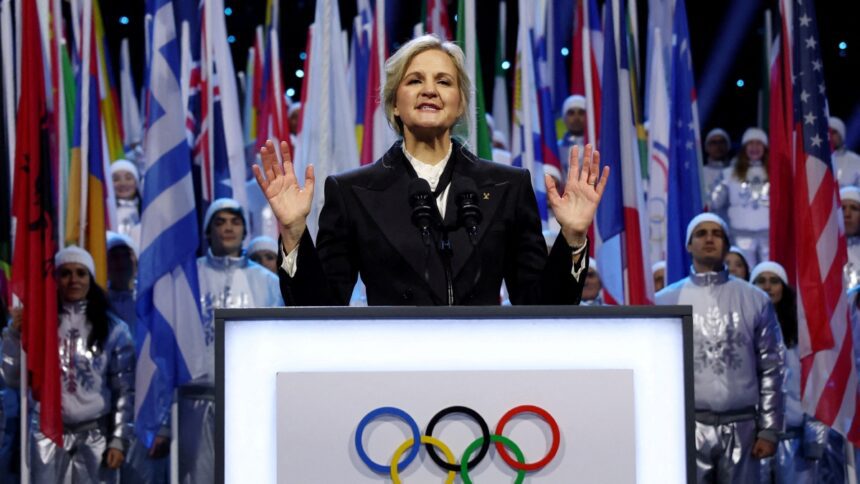
The policy also affects athletes with differences in sex development (DSD). The IOC and its president, Kirsty Coventry, have wanted a clear policy instead of continuing to advise sports’ governing bodies who previously have drafted their own rules. “At the Olympic Games, even the smallest margins can be the difference between victory and defeat,” Coventry, a two-time Olympic gold medalist in swimming, said in a statement. “So, it is absolutely clear that it would not be fair for biological males to compete in the female category.”
As one of her first major actions after becoming the first woman to lead the IOC in its 132-year history, Kirsty Coventry launched a review focused on “protecting the female category” last June.
The issue of female eligibility became a central topic during last year’s seven-candidate IOC presidential election, which followed controversy surrounding women’s boxing at the Paris Olympics. Several of Coventry’s rivals had called for stricter policies.
Three top sports excluded transgender women before Paris Games
Even before the 2024 Paris Games, major sports such as athletics, swimming, and cycling had already barred transgender women who had undergone male puberty. Meanwhile, South African runner Caster Semenya — assigned female at birth but with naturally high testosterone levels — won a ruling at the European Court of Human Rights in her long legal battle against athletics regulations, although the rules themselves remained unchanged.
According to the IOC, its research indicates that individuals born male retain physical advantages. A panel of experts highlighted three key testosterone surges—before birth, during infancy, and throughout puberty into adulthood—which contribute to performance differences in strength, power, and endurance.
The IOC stated that gene testing, specifically screening for the SRY gene typically found on the Y chromosome, is currently the most accurate and least intrusive method for determining eligibility.
However, mandatory gender testing—already used in sports like athletics, skiing, and boxing—is expected to face criticism from human rights organizations and advocacy groups.
</div>