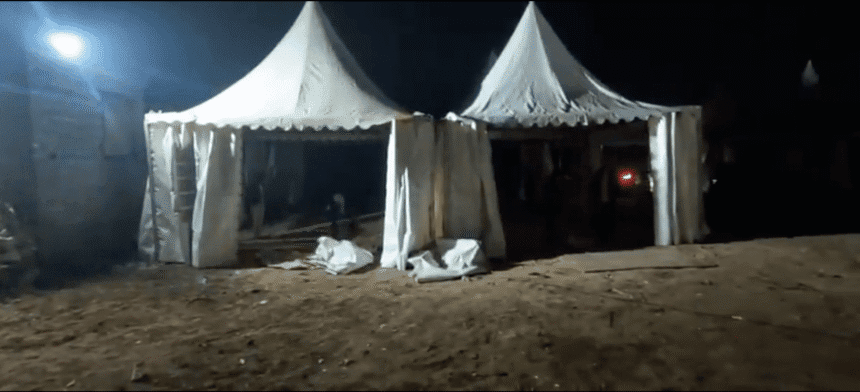
In response to a humanitarian crisis affecting patients’ attendants who are forced to sleep outside hospitals during Delhi’s winter cold wave, the All India Institute of Medical Sciences (AIIMS) in Delhi has initiated temporary shelter provisions. Following a directive from the Delhi High Court on January 12, the Delhi Urban Shelter Improvement Board (DUSIB) has established 40 pagoda tents for individuals who had been sleeping outdoors.
The court’s order came after DUSIB sent a letter to Union Health Minister J.P. Nadda on January 1, 2026, highlighting a “grave humanitarian and public health crisis” near major hospitals in Delhi. The letter noted that nearly 7,892 patients’ attendants, as well as migrants, women, children, and elderly individuals, were sleeping in open areas adjacent to hospitals such as AIIMS, Safdarjung, Ram Manohar Lohia (RML), and Lady Hardinge.
The Centre for Holistic Development (CHD) stated that prior to these actions, only 16 pagoda tents, which could accommodate about 320 people, were available near hospital zones, a situation deemed “grossly inadequate.”
According to a DUSIB Shelter Homes Occupancy Report updated on January 16, Delhi has 323 shelter homes with a capacity of 19,754 beds, but only 6,602 beds were occupied. This indicates a significant gap in both accessibility and utilization despite the urgent need for shelter. The 2025-26 Winter Action Plan includes 119 tent shelters with a total of 2,420 beds, all of which were reported as fully occupied.
The High Court previously emphasized the need for sensitivity in handling the situation, mandating that authorities ensure vulnerable people are not exposed to extreme weather conditions, particularly outside hospitals where attendants often lack alternative accommodation options.
Sunil Kumar Aledia, founder and chairman of CHD, welcomed the recent steps taken but cautioned that a long-term response is necessary. “This is a direct outcome of the High Court’s intervention,” Aledia stated. “AIIMS providing space and DUSIB setting up 40 pagoda tents is a positive step, but it only addresses a fraction of the problem. Thousands of attendants, migrants, and homeless individuals still struggle to find safe shelter during the cold wave.”
Aledia emphasized that, despite the reported available capacity, many shelters are not reachable for hospital attendants due to distance, lack of information, or restrictive entrance hours. He advocated for shelters to be located near hospitals, remain operational throughout the night, and be equipped with essential facilities, including blankets, toilets, and drinking water.
Previously, CHD had reported nearly 8,000 individuals sleeping outside hospitals such as AIIMS and Safdarjung, warning that inaction could lead to avoidable fatalities and represent a violation of the right to life and dignity. The Delhi High Court has requested detailed compliance reports from relevant authorities, including DUSIB, and will review whether the measures implemented are adequate to protect vulnerable populations during the ongoing winter conditions.
Tags: Delhi HC intervention prompts AIIMS to provide space, DUSIB sets up tents for patients’ attendants Extract 5 SEO-friendly keywords as tags. Output only keywords, comma separated.
Hashtags: #Delhi #intervention #prompts #AIIMS #provide #space #DUSIB #sets #tents #patients #attendants