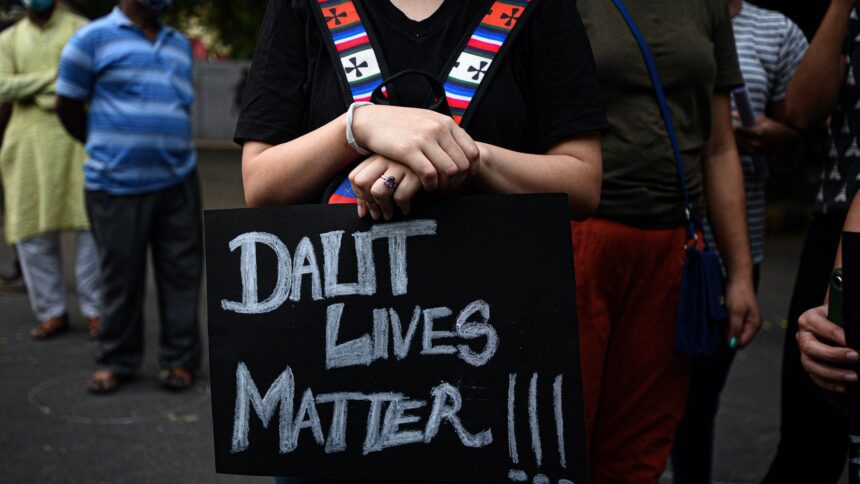

The death of a 23-year-old Dalit house surgeon at the Government Medical College in Siddipet, Telangana, has sparked outrage, with her family and student groups alleging that she was driven to suicide after being cheated and abandoned by a fellow doctor who reportedly refused to marry her, citing her caste.
B. Lavanya from Jogulamba Gadwal district, an MBBS graduate and intern doctor, was found dead in her hostel room on January 5, 2026. A case has been registered under the SC/ST (Prevention of Atrocities) Act and an arrest has been made.
The case has reignited debates on caste discrimination in intimate relationships and institutional spaces, with activists arguing that the incident cannot be seen as an “individual tragedy” but must be understood as the outcome of a caste order that continues to govern even the most private spheres of life.
In a statement, the Ambedkar Students’ Association (ASA), University of Hyderabad, condemned the death as a case of caste violence and said that for Dalits, intimacy is rarely allowed to exist as an ordinary or secure experience because it is constantly policed by the demand to preserve caste boundaries.
The organisation said that when relationships challenge these boundaries, they are disciplined either through violence in the name of honour or through abandonment by partners unwilling to act against the caste order. In both cases, it said, responsibility for the rupture is displaced onto Dalits while the structure that produces the harm remains untouched.
The statement said Lavanya’s death exposes a “violent social truth”: that Dalit women’s lives and aspirations are treated as conditional within hegemonic caste structures. It added that Dalit women live under “double jeopardy”, facing intensified exclusion in both public institutions and private relationships.
ASA also criticised what it called “sanctioned ignorance” in institutions that claim caste is irrelevant in so-called modern spaces, and narratives that individualise structural violence while allowing caste privilege to operate without consequence. This, it said, enables perpetrators to believe their actions will be condoned.
“Lavanya’s death demands more than sympathy. It demands a reckoning with caste power embedded in our institutions, our social relations, and our understandings of love and commitment,” the statement said.
Remembering Lavanya as a young woman whose dreams were legitimate and whose dignity was non-negotiable, the Ambedkar Students’ Association said her death shows that society continues to treat Dalit women as expendable, and said it stands in solidarity with her family while demanding justice for B. Lavanya and an end to caste violence against Dalit women.
The post Telangana: Dalit house surgeon dies by suicide after alleged caste-based rejection, sparks outrage appeared first on Maktoob media.