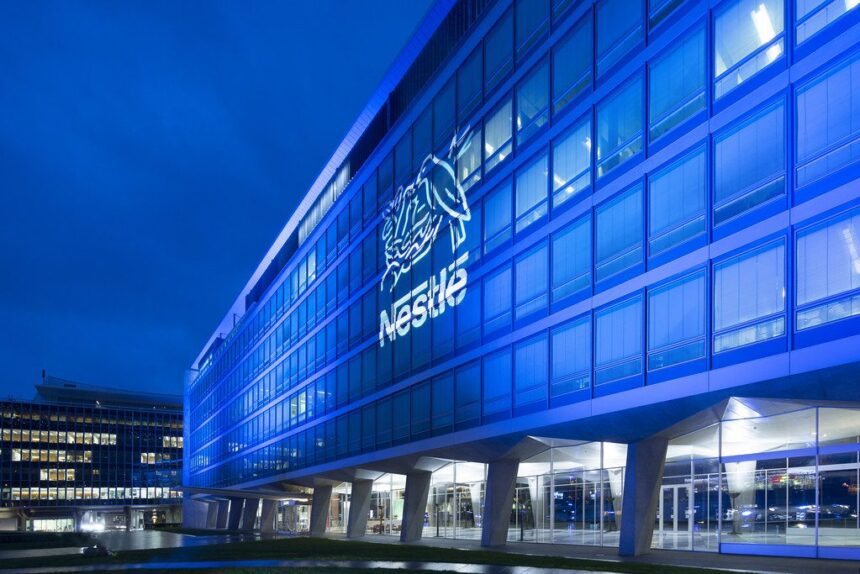

Nestlé has recalled batches of its SMA, BEBA and NAN infant formula products from several countries across Europe, Africa, the Americas and Asia after they were found to be potentially contaminated with a toxin that can cause nausea and vomiting in babies.
The recall has so far been issued in at least 48 countries and markets across Europe, the Americas, and Asia, Africa and Oceania, according to the company’s published list.
The recall, which began on a limited scale in December, has now become a fresh challenge for Nestlé’s new CEO, Philipp Navratil, who is seeking to revive the company’s growth by reviewing its product portfolio following a period of leadership turmoil.
On Monday, the Switzerland-based company said that certain batches of its SMA infant formula and follow-on formula were not safe for infants.
“Following the detection of a quality issue with an ingredient provided by a leading supplier, Nestlé has undertaken testing of all arachidonic acid (ARA) oil and corresponding oil mixes used in the production of its potentially affected infant nutrition products,” they said.
The company said that none of the recalled products have been linked to any confirmed cases of sickness or symptoms, asserting that “Nestlé takes all consumer inquiries very seriously, and is duly investigating them.”
The company said that ARA oil is used in a wide range of infant nutrition products sold globally, meaning the issue affects multiple countries, brands and products, with the specific items varying from country to country.
In affected markets, and in line with local food safety laws, Nestlé said its teams are working with authorities to determine the appropriate course of action to support parents and caregivers.
A problem was found in an ingredient from a major supplier, a company spokesperson said, “Nestle has undertaken testing of all arachidonic acid oil and corresponding oil mixes used in the production of its potentially impacted infant nutrition products”.
On Wednesday, the UAE’s drug authority announced it had recalled some Nestlé baby formula products, according to state news agency WAM.
WAM reported that the Emirates Drug Establishment confirmed no cases of sickness have been linked to the recalled batches.
Qatar’s Ministry of Public Health has warned people not to use certain batches of Nestlé baby formula, after reports of possible contamination with the cereulide toxin, the state news agency said.
Nestlé said none of the recalled products are sold in India, since all baby formulas there are made locally.
“Nestle India does not import or sell any of the affected products or batches that have been withdrawn or recalled. All infant formula brands sold in India are manufactured locally. We have conducted thorough testing on these products and can confirm that they meet all FSSAI and applicable rules and regulations”, The Nestle India told ANI.
Nestlé India said the recall is just a safety step, and no cases of sickness have been reported.
“At Nestle India, the safety and well-being of our consumers is our top priority. All our products are in full compliance with FSSAI and applicable rules and regulations. Following the detection of a quality issue with an ingredient provided by a leading supplier, Nestle has initiated a precautionary recall/withdrawal in some countries for certain infant formula product batches produced in Europe. No illnesses have been confirmed in connection with the products involved to date,” they clarified.
Earlier in 2024, a report by Swiss non-profit Public Eye and the International Baby Food Action Network (IBFAN) accused global food giant Nestlé of adding excessive amounts of sugar to its baby food products sold in low- and middle-income countries.
The investigation found that Nestlé’s popular brands, including Cerelac instant cereal and Nido powdered milk, contained up to 7.3 grams of added sugar per serving in countries such as Thailand, Ethiopia, South Africa, India and Bangladesh, while the same products sold in Europe often contained no added sugar.
The post Nestlé recalls baby formula from at least 48 countries over toxin contamination fears appeared first on Maktoob media.