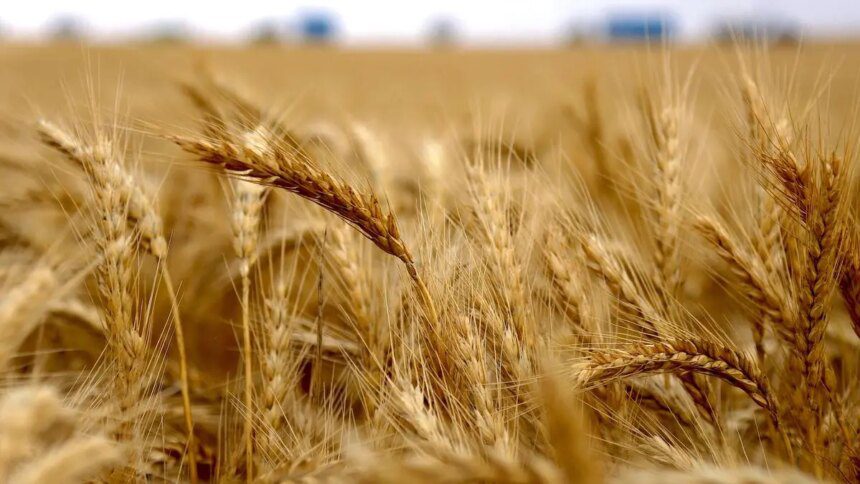

The sowing area under the rabi season’s paddy was 7.7 per cent higher at 9.10 lh from 8.45 lh | Photo Credit: REUTERS
The total area under all agriculture crops was 9.9 per cent higher at 393.07 lakh hectare (lh) as of November 28, against 357.73 lh a year ago, the Agriculture Ministry said in a statement. The sown area under wheat as of November 28 was 187.37 lh against 160.26 lh a year ago. The normal area (average of last five years) of all rabi crops is 637.81 lh.
Among other crops, the sowing area under the rabi season’s paddy was 7.7 per cent higher at 9.10 lh from 8.45 lh and that of maize was 20.8 per cent more at 8.76 lh from 7.25 lh. The barley acreage was 4.60 lh against 4.27 lh and jowar at 14.98 lh against 14.43 lh. The total acreage under nutri/coarse cereals was 29.06 lh, up 9.3 per cent from 26.58 lh.
Favourable soil moisture
In pulses, which reached 87.01 lh against 85.06 lh a year ago, the area under chana was 62.49 lh against 60.13 lh, up by 3.9 per cent and masur (lentil) acreage was 9.4 per cent higher at 11.42 lh from 10.44 lh. The oilseeds acreage was 80.53 lh as of November 28, up by 4.1 per cent from 77.38 lh and it included coverage of 77.06 lh under mustard, which was 5.7 per cent higher from 72.92 lh a year ago, the data show.
The Karnal-based Indian Institute of Wheat and Barley Research (IIWBR) has said that wheat sowing has progressed rapidly across the country, supported by favourable soil moisture and widespread adoption of machine sowing, which saves time, seed and labour. Earlier, it had asked farmers to complete planting wheat by November 20.
“Farmers who have not yet planted are advised to select varieties very carefully, based on sowing time and the agro-climatic condition to get optimum yields. Farmers are advised to select high-yielding, climate-resilient varieties suitable for their sowing window and irrigation conditions, and always procure seed from reliable sources,” it said in its fortnightly advisory for December 1-15.
Farmers who sowed wheat in October, it has asked them to follow timely weed management and irrigation to ensure a robust crop. For wheat sown in the first week of November, emphasis should be given on ensuring proper crop emergence and scheduling the first irrigation after 20-25 days to promote uniform stand establishment.
Foodgrain output target
“Select a variety that suits late planting in your region and avoid using varieties from other zones to reduce the risk of disease susceptibility,” said Ratan Towari, director of IIWBR.
Last year, the total area under all rabi crops was 663.04 lh and foodgrains production was recorded 167.22 million tonnes (mt) and that of oilseeds was 13.57 mt.
The government has fixed a target of 171.14 million tonnes (mt) of foodgrains which include 119 mt of wheat, 15.86 mt of rice, 16.57 mt of pulses, 3.17 mt of nutri cereals, 14.5 mt of maize and 2.05 mt of barley, as well as 15.07 mt of oilseeds (including 13.9 mt of mustard).
Meanwhile, storage in the 166 major Indian reservoirs dropped marginally to 87.83 per cent of capacity as of November 27. Data from the Central Water Commission (CWC) showed that the level in the major reservoirs was 161.218 billion cubic metres (BCM) against a capacity of 183.565 BCM.
The 11 reservoirs of the northern region were filled to 84 per cent of the 19.836 BCM capacity at 16.619 BCM. The level in Rajasthan was 98 per cent and in Punjab, it was 85 per cent. In the central region’s 28 reservoirs, the storage was 43.772 BCM or 90 per cent of the 48.588 BCM capacity. The level was 93 per cent in Madhya Pradesh and 76 per cent in Uttar Pradesh.
Published on December 1, 2025