
A 19-year-old Muslim student at Hindu College in Moradabad, Uttar Pradesh, Farhad Ali, was severely injured when his classmates allegedly attempted to set him on fire as part of a “prank.” This incident, occurring on January 8, has sparked a debate on the definitions of pranks and the underlying tensions in the region.
Incident Details
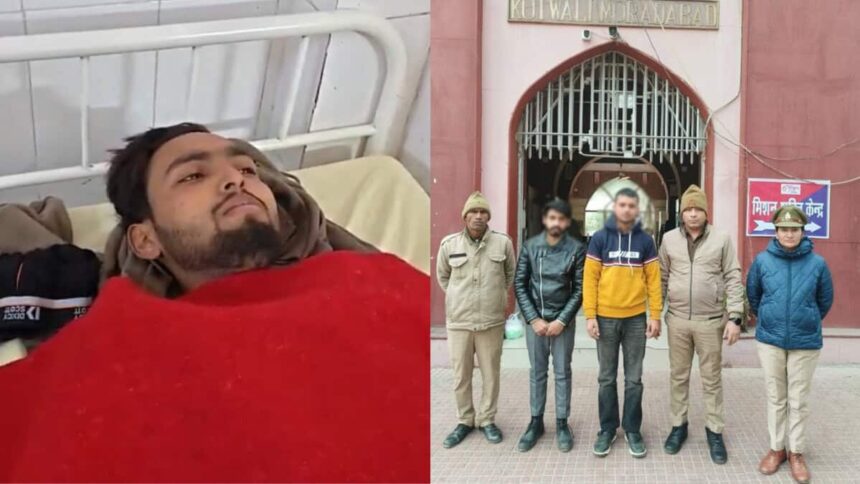
Farhad Ali was leaving the college after an examination when he was reportedly attacked by his classmates, Deepak Kumar and Aarush Singh. Witnesses stated that the two poured an inflammable substance on Ali and ignited it, although police initially described the incident as a “prank gone wrong.” Ali sustained serious injuries, specifically eight percent burns on his legs and thighs. He was promptly taken to the hospital by his classmates, who were reportedly frightened after the flames spread.
Conflicting Narratives from Victim and Police
Police officials, including Moradabad City Superintendent of Police Ranvijay Singh, labeled the incident a misguided prank with no harmful intent. They noted that Kumar and Singh had previously committed a similar act on another student, Dhruv Thakur, who fortunately suffered no injuries. According to the authorities, the victim’s parents had initially requested that the case be dropped, indicating a possible reluctance to pursue legal action further.
In stark contrast, Farhad Ali firmly rejected the police’s interpretation of events. Speaking to the press from the hospital, he asserted that it was a deliberate attack. He described the incident as intentional, citing that his assailants used petrol from a white bottle and a lighter to ignite the flames. Ali’s insistence on the attack being premeditated adds another layer to the investigation, raising questions about motivations and accountability.
The Broader Context of Violence Against Minorities
This incident is set against a backdrop of rising communal tensions in India, where acts of violence against minority communities have raised concerns about safety and justice. The response from authorities could influence public perception regarding the seriousness with which such acts are taken, particularly when they involve students from different religious backgrounds. Critics argue that casually dismissing such incidents as “pranks” could undermine the severity of the situation and embolden similar behavior in the future. This has led many to scrutinize whether authorities are taking adequate steps to prevent hate crimes across campuses and public spaces.
Why This Matters
The Moradabad incident is significant because it highlights broader societal issues regarding youth behavior, communal relations, and the treatment of minority communities in India. As a nation grapples with its identity and social fabric, such events can create ripple effects that affect political discourse and community relations. The interpretations of this incident could influence how similar cases are viewed and managed moving forward, potentially impacting legislation and policy addressing youth safety and hate crimes.
Frequently Asked Questions
What happened to Farhad Ali?
Farhad Ali was allegedly set on fire by his classmates outside Hindu College in Moradabad after they reportedly poured an inflammable substance on him during what they described as a prank.
What do the police say about the incident?
Moradabad police have classified the incident as a “prank gone wrong” and stated that the accused had no ill intentions. They emphasized that the two accused were arrested and sent to judicial custody.
How does Farhad Ali view the incident?
Farhad Ali rejects the police’s characterization of the incident as a prank, asserting that it was a deliberate attack. He stated that his classmates intentionally set him on fire.
What implications does this incident have for communal relations in India?
This incident underscores the escalating communal tensions and raises concerns about safety for minority communities. It prompts discussions on accountability and the seriousness of violence against marginalized groups in academic settings.