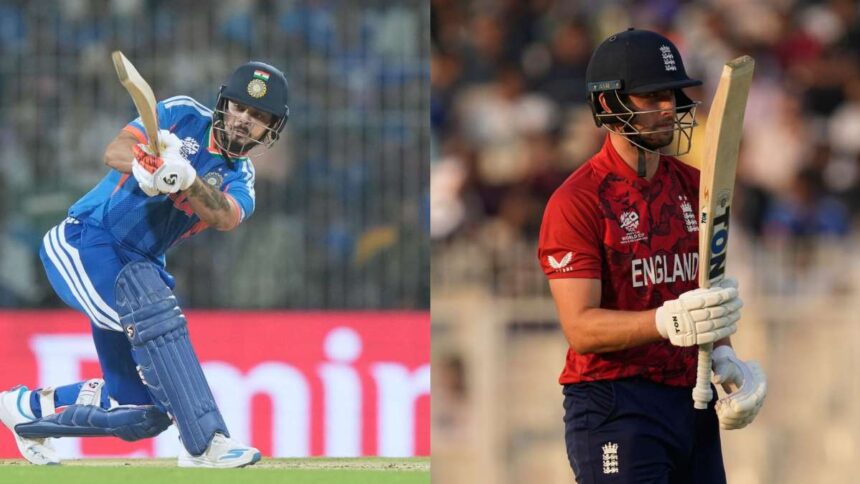
Team India will be taking on England in the 2nd semi-final of the ongoing T20 World Cup 2026. The two sides are looking to reach the final of the tournament. It is worth noting that both India and England have been in brilliant form in the ongoing World Cup.
Team India reached the semi-final after finishing in second place in their Super 8 group, whereas England topped their Super 8 group. With the sides set to take on each other, it could be interesting to see which side comes out on top, considering the form that they have been in.
Ahead of the game, let us have a look at the statistical comparison between the two squads. With both sides excelling in six-hitting, let us have a look at which side has hit more sixes in the ongoing T20 World Cup 2026.
It is worth noting that Ishan Kishan and Hardik Pandya lead the charts for team India in six-hitting. The two stars have hit 12 sixes each in the T20 World Cup 2026 so far, and in total, the Men in Blue have hit 69 sixes so far in the tournament, being one of the teams with the highest sixes hit in the World Cup.
How has England fared in six hitting in the T20 World Cup 2026?
On the other hand, England is quite far behind the Indian team when it comes to six-hitting in the ongoing T20 World Cup 2026. Will Jacks leads the chart for England with 12 sixes hit in the tournament. Harry Brook sits in second place with nine sixes hit.
In total, England has hit 59 sixes in the tournament, exactly 10 fewer than team India. Taking on the Men in Blue in the next game, England will look to stay on the top of their game as they face the defending champions.
Also Read:
</div>