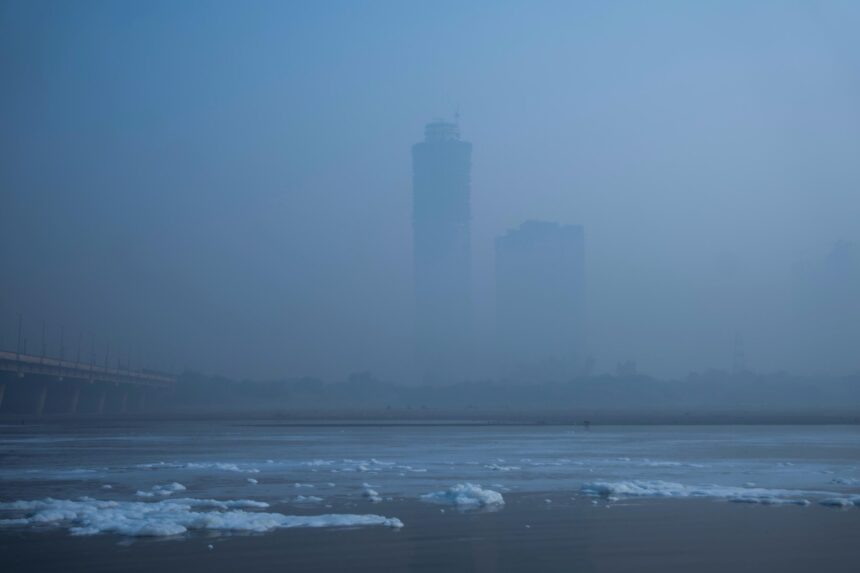
The Singapore High Commission in New Delhi has issued an advisory urging Singapore nationals in the Delhi National Capital Region (NCR) to follow health and safety precautions after Indian authorities invoked Stage 4 of the Graded Response Action Plan (GRAP), the strictest level, amid worsening air pollution.
In an advisory issued on Sunday, the High Commission said the Indian Central Pollution Control Board (CPCB) had enforced GRAP Stage 4 across Delhi-NCR, triggering severe restrictions on construction and industrial activities. Schools and offices have been encouraged to switch to hybrid or remote formats, while residents, especially children, the elderly, and those with respiratory or cardiac ailments, have been advised to remain indoors and wear masks if stepping outside.
The High Commission urged Singapore nationals in the region to “pay heed” to the local authorities’ guidance, warning that the hazardous air quality poses serious health risks. It also cautioned travellers that low visibility conditions could disrupt air travel, noting that Indira Gandhi International Airport and several airlines have already issued advisories.
The dense fog and thick smog blanketed Delhi on Monday morning, severely reducing visibility to near zero and disrupting transport services across the capital. According to sources, at least 170 flights were cancelled, while hundreds more were delayed throughout the day due to cascading operational impacts. Train services also ran several hours behind schedule.
Delhi’s air quality remained firmly in the “severe” category, with the city’s average Air Quality Index (AQI) recorded at 498. Of the 40 air quality monitoring stations across the capital, 38 reported ‘severe’ air quality, while the remaining two registered “very poor” levels. Jahangirpuri emerged as the most polluted area, with an AQI of 498, the highest recorded in the city.
Under CPCB guidelines, an AQI between 401 and 500 is classified as ‘severe’ and poses serious health risks even to healthy individuals. On Sunday, Delhi’s AQI had already climbed to 461, marking the city’s most polluted day of the winter season and the second-worst air quality recorded in December so far.
Earlier on Monday, Delhi airport authorities issued a travel advisory warning passengers of potential disruptions due to poor visibility. IndiGo cancelled 109 flights, while Air India cancelled 37 flights, including both arrivals and departures. Air India Express said 20 flights across its northern India network were impacted.
Two international SpiceJet flights, from Bangkok and Dubai, were diverted to Jaipur, while Akasa Air announced cancellations across parts of its network, with details awaited. Flights between Delhi and cities such as Mumbai, Indore, Lucknow, Varanasi, Coimbatore, and Kolkata were among those cancelled.
In a statement, IndiGo said prolonged low visibility during morning hours had affected air traffic movement, leading to cancellations to ensure safe operations.
“We understand how inconvenient this can be… our teams across airports are working continuously to manage operations as smoothly as possible,” the airline said.
Delhi airport authorities also said they were coordinating with all stakeholders to minimise inconvenience and advised passengers to check flight updates directly with their airlines, expressing regret for the disruption caused.
The Singapore High Commission said nationals requiring consular assistance could contact the mission directly, reiterating the importance of staying informed as pollution levels and visibility conditions continue to fluctuate.
The post Singapore High Commission issues advisory for nationals in Delhi NCR after GRAP Stage 4 curbs amid severe pollution appeared first on Maktoob media.