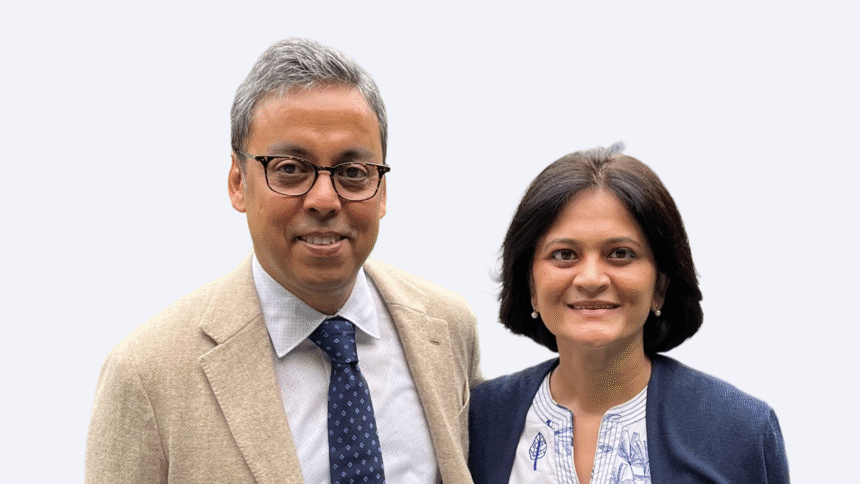
Rajdeep and Shilpa Endow, Co-founders, Moonjar Technologies
That’s exactly the kind of situation that husband-and-wife duo Rajdeep and Shilpa Endow’s healthtech start-up Moonjar Technologies hopes to solve with their first product Maatra. As Rajdeep, former chief of Sapient India and then a consultant with PE firms, says rather sheepishly, there has been an instance when he has struggled to recall a basic thing like the blood group of one of his family members. “The first thing we observed as caregivers to our parents is that families don’t have access to their health data when they need it,” he says.
Maatra is a platform that seeks to bring all family-held medical records into one secured, accessible system. “If you think of a medical interaction in India, we get treated for symptoms, because we can’t bring historical longitudinal data into the conversation,” says Rajdeep. But as he points out, “It’s clinically proven that historical data improves diagnosis.”
Then, there is the issue of the patient having to undergo unnecessary re-tests just because they can’t lay their hands on the last test. Both cost and stress go up. The other aspect, says Shilpa who was an HR professional, is that we don’t have generational data. “So, at maximum my view might be limited to my parents. I have no idea what is flowing through my family genes, and what the next generation is going to be facing,” she says.
Digital health lockers
There are other systems like Practo and Driefcase that function like a digital health locker allowing users to store medical records on the cloud. But the Endows say that where Maatra differs from the others is it is a “family first” platform. “It’s not individual first. It understands family relationships.” Also, says Shilpa, they have provision to organise and store the medical record of pets too as “pets are family”. Both the Endows emphasise that the app is being built as a “calm” technology with users facing no stress, and no ads.
In the first version of the product, Rajdeep says, two primary use cases are being solved — one, allowing users to digitise all the paper documents. There is a lot of AI in the app so that a user can store and search it without friction. The second use case is emergency readiness. “We also make sure you don’t forget anything, whether it’s a lab test, follow up, physiotherapy, medicine. We have an elaborate reminder system,” says Rajdeep.
A WhatsApp like feature has been replicated inside Maatra so that family members can communicate with each other. It will operate on a subscription model because Rajdeep points out features like security, data privacy, calm design, cutting edge AI, optical character recognition all cost money.
What do doctors feel about this? “I have for long advocated for people to carry their own medical records on a template which is generic, including details such as family members and illnesses attributed to them, medication, allergies, past surgeries, medical history, number of medications, prior hospitalizations and a separate file of investigations kept in chronological order,” says Dr Rajeev Jayadevan, noted Kochi-based gastroenterologist. However, he says, “I do not think a multigenerational medical record is a good idea. Privacy issues crop up… regardless of proximity by blood.”
Rajdeep however says that Maatra has been created with the help of a lawyer and respects India’s digital and private data protection act. There is provision for consent so families can control what data can be seen even within family members.
Right now in beta mode — users can join the waitlist — the app will be launched in December.
Published on November 17, 2025