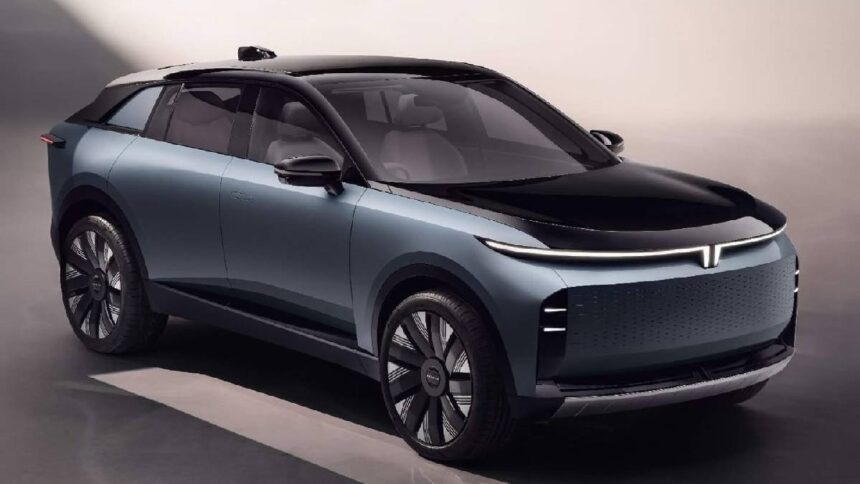
Tata Motors is set to launch its inaugural electric vehicle under the Avinya brand next year. The company has announced a strategic collaboration with its subsidiary, Jaguar Land Rover (JLR), ahead of this launch, as reported by Autocar.
PB Balaji, Group CFO of Tata Motors, confirmed that the premium Avinya electric vehicles will utilize JLR’s “born-electric” Electrified Modular Architecture (EMA) platform.
A Strategic Partnership
A Memorandum of Understanding (MoU) has been signed between Tata Passenger Electric Mobility Ltd (TPEML) and Jaguar Land Rover. As part of this agreement, Tata Motors will adopt the EMA platform in exchange for a royalty fee. This partnership encompasses more than just the chassis, providing Tata access to:
- Advanced electrical architectures
- Electric Drive Units (EDUs)
- Battery pack technology
- Specialized manufacturing expertise
Balaji stated, “This collaboration will significantly reduce our development time and transition Tata Motors into advanced electrical and electronic architectures. It prepares the brand for a future of autonomous vehicles and represents a significant win-win strategy for both Tata Motors and JLR.”
He further explained that while searching for a dedicated “pure EV” platform, they determined that JLR’s architecture was ideally suited for the premium positioning of the Avinya brand.
Understanding JLR’s EMA Architecture
First announced in 2021, the Electrified Modular Architecture (EMA) is a dedicated electric vehicle platform designed to accommodate high levels of connectivity and performance.
Key features of the EMA platform include:
- Space Efficiency: Designed “around the battery” with a completely flat floor to maximize interior cabin space.
- Future-Ready Technology: Built to support Level 2+ autonomy, Software Over The Air (SOTA), and Feature Over The Air (FOTA) updates.
- Advanced Charging: Incorporates a highly integrated propulsion system with cell-to-pack battery technology, enabling ultra-fast charging and high-performance capabilities.
- Connectivity: Capable of vehicle-to-infrastructure communication and extensive cloud integration.
- Safety: Engineered to achieve 5-star global safety ratings.
To maintain competitiveness, Tata Motors plans to localize the EMA architecture within India. This strategy aims to blend premium global engineering with local cost efficiencies.
ALSO READ: 2026 Luxury Car Outlook: Upcoming Launches from BMW, Audi, Mercedes-Benz, and Volvo