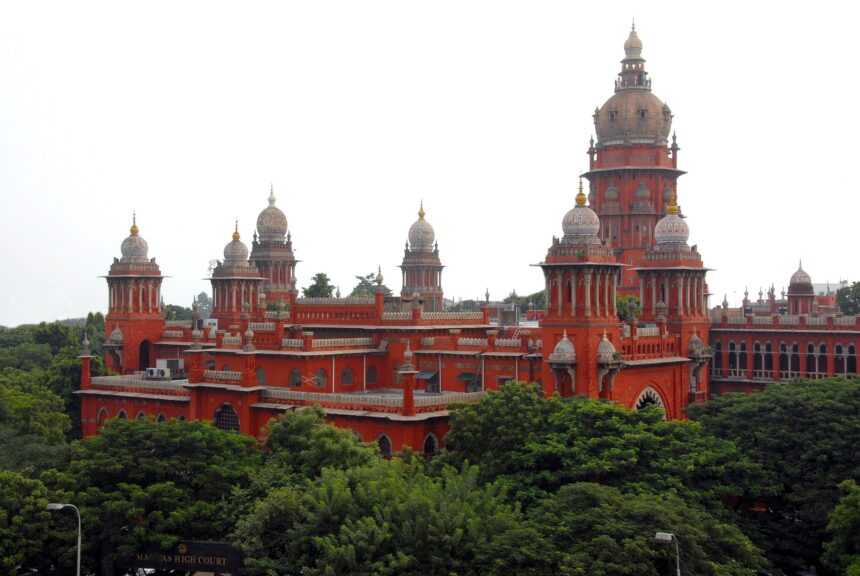
The Madras High Court recently characterized preventive detention laws as “draconian” and cautioned against their misuse by the State for political vendettas or to silence dissent. The court emphasized that such powers should be exercised “sparingly, with extreme caution,” according to Live Law.
In its observations, the bench, consisting of Justice S.M. Subramaniam and Justice P. Dhanabal, stated, “The detention laws cannot be used to settle political scores or silence dissenting voices. Power vests with the executive authorities to impose imprisonment, and therefore, the power to detain a person must be exercised sparingly and with extreme caution.” The justices stressed the need for courts to take a serious stance against detention actions that lack bona fide intent.
The bench urged that if a detention is conducted carelessly or based on extraneous motives, including political retaliation, the State should initiate disciplinary measures against the responsible officials under appropriate service rules. They added, “Any callousness, motive, extraneous consideration, settling of political scores, or silencing of dissenting voices, if established through facts and documents, must result in disciplinary proceedings against the detaining or police authorities.”
Highlighting the importance of due diligence, the court reiterated that the issuance of detention orders requires thoughtful consideration and careful examination of relevant factors. Personal liberty, they noted, is a constitutional mandate rather than a discretionary privilege granted by the State. “Failure to protect it would result in unconstitutionality, and an aggrieved citizen is entitled to sue the State and its authorities for appropriate relief, including damages,” they concluded.
These observations emerged during a habeas corpus petition filed by the wife of Varaaki, a YouTuber and investigative journalist detained under the Tamil Nadu Goondas Act as a “sexual offender.” The petitioner alleged that Varaaki’s detention was influenced by his critical views on the political and executive authorities in the State.
In response to a preliminary objection raised by the State regarding the petition’s maintainability, the court maintained that swift resolution of habeas corpus petitions, which concern personal liberty and fundamental rights, is a constitutional imperative that should be prioritized.
The bench noted that five adverse cases against Varaaki had been previously handed over to the CB-CID by a single judge, who remarked that these cases appeared to be motivated by mala fides. Another case was identified as a landlord-tenant dispute, suitable for resolution in the Rent Control Court.
Considering these factors, the court granted Varaaki interim bail for 12 weeks, requiring his release upon posting a personal bond of ₹1,00,000 before the Superintendent of Police. Conditions of the bail included restrictions on leaving the country, influencing witnesses, and a requirement to cooperate with ongoing investigations.
Preventive detention laws in India face significant criticism for their potential for misuse and arbitrary application, often invoked against political dissenters, activists, journalists, and human rights advocates rather than for legitimate security threats. Critics point to examples where the National Security Act (NSA) has been applied in cases connected to cow slaughter, governmental criticism, and participation in protests.
Human rights proponents argue that such laws infringe upon fundamental rights, particularly Article 21 of the Constitution, which safeguards the right to life and personal liberty. Detainees often find themselves held on vague or undisclosed charges, facing delays in access to necessary information and stringent bail conditions, leading to prolonged detention without trial or conviction.
Tags: Preventive detention laws are ‘draconian’, says Madras High Court Extract 5 SEO-friendly keywords as tags. Output only keywords, comma separated.
Hashtags: #Preventive #detention #laws #draconian #Madras #High #Court