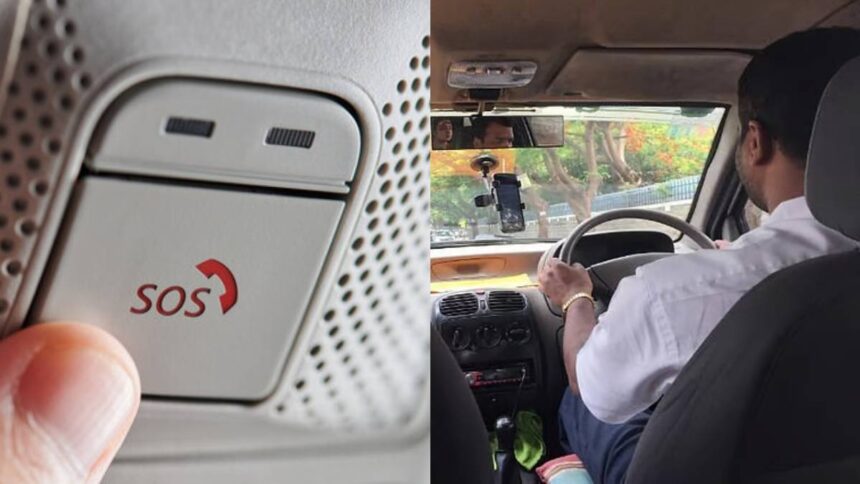
Maharashtra Legislative Council Deputy Chairperson Neelam Gorhe on Friday directed officials to immediately verify the effectiveness of the panic button systems installed in the state’s buses, cabs, and taxis. She called for the rectification of any deficiencies to strengthen passenger safety, particularly for women.
Taking note of complaints that emergency buttons in several private taxis, cabs, and buses were non-functional, Gorhe chaired a review meeting at Vidhan Bhavan in Nagpur, where the state legislature is holding its winter session. Attendees included State Transport Commissioner Vivek Bhimanwar, senior officials, and cab association representative Keshav Kshirsagar.
Gorhe observed that while these systems were introduced to ensure quick assistance to women during emergencies, their impact on the ground “has not been as expected”.
15 Daily checks
She emphasised the urgent need for rectifying all faults, improving public awareness, and ensuring wider dissemination of information to citizens. The Council Deputy Chairperson also directed that every district must conduct at least 15 daily checks on vehicles and take corrective action using live tracking data.
Gorhe further suggested that public awareness should be created by placing clear instructions inside vehicles fitted with the panic button system, utilising pamphlets, advertisements, and other media. She also recommended activating a dedicated WhatsApp number for lodging complaints.
Transport Commissioner Bhimanwar informed the meeting that 1,40,599 vehicles in the state have been fitted with panic button systems. Of these, 1,01,086 are functional, while the remainder have non-operational or faulty devices. He added that drivers of vehicles found with defects were being notified to take corrective steps.
The process
The senior bureaucrat detailed the process: The transport department’s command and control centre in Mumbai has received 6,30,255 alerts through these systems. Officials send immediate notifications to vehicle owners upon receiving an alert, and if there is no response, the information is passed on to the ‘112’ emergency line.
The Transport Commissioner concluded by noting that installing such systems is mandatory when issuing fitness certificates to vehicles.
ALSO READ: Nissan confirms launch of new MPV in India based on Renault Triber