India’s insurance industry is in the midst of one of its most significant transformation cycles. Already among the world’s fastest-growing markets and the fifth-largest life insurance market in emerging economies, the sector has expanded at a steady 17% CAGR over the last two decades. With the Sabka Bima Sabki Raksha Bill expected to advance and the market projected to reach USD 222 billion by FY26, insurers are entering a phase defined not just by scale, but by structural reinvention.
The message is evident for decision makers and leaders: the period of gradual digitization are gone. The industry is transitioning to agentic operating models, which means that processing claims, identifying fraud, real-time risk management and essential underwriting tasks are performed by autonomous AI systems. With this evolution, traditional, transactional insurance is making way toward a continuous, intelligence-based risk ecosystem.
FDI Unlocked: Strategic Inflection Point for Market LeadershipAdditionally, compared to a shift in laws and regulations, an option to permit 100% FDI by way of the automatic process creates a new marketplace. Global insurers heading to India will transform underwriting accuracy and product sophistication with their advanced actuarial skills, global risk frameworks and specialist knowledge.
It is expected that foreign reinsurers are going to speed accelerate innovation in cyber protection, adaptive solutions for climate change and long-term solutions tailored to India’s demographic reality now that they’ve gained better access to the marketplace. As global players ramp up by 2027, domestic insurers will need to adopt hybrid strategies, pairing local distribution strength with global-grade pricing and decisioning models.
The competitive advantage will not lie in scale alone, but in capital efficiency, sharper risk selection, and faster adaptability, areas where agentic AI and global best practices intersect.Digital Momentum: The Shift Toward Embedded and Omnichannel Dominance
India’s online insurance market is on track to grow from USD 248 million in 2025 to USD 486 million by 2030. Embedded insurance is becoming a primary distribution channel, seamlessly integrated into e-commerce, mobility, and fintech journeys, reducing acquisition friction and expanding reach.
Smart contracts powered by blockchain are shortening settlement cycles and enabling instant payouts triggered by predefined conditions. IRDAI’s open architecture, API sandboxes, and data-sharing frameworks are enabling insurers to build fluid omnichannel ecosystems that align agents, digital platforms, and partners.
With 90%+ of retail policies already issued digitally and cashless health claims increasing across urban centers, CXOs face a strategic mandate:
double down on AI-driven, API-native architectures that unify customer journeys and accelerate claims processing.
Vernacular, IoT-aware AI agents are unlocking new customer segments, especially in rural and semi-urban regions. This shift is redefining accessibility, reducing cost-to-serve, and increasing product relevance at scale.
Insurtechs Redefining the Value Chain: From Underwriting to Risk Engineering
India’s 150+ insurtechs, collectively valued at USD 15.8 billion, are emerging as strategic collaborators rather than disruptors. Their impact spans the entire value chain:
- ML models reducing claims leakage
- Computer vision accelerating damage assessment
- Wearable-driven usage-based health insurance
- Parametric covers enabling minute-level payouts for climate events
Agentic AI is enabling straight-through processing, minimizing human intervention to only complex or interpretive cases. The strategic implication is clear:
Collaboration with insurtechs unlocks new propositions, improves speed-to-market, and expands reach in underserved MSME and climate-vulnerable segments.
Global Automation Trends: Operational Excellence Meets Experience-Led Growth
Globally, commercial insurance is setting the pace in automation. Underwriters are leveraging alternative data and generative AI to redesign end-to-end processes, treating underwriting excellence as a strategic differentiator.
Across markets, insurers are consolidating fragmented policy administration systems and migrating to cloud-native platforms to gain agility and lower IT overheads. This shift supports the larger movement toward experience-led selling, where data enables hyper-personalized risk narratives and strengthens customer trust.
Distribution, too, is evolving: digital and embedded channels are becoming credible alternatives to broker-dominated models, especially in retail lines.
Leadership Imperative: The Choice Is Between Scaling and Stagnating
2026 represents a decisive juncture. The strategic priorities are no longer ambiguous:
- Move towards agent-native operating models
- Adopt policy-as-code frameworks for governance
- Deploy multi-agent orchestration across sales, service, and claims
- Enable real-time dashboards to monitor AI reasoning and outcomes
While many proofs of concept stall, leaders are clarifying their focus on measurable outcomes: faster claims cycles, localized AI models trained on Indian data, and partnerships that combine global technology depth with India’s execution expertise.
The industry is undergoing a fundamental redefinition. Insurers must choose whether to scale with agentic intelligence or fall behind in a market where customers, competition, and technology will not wait.
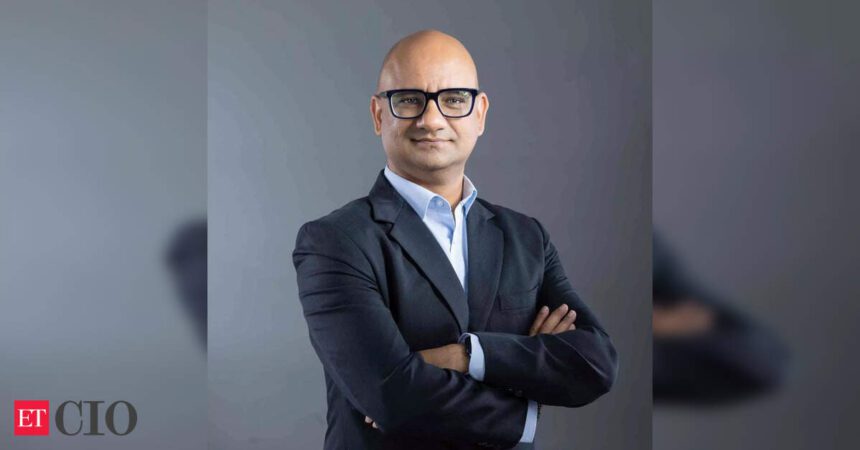
The author is Ritesh Varma, Head of Business Consulting and Insurance Practice.
Disclaimer: The views expressed are solely of the author and ETCIO does not necessarily subscribe to it. ETCIO shall not be responsible for any damage caused to any person/organization directly or indirectly.