In many organizations, the same offices in Bengaluru, Hyderabad, or Pune are now building global products, designing AI solutions, leading cybersecurity programs, and shaping enterprise strategy. For some of the biggest corporations in the world, what were once viewed as support hubs have evolved into strategic nerve centres.
India’s Global Capability Centres (GCCs) have undergone a significant change. What started as a cost-efficiency play has matured into a model that enables innovation, agility, and global collaboration. As businesses rethink how work is organized in an increasingly digital world, GCC operating models are evolving yet again.
The findings of the Managed Office Space Report by Awfis and ANAROCK also highlight the rising preference for managed office spaces (MOS), driven by flexibility, cost efficiency, and operational convenience. Nearly 84% of respondents choose MOS to support remote and hybrid workforces, while 68% say modern design and customization improve employee experience. Interest remains high, with 9 out of 10 considering MOS for future expansion. Cost efficiency is a key driver, cited by 71%, with 57% reporting savings in fit-outs and maintenance. Additionally, 81% value flexible office layouts, 64% are influenced by integrated services and amenities, and 70% emphasize the importance of operational support such as maintenance, housekeeping, and security.The question now is not just how GCCs have changed but what comes nextThe early generation of GCCs focused primarily on back-office functions like finance operations, IT support, HR processes, and customer service. Their success was measured in terms of cost savings and operational efficiency. That narrative has changed dramatically. Today, GCCs are expected to contribute directly to business growth. Many are leading global initiatives in product development, analytics, cybersecurity, AI engineering, and digital transformation. In sectors such as banking, retail, healthcare, and technology, Indian GCC teams are now building platforms, designing products, and shaping enterprise strategy.
This transition requires a fundamentally different operating model. Instead of functioning as remote delivery centres, GCCs are increasingly structured as integrated extensions of the global enterprise.
One of the most noticeable shifts is the move toward capability-led operating structures. Rather than organizing teams purely around processes or support functions, companies are building specialized capability hubs within their GCCs. These hubs focus on areas such as advanced analytics, AI and machine learning, cloud engineering, cybersecurity, and product design. The goal is to create centres of excellence that serve the entire global organization.
Another trend shaping the future operating model is increased autonomy. Earlier, most GCCs operated under tightly controlled governance structures with decisions flowing primarily from global headquarters. While early GCC models (1.0–2.0) were defined by strict hierarchical control and a lift-and-shift approach, the future operating model, particularly accelerated by AI and digital transformation, is characterized by increased decision-making authority, end-to-end process ownership, and local strategic leadership. A February 2026 FICCI-Anarock report forecasts India’s Global Capability Centres (GCCs) to exceed 2,400 by 2030, employing over 2.8 million professionals and hitting a market size of $105–110 billion. Today, many organizations are empowering their India centres with greater ownership. GCC leaders are being given more control over budgets, hiring, partnerships, and technology roadmaps. This shift reflects a growing confidence in the maturity and leadership capabilities within India’s GCC ecosystem.
As the nature of work evolves, flex spaces need to change into dynamic hubs that cater to the changing requirements of GCCs and modern workstyles. This means integrating advanced tech like smart workspaces, high-speed connectivity, and collaborative tools to foster innovation and productivity.
Flex spaces should also prioritize flexibility in design, offering adaptable layouts that support everything from focused work to team collaborations and client meetings. Amenities like on-site wellness programs, networking events, and skill-building workshops can help attract and retain top talent.
By doing so, flex spaces can become strategic partners for GCCs, providing the right environment to drive growth, innovation, and global connectivity
Another defining feature of the emerging operating model is a shift toward more collaborative structures. Traditional hierarchical frameworks are gradually giving way to agile, networked teams that work across geographies. This approach mirrors how modern digital companies operate. Instead of rigid reporting lines, teams are organized around outcomes and projects. Engineers in India might work alongside product teams in the US and design teams in Europe, contributing to the same product lifecycle.
India’s GCC ecosystem is also benefiting from a rapidly expanding external network. Startups, academia, venture funds, and innovation labs are increasingly collaborating with GCCs to drive experimentation and new product development. This ecosystem approach allows global companies to move beyond internal capabilities and tap into the broader innovation landscape in India. Cities like Bengaluru, Hyderabad, Pune, and Gurugram are already emerging as innovation clusters where multinational companies, startups, and research institutions coexist and collaborate.
The next phase of GCC evolution will likely be defined by deeper strategic integration with global businesses. We may also see the emergence of GCC 3.0 models with centres that combine technology, product innovation, and business leadership under one roof. These organizations will not only support global operations but will also shape how companies compete in the digital economy.
For India, this shift presents a significant opportunity
With its deep talent pool, strong digital infrastructure, and growing innovation ecosystem, the country is well-positioned to remain the global hub for capability centres. And perhaps the clearest way to see this is to walk into one of these offices again because the geography may not have changed, but the role certainly has.
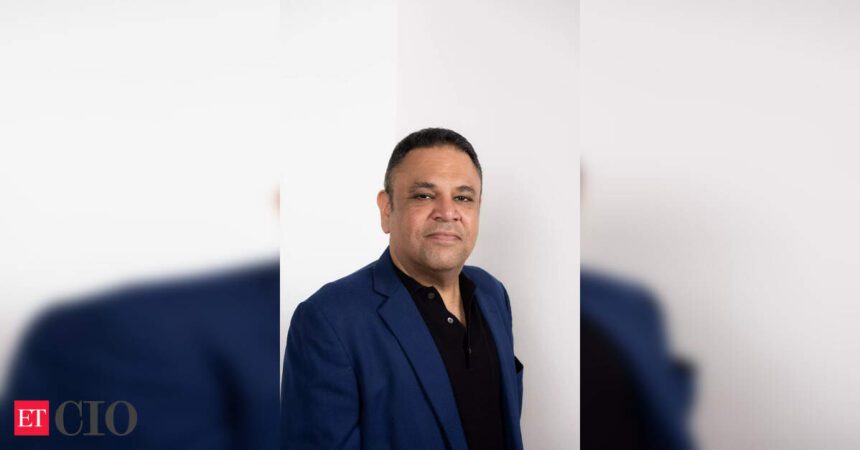
The author is Amit Ramani, CMD, Awfis Space Solutions Limited.
Disclaimer: The views expressed are solely of the author and ETCIO does not necessarily subscribe to it. ETCIO shall not be responsible for any damage caused to any person/organization directly or indirectly.