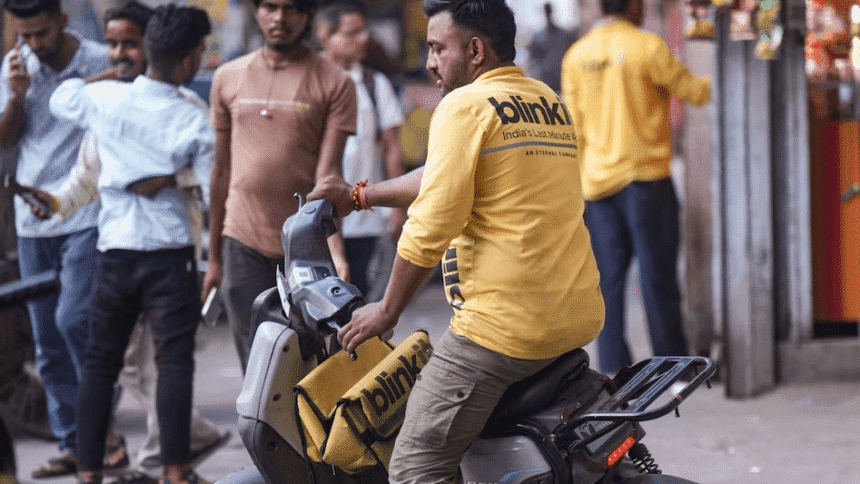
The Telangana Gig and Platform Workers’ Union (TGPWU) and the Indian Federation of App-based Transport Workers (IFAT) have welcomed Union Labour and Employment Minister Mansukh Mandaviya’s intervention to address unsafe “10-minute delivery” targets, following which major platforms have begun withdrawing the practice.
Amid sustained concerns over the safety, health, and working conditions of delivery partners, Union Labour and Employment Minister Mansukh Mandaviya on Tuesday met representatives of leading platforms such as Blinkit, Zepto, Swiggy, and Zomato to discuss rigid delivery timelines. He urged the companies to drop hazardous, time-bound commitments that put workers at risk.
Following the meeting, Blinkit has officially removed the “10-minute delivery” promise from all its branding and platforms. The company has revised its main tagline from “10,000+ products delivered in ‘10 minutes’” to “30,000+ products delivered at your doorstep.”
Other delivery platforms have assured the Government of India that they will remove delivery-time guarantees from their advertising and social media campaigns in the coming days. This move is aimed at enhancing road safety, easing work pressure, and improving overall conditions for gig and platform workers.
In a statement, Shaik Salauddin, Founder President of TGPWU and National General Secretary of IFAT, said, “This is a significant and much-needed step in protecting the lives and dignity of gig and platform workers.”
In a press release, Shaik Salauddin said, “The 10-minute delivery model forced delivery partners into dangerous road behaviour, extreme stress, and unsafe working conditions. This intervention is a victory for all gig and platform workers, especially in the context of the nationwide flash strike and protests held from December 25–31, which highlighted unsafe work practices imposed by platforms.”
On New Year’s Eve, delivery workers across the country stopped work to demand better pay, safety, and social security. Soon after, Zomato founder Deepinder Goyal and others from the start-up and investor community shared posts on X, stating that critics do not fully understand how the gig economy works.
Goyal said, The 10-minute delivery model works because stores are located nearby and orders are packed quickly, not because riders drive faster. He explained that partners usually travel less than 2 km at a normal speed of 15 km/h, and that they do not see the 10-minute promise in their app. However, workers say their pay per delivery has declined, and that they now earn extra only if they complete a fixed number of deliveries or cover longer distances.
The government has claimed that it is working to provide social security benefits to gig and platform workers. Under the new Social Security Code, workers can register on a national list and gain access to healthcare, accident insurance, disability support, and pensions, he added. A special fund will be created for this purpose, with contributions from governments and companies such as Amazon, Flipkart, Swiggy, and Zomato, which will be required to pay 1–2% of their annual turnover, capped at 5% of what they pay workers.
The post Gig workers’ unions welcome govt intervention as platforms drop ‘10-minute delivery’ targets appeared first on Maktoob media.