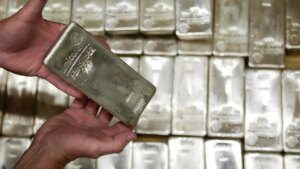
On October 17, gold reached a record high of $4,381.58 per ounce, yet global central banks continued their purchases of the precious metal, according to data released by the World Gold Council (WGC). However, the volume of purchases in 2023 for the January-October period has been lower compared to the previous three years.
“Central bank demand for gold remained robust in October, totalling 53 tonnes (+36% month-on-month) and continuing the strong trend seen throughout the year. Buying remained concentrated among a small number of central banks, led by the National Bank of Poland, which resumed activity during the month,” stated Krishna Gopaul, WGC senior analyst for EMEA (Europe, Middle East, and Africa).
As of October 31, year-to-date reported net purchases totalled 254 tonnes, marking a slower pace relative to the previous three years.
“This possibly reflects the impact of higher prices. Even so, sustained activity from emerging-market central banks—supported by findings from our annual survey—strongly suggests that these purchases are strategic rather than opportunistic, reinforcing gold’s importance amid persistent macroeconomic uncertainty,” Gopaul added.
The National Bank of Poland re-entered the gold market in October after halting its purchases in May. It increased its gold allocation to 30% of its reserves, acquiring 16 tonnes in October and boosting its total gold reserves to 531 tonnes, which accounted for 26% of its total reserves at the end of October prices.
Year-to-date, the National Bank of Poland, with total purchases of 83 tonnes, remains the largest official-sector gold buyer, significantly outpacing Kazakhstan’s purchases, which totalled 41 tonnes.
Additionally, the Central Bank of Brazil made its second consecutive monthly purchase, acquiring 16 tonnes in October following a 15-tonne purchase in September, bringing its gold reserves to 161 tonnes, or 6% of its total reserves.
Other notable purchases included nine tonnes by the Central Bank of Uzbekistan, four tonnes by Bank Indonesia, three tonnes by the Central Bank of Turkey, two tonnes by the Czech National Bank, and two tonnes by the National Bank of the Kyrgyz Republic. The Bank of Ghana, People’s Bank of China, National Bank of Kazakhstan, and the Central Bank of the Philippines each acquired just under one tonne in October.
In contrast, the Central Bank of Russia was the only institution to sell gold, offloading three tonnes to capitalize on the record-high prices, reducing its reserves to 2,327 tonnes.
Gold purchasing remains heavily concentrated among emerging-market central banks, as noted by Gopaul. He mentioned that the National Bank of Serbia plans to increase its gold reserves to at least 100 tonnes by 2030, nearly doubling its current holdings of 52 tonnes.
At the recent London Bullion Market Association conference in Kyoto, Madagascar and South Korea expressed interest in increasing their gold reserves, though they have not provided specific timelines for their plans.
This report was published on December 3, 2025.