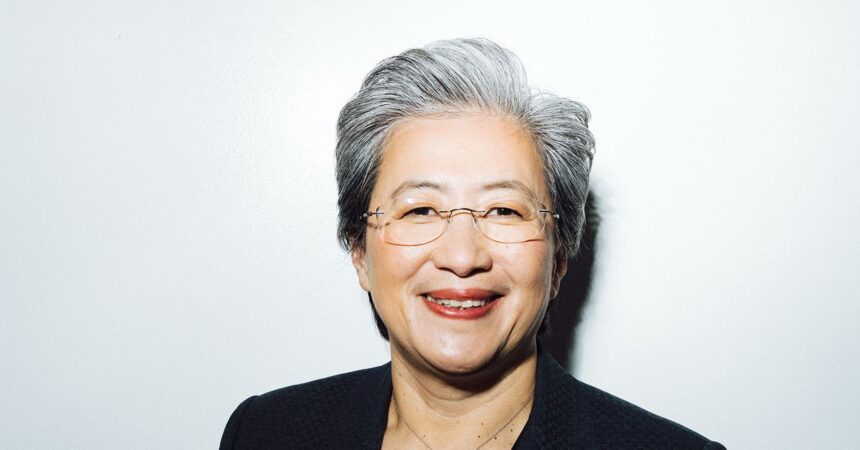
WIRED reported that AMD CEO Lisa Su is intensifying competition with Nvidia, despite AMD being significantly smaller in market capitalization—$353 billion to Nvidia’s $4.4 trillion. Speaking at WIRED’s Big Interview conference in San Francisco, Su addressed concerns regarding the AI industry bubble.
When asked by WIRED senior writer Lauren Goode whether the tech sector is witnessing an AI bubble, Su replied, “emphatically, from my perspective, no.” She asserted that the demand for chips from companies like AMD will be substantial, and she believes fears surrounding a bubble are “somewhat overstated.”
Since taking the helm of AMD in 2014, Su has seen the company’s market capitalization grow from $2 billion to approximately $300 billion. She is now focusing on the increasing need for computing power and data centers to support AI technologies.
However, AMD faces significant challenges. One major obstacle involves the construction of data centers and ensuring widespread availability of its chips. During the panel discussion, Su confirmed that AMD would incur a 15 percent tax on MI308 chips as mandated by the Trump administration for shipments to China. The U.S. had previously halted sales to China but began reviewing applications again over the summer. AMD estimated that these U.S. export restrictions on MI308 chips would set the company back roughly $800 million.
Earlier this year, AMD secured a substantial agreement with OpenAI, where the AI firm will deploy 6 gigawatts of AMD’s Instinct GPUs over several years. As part of this partnership, OpenAI will have the option to purchase 160 million shares of AMD stock at a penny per share, effectively acquiring a 10 percent stake in the company. The deployment of the first gigawatt is anticipated in the latter half of next year.
This agreement is one of several strategic moves AMD is making to capitalize on AI data centers. Su indicated that she is not overly concerned about competition from Nvidia, Google, or Amazon, all of which have their own chip development initiatives. “When I look at the landscape, what keeps me up at night is ‘How do we move faster when it comes to innovation?’” she stated.
Su emphasized that AI is still in its early stages and that AMD must be prepared to meet future demands for chips. She remarked, “As good as the models are today, the next one will be better,” expressing her belief in the vast potential of AI and the importance of continuing to advance the technology.