The chairperson of the African Union Commission on Friday rejected any recognition of Somaliland as an independent state and reaffirmed the continental body’s commitment to Somalia’s unity and sovereignty, amid rising diplomatic tensions over recent developments in the Horn of Africa.
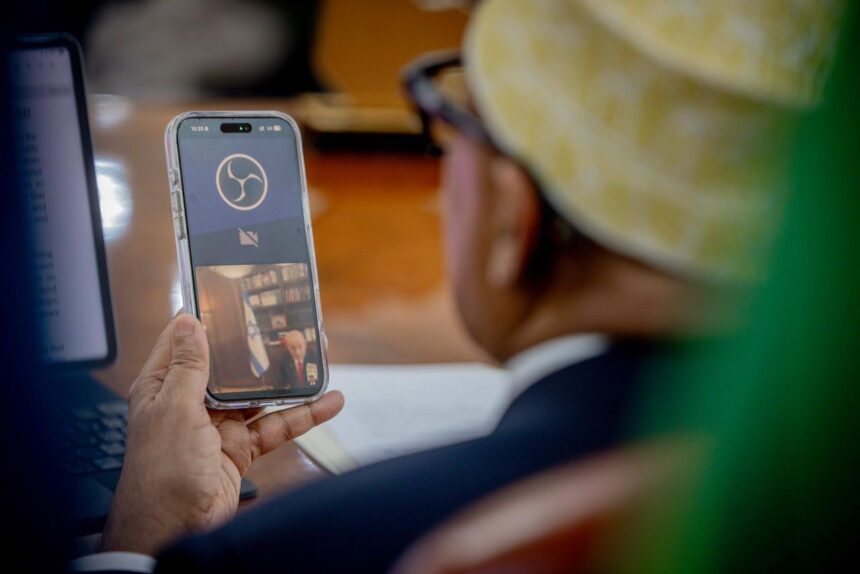
This comes after war crime-accused Israeli Prime Minister Benjamin Netanyahu announced the recognition. Netanyahu framed the diplomatic breakthrough with Somaliland as being in the spirit of the Abraham Accords and said he would champion Somaliland’s cause during his meeting with United States President Donald Trump.
Separately, foreign ministers from more than 20 countries, along with the Organisation of Islamic Cooperation, issued a joint statement condemning Israel’s reported recognition of Somaliland on December 26, calling it a serious violation of international law and the U.N. Charter.
The ministers — representing Jordan, Egypt, Algeria, Comoros, Djibouti, The Gambia, Iran, Iraq, Kuwait, Libya, Maldives, Nigeria, Oman, Pakistan, Palestine, Qatar, Saudi Arabia, Somalia, Sudan, Türkiye and Yemen — said the move threatens peace and security in the Horn of Africa and the Red Sea region and sets a dangerous international precedent.
African Union Commission Chairperson Mahmoud Ali Youssouf said the AU “unequivocally” opposes any initiative aimed at recognising Somaliland, stressing that the region remains an integral part of the Federal Republic of Somalia. He cited the AU’s founding principles, including respect for borders inherited at independence, as affirmed by a 1964 decision of the former Organisation of African Unity.
“Any attempt to undermine the unity, sovereignty and territorial integrity of Somalia runs counter to the fundamental principles of the African Union and risks setting a dangerous precedent,” Youssouf said, warning of potential consequences for peace and stability across the continent.
Youssouf said the AU remains fully committed to Somalia’s territorial integrity and supports Somali authorities’ efforts to consolidate peace, strengthen state institutions and advance inclusive governance.
The statement reaffirmed full support for Somalia’s sovereignty and territorial integrity and rejected any measures that undermine the country’s unity. It also dismissed any linkage between the issue and attempts to forcibly displace Palestinians, calling such actions unacceptable under international law.
What is Somaliland?
Somaliland is a self-declared, but internationally unrecognised, state in the Horn of Africa that lies in the northwestern part of Somalia. It has functioned with its own government, security forces and institutions for more than three decades, but no country formally recognizes it as an independent nation.
Somaliland was a British protectorate until 1960, when it gained independence as the State of Somaliland. Days later, it voluntarily united with the former Italian-administered Somalia to form the Somali Republic. After the collapse of Somalia’s central government in 1991, following years of civil war and repression under dictator Siad Barre, leaders in the northwest declared Somaliland’s independence, citing atrocities committed against the region.
Since 1991, Somaliland has operated as a de facto state, holding elections, maintaining relative stability and issuing its own currency and passports.
Somaliland occupies one of the most geopolitically sensitive locations in the world, sitting along the Gulf of Aden at the mouth of the Red Sea, a maritime corridor linking Europe, the Middle East and Asia. The port city of Berbera is Somaliland’s main strategic asset. The United Arab Emirates, a notable absence in the joint statement, has invested heavily in modernising the port and developing a trade corridor.
The post African Union, OIC countries reject Israel’s recognition of Somaliland appeared first on Maktoob media.