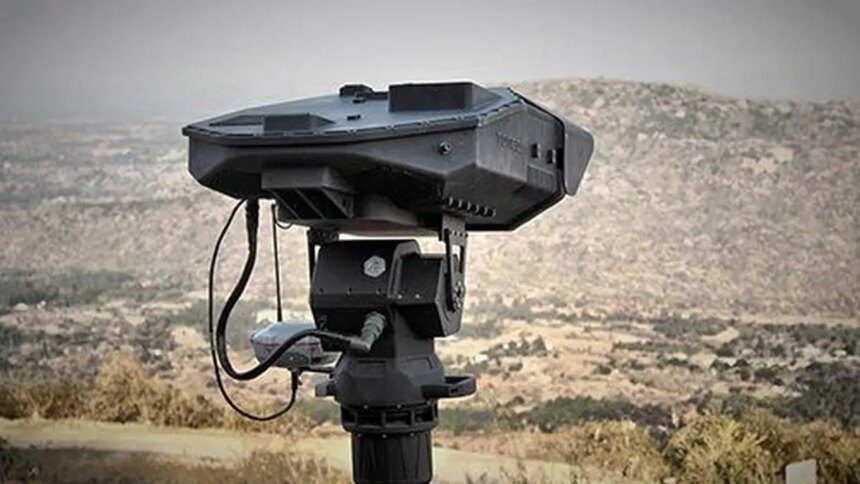

Bengaluru-based Tonbo Imaging is transitioning its military-grade thermal imaging technology for civilian applications, particularly targeting railway and automotive safety. With a significant IPO of ₹852 crore set for October 15, the company aims to diversify its offerings while leveraging its expertise in sensor technologies originally designed for battlefield conditions.
Military Origins and Innovations
Tonbo Imaging has carved a niche in the defence sector with cutting-edge imaging technologies used for applications ranging from drone detection to battlefield surveillance. Their MGS-23 system enhances conventional anti-aircraft guns with thermal imaging and targeting capabilities. Additionally, the company is developing WaveStrike, a high-power microwave technology aimed at neutralizing drone swarms by interfering with their electronics.
Sources familiar with the company’s work indicate that its technologies have been deployed across various military theatres, exhibiting operational readiness in challenging environments. “We don’t make the weapon; we make the eyes and the brains of the weapon,” noted a source close to its defence projects.
Expanding Into Civilian Applications
The shift to civilian applications focuses on advanced driver assistance systems (ADAS) and railway safety. With the ability to identify heat signatures, Tonbo’s technology holds promise for detecting hazards beyond standard visibility. This is particularly crucial on highways and railway corridors, where it can warn locomotive drivers of animals, such as the elephants frequently crossing tracks in Assam.
The company is currently running a pilot project in collaboration with Indian Railways, merging thermal imaging, electro-optical sensors, and radar technologies to enhance railway safety. “We understood two domains very well. We understood defence and we understood autonomous vehicles,” an insider stated, emphasizing their dual expertise.
Financial Landscape and Future Prospects
Tonbo Imaging’s financial outlook appears robust, with a signed order book estimated at ₹290 crore, excluding defence programmes still in qualification processes. Projections indicate a potential revenue of over ₹550 crore by FY27 and nearing ₹1,000 crore in FY28—up substantially from ₹362.65 crore in FY26. The upcoming IPO is primarily an offer for sale, allowing early investors a profitable exit without facilitating new capital influx.
Major investors, including SBI Mutual Fund and HDFC Life, have participated in pre-IPO efforts, contributing around ₹400 crore. The source suggests that broader revenue growth could also lead to future fundraising opportunities, contingent on delivering consistent business performance.
What This Means
The adaptation of military-grade technology for civilian use highlights a growing intersection between defence and commercial sectors in India. As the country invests in modernizing its infrastructure, integrating advanced technologies like those offered by Tonbo could enhance safety across transportation networks. Furthermore, the IPO presents a significant moment for investors seeking exposure to the evolving tech landscape within India, particularly in sectors that are increasingly merging with defence capabilities.
Frequently Asked Questions
What specific technologies does Tonbo Imaging offer for civilian use?
Tonbo Imaging is leveraging its thermal imaging and electro-optical sensors to create systems for advanced driver assistance and railway safety, focusing on hazard detection and animal tracking.
How does the impending IPO impact Tonbo Imaging’s growth strategy?
The ₹852 crore IPO is primarily an offer for sale, allowing existing investors to cash out, while also providing Tonbo with a potential avenue for future expansion based on business performance.
What are the projections for Tonbo’s revenue growth?
Estimated revenues could exceed ₹550 crore by FY27, with potential growth towards ₹1,000 crore in FY28, based on current contracts and market conditions.
How does Tonbo Imaging’s technology relate to national security?
Tonbo’s advanced imaging technologies have been instrumental in enhancing military capabilities and are increasingly seen as valuable in domestic applications, reinforcing safety in transportation and infrastructure.