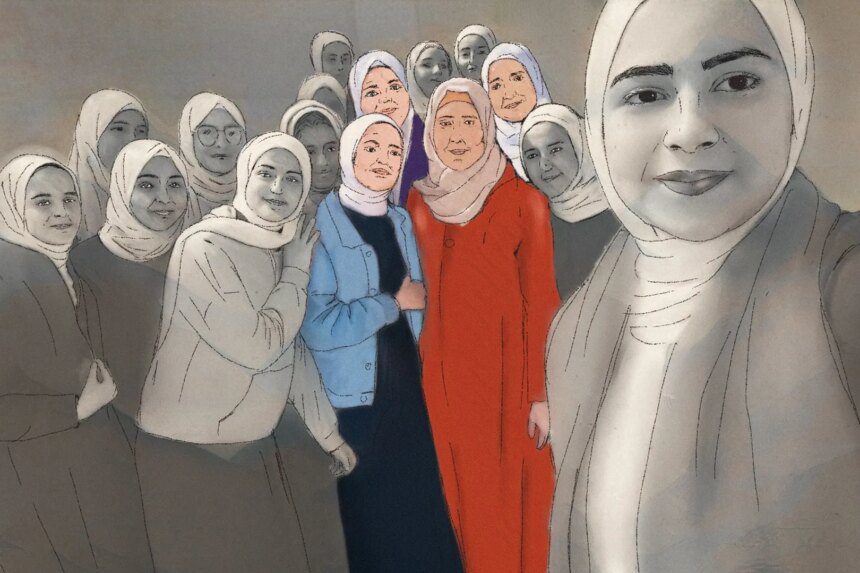

Aya Adnan’s journey reflects the struggle of young women pursuing education in conflict zones. At just 19, she dedicated herself to becoming a doctor, specifically a neurosurgeon, amid rising challenges due to war and personal loss. Her brother Yasser’s support played a pivotal role in her educational pursuits as she navigated unforeseen hurdles that threatened her dreams.
Aya’s Aspirations and Educational Journey
Aya Adnan grew up in Nuseirat, Gaza, where she excelled academically. With 96 percent in her final school exams, she was eager to join a university program that would lead her to a career in medicine. Aya’s determination was heightened by a personal health scare in 11th grade, which exposed her to the world of neurology. However, financial constraints posed a significant challenge to her higher education ambitions.
This obstacle led her to her elder brother Yasser, a lawyer who had built a successful practice. With an age gap of 17 years, Yasser was a father figure to Aya, providing guidance and support. During a visit to the Islamic University of Gaza in August 2023, they explored various educational avenues together. While the suggestion of engineering was proposed, Aya remained steadfast in her desire to wear a white coat—her vision of a medical career.
Shifting Focus Amidst Conflict
Realizing her dream of attending medical school was potentially slipping away, Aya settled for a course in medical laboratory sciences. Despite not fully aligning with her initial aspirations, Yasser encouraged her to view this as an opportunity. His words, “Sometimes what is withheld from us can be better for us than what is given to us,” provided Aya with a renewed perspective.
However, just as her university journey began, war broke out in Gaza, disrupting not only her education but also her family’s stability. The family’s home was severely damaged, forcing them to live in an aunt’s house. Aya’s university timetable was replaced by the urgent daily battles for survival, including sourcing water and preparing meals. All the while, Yasser continued to check on their damaged family home, both to safeguard their possessions and provide a sense of normalcy amidst chaos.
Tragedy and Resilience
The turning point came on December 12, when a missile strike on their home claimed Yasser’s life at just 32 years old. The loss was devastating, and Aya was left haunted by their last conversation. When she returned to the remnants of her home a week later, she discovered the university supplies Yasser had bought her, invoking memories of his support.
Despite her hardships, Aya persevered with remote learning in medical laboratory sciences. This transition was fraught with difficulties, as the practical nature of her major clashed with the lack of resources. Nevertheless, she continued to adapt, embodying resilience in the face of overwhelming challenges, a narrative sadly familiar to many young women in conflict zones.
What This Means
Aya Adnan’s story underscores the pressing need for support and resources for young women in conflict-affected regions. In India, where many areas still struggle with educational access, especially for girls, Aya’s journey serves as a poignant reminder of the resilience required to pursue dreams against all odds. It highlights the importance of familial support, societal acknowledgment, and institutional backing in fostering a conducive environment for education.
Frequently Asked Questions
What challenges did Aya face while pursuing education in Gaza?
Aya faced financial constraints, the impact of war, and the tragic loss of her brother, which greatly affected her educational journey.
What inspired Aya to pursue a career in medicine?
Aya’s personal health challenges in high school ignited her interest in neurology and the broader medical field, motivating her to become a doctor.
How did Aya’s family support her ambitions?
Her brother Yasser played a crucial role by guiding her through university options, providing financial assistance, and encouraging her to believe in her abilities despite setbacks.
What does Aya’s story tell us about education in conflict zones?
Aya’s experience highlights the immense challenges faced by young individuals, especially women, in conflict-affected areas, emphasizing the need for supportive educational programs and resources.