Mass Gathering in Paris: Pope Leo XIV Draws Huge Crowds
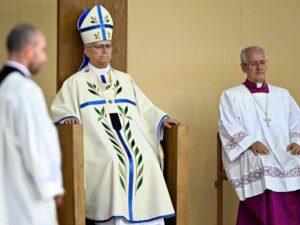
In a historic event, Pope Leo XIV led an open-air Mass at Paris’s famous Champs-Elysees, attended by approximately 800,000 people, significantly exceeding the 600,000 who had registered prior. This gathering marks a significant moment in contemporary religious history, blending spiritual celebration with the political overtones of a country that has grappled with secularism since the early 20th century.
Crowd Enthusiasm and the Pope’s Procession
Responding to the cheers of the crowd, Pope Leo XIV greeted thousands from his popemobile during an impressive 2km (1.2-mile) parade along the grand boulevard, ending at Place de la Concorde. This location was not just significant for its size; it carries historical weight as a site of execution during the French Revolution, where figures like Louis XVI and Marie-Antoinette met their fate.
The imposing stage at Place de la Concorde, adorned with a golden cross, was filled with choir singers and clergy, creating a deeply spiritual atmosphere. This juxtaposition of faith and history in a location symbolizing the French republic stirred mixed emotions among attendees and observers alike.
Controversy Over Venue Choice
While the event was celebrated by many, it has also faced criticism stemming from France’s long-standing commitment to secularism, rooted in the 1905 law that separates church from state. Critics argue that Place de la Concorde symbolizes the republic and has historically hosted national celebrations like Bastille Day, making it an inappropriate venue for a religious gathering.
Alternative locations, such as Les Invalides, previously used for similar events—most notably by Pope Benedict XVI in 2008—were suggested as more suitable options. This debate highlights the ongoing tensions in France regarding the role of religion in public spaces, a conversation that resonates with India’s own discussions about secularism and cultural identity.
What This Means
The gathering of such a large crowd in Paris serves as a reminder of the enduring influence of religion in public life, despite secular policies. For Indian readers, it raises important questions about the intersection of faith and politics, especially in a nation like India, where religious identity plays a pivotal role in social dynamics. Understanding these events can provide insights into how different countries navigate the balance between tradition, public celebration, and national identity.
Frequently Asked Questions
Why did Pope Leo XIV hold Mass at the Champs-Elysees?
The venue allowed for a large gathering to celebrate faith openly, which reflects both the pope’s influence and the historical significance of the location in France.
What is the historical significance of Place de la Concorde?
Place de la Concorde is historically significant as it was the site of numerous executions during the French Revolution, including those of royal figures like Louis XVI and Marie-Antoinette, making it a powerful symbol of French republicanism.
What are the challenges of holding religious events in secular countries?
In secular countries like France, holding religious events in public spaces can spark debate over the separation of church and state, as these gatherings may be perceived as undermining secular values.
How do religious gatherings in India compare to those in France?
India, with its diverse religious tapestry, often sees large public gatherings for religious celebrations. However, similar tensions arise concerning communal harmony and secularism, paralleling the debates occurring in France.