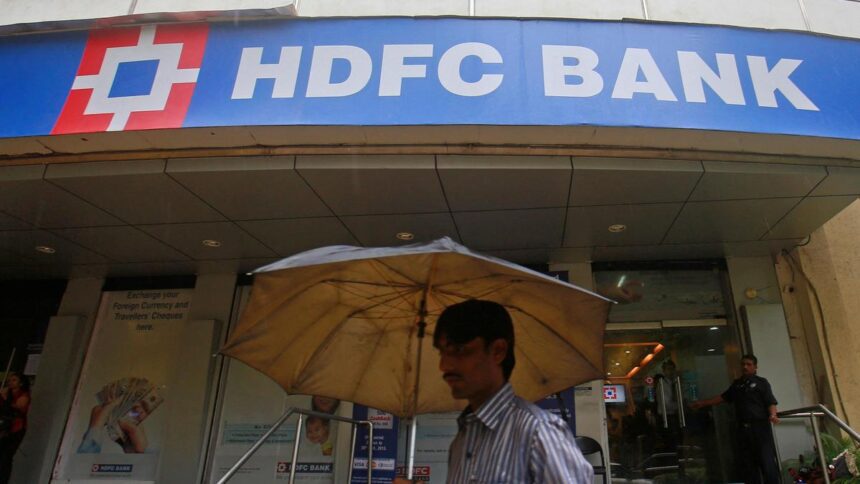

HDFC Bank’s shares showed a modest upward movement on Wednesday, rising by 0.41% to ₹741.65. Despite this gain, the stock continues to struggle, with a year-to-date decline exceeding 25% and a substantial gap from its recent 52-week high of ₹1,020.50 recorded in October 2025. Analysts are focused on the potential for recovery, especially following bullish commentary from UBS regarding the stock’s future performance.
Current Stock Performance
On Wednesday, HDFC Bank’s stock began trading at ₹735.65 on the National Stock Exchange (NSE) and reached an intraday high of ₹742.80. The stock’s low for the day was recorded at ₹734.00, with a significant trading volume of 131.70 lakh shares, translating to a traded value of ₹973.48 crore. Notably, the bank’s total market capitalization has reached ₹11.43 lakh crore, signaling the scale and impact of the institution within the Indian banking sector.
Market Sentiment and Analyst Ratings
The sentiment surrounding HDFC Bank’s stock remains mixed. Existing sell-side pressure is evident, with a substantial 68.75% of the order book situated on the sell side, compared to just 31.25% on the buy side. This trend raises concerns over investor confidence, yet the stock has attracted positive attention from analysts. UBS recently assigned a “Buy” rating, setting a price target of ₹1,000. The brokerage cited several factors, including the likely resolution of the CEO succession issue, aggressive branch expansion plans, and projections indicating an improvement in loan growth to 15% over the fiscal years FY27-29.
Upcoming Events and Expectations
Investor focus is also gearing up for HDFC Bank’s Q2 results, which are scheduled for release on October 17, 2026. This upcoming announcement is likely to be scrutinized for insights into the bank’s performance in a challenging economic environment. Analysts anticipate that clear indicators of loan growth and stability in margins, forecasted to recover to 3.5%, will play a significant role in shaping investor sentiment going forward. Earlier, UBS pegged the bank’s return on assets at 1.9% by FY28, suggesting the potential for improved profitability if current strategies are successfully executed.
What This Means
The stock’s ongoing volatility reflects broader trends in the Indian banking sector, which have been influenced by external economic conditions and internal management changes. HDFC Bank’s challenges resonate with many financial institutions navigating these turbulent times. The supportive outlook from UBS indicates that market analysts believe in the bank’s future growth potential, though the current stock performance points to a cautious investor base. For Indian investors, understanding the reasons behind the company’s sluggish stock performance, especially ahead of key earnings reports, is crucial for informed decision-making.
Frequently Asked Questions
What are the recent developments affecting HDFC Bank’s stock price?
HDFC Bank’s stock price has been influenced by market conditions, sell-side pressure, and positive analyst ratings. Notably, UBS’s “Buy” rating and projected loan growth have created a mixed investor sentiment.
When will HDFC Bank release its Q2 results?
HDFC Bank is scheduled to announce its Q2 results on October 17, 2026. This upcoming report is highly anticipated by investors.
What is the significance of HDFC Bank’s market capitalization?
With a market capitalization of ₹11.43 lakh crore, HDFC Bank remains one of the largest banks in India, showcasing its significant influence on the financial sector.
What does the analyst forecast imply for HDFC Bank’s future?
Analyst forecasts, such as UBS’s target price of ₹1,000, suggest optimism regarding HDFC Bank’s potential recovery and growth, particularly if loan growth improves and management issues are resolved.