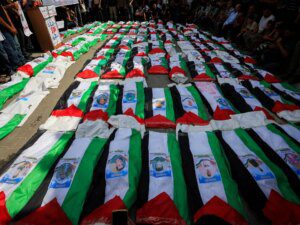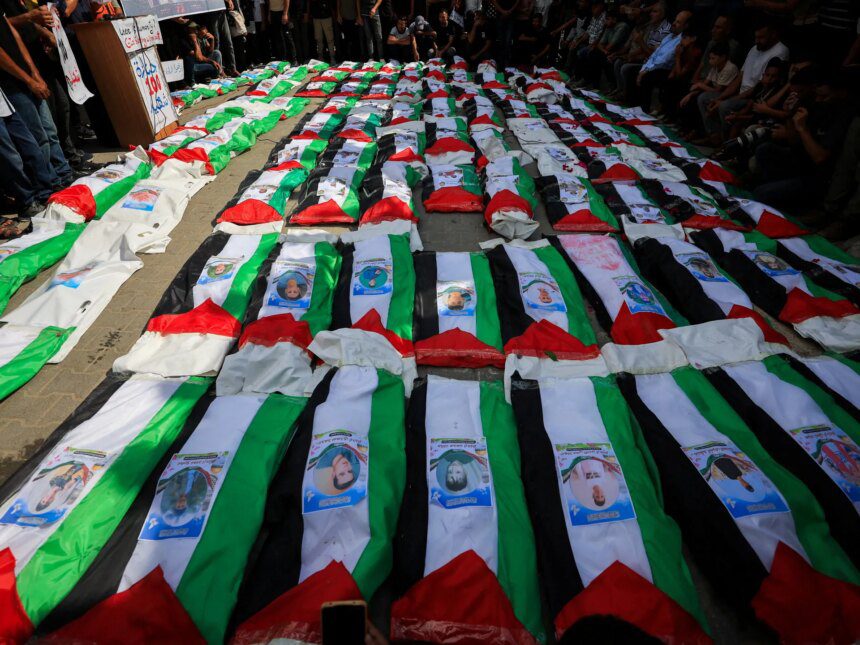

In a tragic event that underscores the ongoing humanitarian crisis in Gaza, a funeral was held for 100 victims recently recovered from the rubble of destroyed homes in the Zeitoun neighbourhood. This incident reflects the severe toll of prolonged conflict and the staggering loss of life, with Gazan officials reporting tens of thousands of fatalities since late 2023.
The Mass Funeral in Gaza
On Sunday, thousands of Palestinians gathered to pay their respects as families mourned the loss of their loved ones during a solemn funeral procession in Gaza City. The recovered remains, draped in Palestinian flags, were laid out near the ruins that once housed their homes. Among the deceased were members of the Rahim, Balawi, Malaka, Qanbour, and Salmi families, who lost their lives due to Israeli military strikes approximately two and a half years ago, as stated by local authorities.
Scale of Human Tragedy
The event highlights a dire situation, with reports indicating that similar recovery operations in recent weeks have unearthed over 100 bodies from separate incidents involving the Abu Shariah and Hassaniya families, who perished in a single aerial strike. Additionally, recovery efforts have tallied more than 500 bodies from the fallout of the al-Taj Tower, part of an extensive and painful retrieval operation following prior military actions.
According to the Gaza Health Ministry, the spiraling violence since October 2023 has resulted in at least 73,651 deaths and over 174,592 injuries among the Palestinian population. These staggering statistics reflect the human cost of conflict and the urgent need for international intervention.
Broader Context of the Conflict
The ongoing Israel-Palestine conflict has roots extending back over a century, characterized by frequent escalations and prolonged periods of violence. The recent surge in fatalities and the mass recovery of bodies signify a particularly brutal phase of this conflict. Beyond the immediate loss of life, the psychological and infrastructural ramifications for the Palestinian people are profound and ongoing.
For many families, the loss of multiple members in a single strike represents not just a personal tragedy but a broader narrative of suffering that extends across communities in Gaza. The international community remains divided on how to address these humanitarian crises, often complicating relief efforts and exacerbating the plight of civilians caught in conflict.
What This Means
For Indian readers, the events in Gaza resonate deeply, given India’s historical stance on seeking peace and justice in conflict zones globally. The mass funeral serves as a stark reminder of the urgent humanitarian situation and the need for dialogue and resolution to end such suffering. In an era where global conflicts are increasingly intertwined, India, with its diplomatic reach, has a significant role in advocating for peace and supporting humanitarian initiatives.
Frequently Asked Questions
What has caused the recent surge in casualties in Gaza?
The surge in casualties can be attributed to intensified military operations and strikes by Israeli forces, affecting residential areas significantly and leading to a high number of civilian deaths.
How does the international community respond to the situation in Gaza?
The international community remains divided, with calls for emergency humanitarian aid often overshadowed by political disagreements on the conflict’s resolution, limiting effective intervention.
What can be done to support humanitarian efforts in Gaza?
Supporting humanitarian organizations that provide aid to affected families, advocating for ceasefire agreements, and promoting dialogue are critical approaches to alleviating the suffering in Gaza.
Is there any role for India in addressing the Israel-Palestine conflict?
India has historically supported Palestinian self-determination and has engaged in diplomatic efforts to encourage peaceful resolutions, suggesting a potential role in facilitating discussions and aid efforts.