
Summary
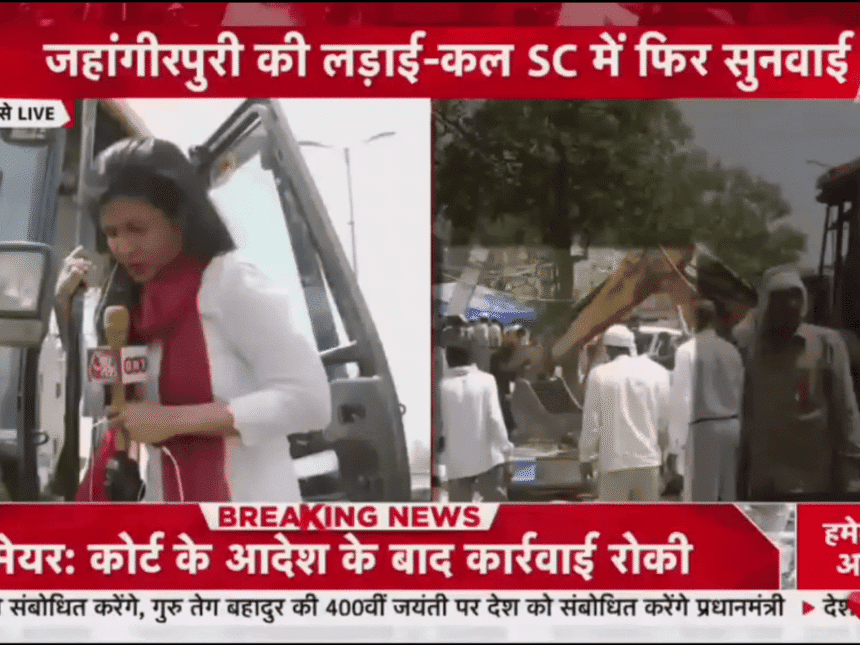
Aaj Tak anchor Anjana Om Kashyap was recently seen reporting live from a bulldozer involved in demolishing illegal constructions in Jahangirpuri, New Delhi. Her interactions with local residents and the ongoing demolition sparked significant discourse around the legal and social implications of such actions amid ongoing tensions in the area.
Kashyap’s Bulldozer Ride: A Live Report
During a live broadcast, Kashyap climbed onto a bulldozer to provide viewers with real-time visuals of the demolition process. Engaging with the driver, she positioned herself to convey the unfolding situation directly to her audience. “You are now watching live images from the crane that is going to demolish an illegal construction,” she stated, illustrating the dramatic nature of the event. The act of reporting from such a setting stirred various reactions, raising questions about the media’s role in contentious civic matters.
Local Voices: Tensions and Discontent
In another segment of her report, Kashyap approached local residents who were protesting the demolition orders. One visibly agitated resident questioned, “If the Supreme Court has given the order to stop the demolition, why is it still being carried on?” This reflects the community’s outrage and confusion regarding legal rulings versus ground actions. In a subsequent interaction, another resident, Sonu, articulated the harmonious relationship between Hindu and Muslim communities in the area, stating, “We are Hindus. We have been living in harmony with our Muslim neighbors.” However, Kashyap interrupted him, implying a directive from law enforcement to evacuate the area. This scene captures the essence of local grievances amidst broader political and legal disputes.
Media’s Role in Political Narratives
The incident raises critical questions regarding the media’s involvement in portraying sensitive issues. Kashyap’s decision to film from the demolition site may signal a sensationalist approach aimed at garnering viewer engagement. This aligns with a growing trend among Indian media to adopt provocative reporting styles when covering communal and civic unrest. The interactions she had with residents, marked by a swift dismissal of their concerns, highlight the complexities of media representation in a politically charged environment.
Why This Matters
The ongoing demolitions in Jahangirpuri and other areas are emblematic of larger systemic issues in India—housing rights, communal tensions, and the interface between legal frameworks and grassroots realities. Observers note that the aggressive demolition drive has raised alarms about potential discrimination against minority communities, particularly in urban contexts where housing is a contentious issue. Kashyap’s live reporting may contribute to a broader narrative regarding the treatment of marginalized groups in India, impacting public opinion and political discourse. How the media portrays these events can significantly influence perceptions of justice, governance, and social harmony.
Frequently Asked Questions
What sparked the demolitions in Jahangirpuri?
The demolitions were part of a crackdown by local authorities claiming to target illegal constructions in the area, have been met with significant public outcry and legal challenges.
What is the stance of local residents on the demolitions?
Residents have expressed anger and confusion, particularly in light of judicial orders purportedly halting demolitions, leading to questions about the rule of law and public safety.
How does this situation relate to broader communal tensions in India?
The demolitions have underscored existing communal divides between Hindu and Muslim communities in the region, raising concerns about housing rights and equitable governance.
What role does media play in such situations?
Media coverage, such as that by Anjana Om Kashyap, can shape public narratives and influence community perceptions, often reflecting broader societal trends in sensationalism and activism.