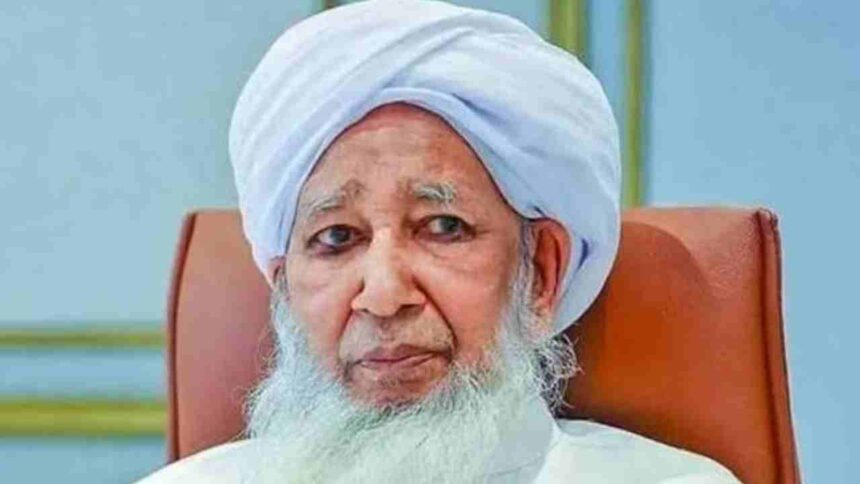

Abubakar Musliyar, a prominent Islamic cleric from Kerala, has sparked controversy with his recent statements advocating for the confinement of women to their homes. His remarks, delivered during an Islamic conference in Kochi, have drawn significant backlash from political leaders and women’s rights advocates, asserting the need for societal progress and gender equality.
The Controversial Remarks
During the conference, Musliyar, who holds the position of general secretary of the Sunni-Shafi’i Islamic intellectual council ‘Samastha Kerala Jamiyyathul Ulama’, emphasized that the Quran implies women should remain out of the public eye. He argued that public participation by women leads to societal destruction and reinforced his stance by referencing the ‘purdah’ culture inherent in Islam as a protective measure. Musliyar stated, “The Quran has made it clear that women should live confined to their homes and should not be seen in public.”
Public and Political Response
The comments have been met with severe criticism from local political figures. Kerala’s Women and Child Welfare Minister Bindu Krishna and CPM leader PK Smriti were vocal in their opposition, stating, “Those dark days are gone.. know that.” Such remarks have been interpreted as an affront to women’s dignity and progress in Kerala and beyond. The ongoing debate raises critical questions about the place of religious interpretations in contemporary society and the need for reform in gender relations.
The Larger Context of Discrimination and Exclusion
This incident highlights a broader issue of gender discrimination and the marginalization of women in various societal frameworks, particularly within religious contexts. In recent years, women in India, and particularly Muslim women, have experienced significant discrimination both socially and economically. This encompasses societal pressures, restrictions, and unequal access to opportunities, compounded by existing religious constructs that often silence women’s voices. The sidelining of women in public discourse not only affects their social stature but also perpetuates cycles of economic and educational exclusion.
Why It Matters
The implications of such statements and societal attitudes are profound. They affect the socio-economic fabric of communities and can contribute to long-lasting inequities. The marginalization of Muslim women, specifically, raises important questions about gender rights and the role of tradition in modern governance. The tensions between religious beliefs and contemporary human rights standards necessitate critical dialogue and reform to promote equality and ensure that female voices and contributions are recognized and valued in all aspects of life.
Frequently Asked Questions
What are the implications of Abubakar Musliyar’s remarks?
His remarks contribute to a prevailing mindset that may inhibit women’s participation in society, echoing larger issues of gender inequality and social exclusion that affect not only Muslim women but society as a whole.
How have political leaders responded to these comments?
Prominent Kerala politicians, including Women and Child Welfare Minister Bindu Krishna, have condemned Musliyar’s remarks, asserting the necessity for women’s rights and denouncing any regressive views.
What broader issues does this incident touch upon?
This incident illustrates deep-rooted gender discrimination within religious and cultural frameworks, raising concerns about women’s access to public life, education, and economic opportunities.
Why is there a need for reform in these areas?
Reform is necessary to align cultural practices with modern human rights standards, ensuring that all individuals, regardless of gender, can participate fully and equally in public life and decision-making processes.