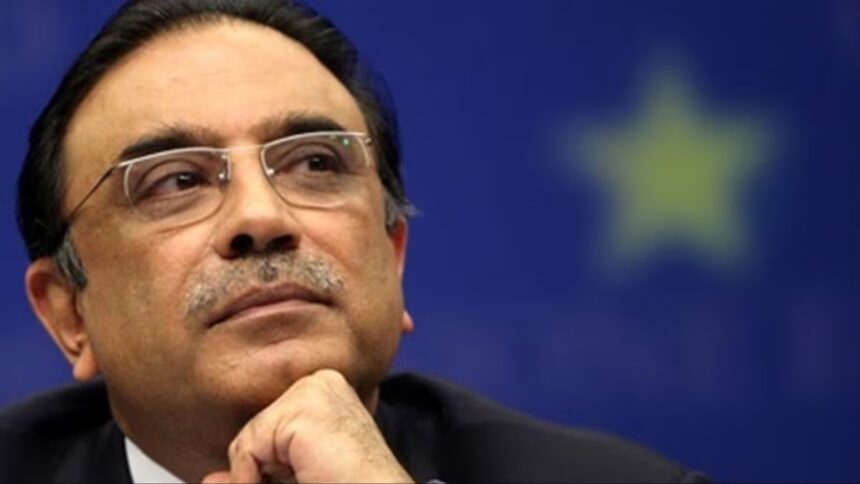

In a recent address on Pakistan’s Independence Day, President Zardari discussed the historical and cultural dynamics between Pakistan and India, focusing particularly on the recent implications for religious minorities in both countries. His remarks come amidst growing tensions and evolving narratives surrounding identity and tolerance in South Asia.
Historical Context of Pakistan-India Relations
President Zardari spoke at a ceremony marking the construction of a monument in Pakistan, commemorating what it terms a “remarkable triumph in Marka-e-Haq,” referring to the 2025 military conflict with India. This context indicates ongoing challenges and rivalries that dominate the relationship between the two nuclear-armed nations. Zardari emphasized the contrasting outlooks of India and Pakistan, invoking India’s expansive nationalistic ideology of ‘Akhand Bharat,’ which envisions a greater India inclusive of Pakistan. He expressed concern that many historical lessons pertinent to both nations have been overlooked in contemporary discourse.
Minority Rights and Religious Dynamics
During his speech, Zardari claimed, “We are Muslims of the mindset that we tolerate,” while addressing how Pakistan treats its Hindu community. He posited that Pakistan’s Hindu minority—approximately 1.61% according to the latest census—enjoys a degree of freedom not typically found in other regions. This claim was positioned against a backdrop of tension, notably amid criticism of India’s treatment of its Muslim population, suggesting a perceived contrast between the two nations’ governance and social strategies. Zardari further stated that the Hindus in Pakistan would prefer to remain within its borders rather than align with India, hinting at an ongoing local identity crisis impacted by national limits on religious freedom.
Census Data and Demographic Discrepancies
The President’s assertions were backed by data, albeit with discrepancies in reported figures regarding Pakistan’s Hindu population. While Zardari estimated the Hindu demographic at “three to four per cent,” the 2023 Census reveals this figure to be closer to 1.61%. The official statistics detail 3,867,729 Hindus, plus an additional 1,349,487 individuals categorized as Scheduled Castes. Collectively, these demographics comprise about 2.17% of Pakistan’s population of 240.46 million, emphasizing that the reality of the Hindu community’s size and influence is more complex than implied by Zardari’s claims. Notably, this group is predominantly located in the Sindh province, raising important questions about regional disparities and religious freedoms.
Why It Matters
The conversation surrounding minority rights in Pakistan, as highlighted by President Zardari, holds significance for the broader South Asian context, reflecting ongoing issues of social inclusion and discrimination. As religious nationalism rises in both India and Pakistan, these narratives contribute to the global discourse on tolerance and coexistence in multicultural societies. Understanding these dynamics is crucial for international observers, policymakers, and social developers seeking to foster dialogue and policies that promote inclusivity while addressing systemic marginalization faced by religious minorities in both countries.
Frequently Asked Questions
What is the significance of Zardari’s comments on Hindu tolerance in Pakistan?
Zardari’s remarks aim to illustrate Pakistan’s self-identity as a tolerant state, particularly in contrast to India’s perceived exclusionary policies towards Muslims. This reflects ongoing efforts to define national identity against historical grievances.
How does the Hindu population in Pakistan compare to that in India?
In Pakistan, Hindus make up approximately 1.61% of the population, while India’s Muslim population accounts for about 14% of its totals. Both nations have witnessed significant challenges regarding the treatment of religious minorities.
What role does the census play in understanding minority populations?
Census data provides critical insights into the demographic compositions of nations, highlighting differences in representation and access to rights, which can influence public policy and social dynamics.
How does nationalism influence minority rights in South Asia?
Nationalist ideologies like ‘Akhand Bharat’ in India and similar sentiments in Pakistan often contribute to the marginalization of religious minorities, framing them within larger narratives of identity and nationhood. These discourses can result in social exclusion and discriminatory practices.