
Strengthening Religious Activities Among Thai Muslims
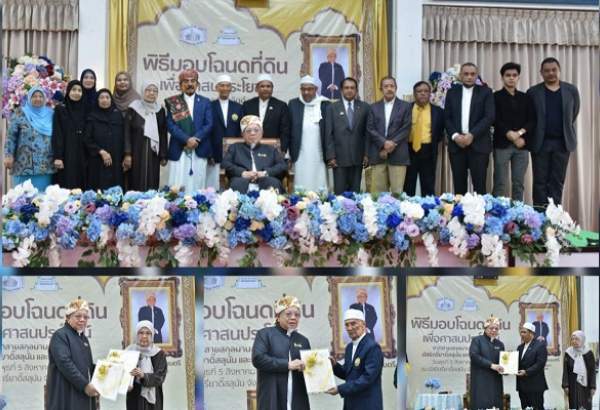
Sheikh “Arun Boonchom,” the Sheikh al-Islam of Thailand, has taken a significant step toward bolstering the religious engagement of Thai Muslims by overseeing the transfer of waqf land documents for two mosques in Nonthaburi province. This initiative illustrates the critical role of waqf in supporting the Muslim community’s religious and social fabric.
Legacy of Waqf in Thailand
The recent ceremony marked the handover of ownership documents from “Jintana Yuthasamut,” representing the Manajit family, to the representatives of “Riyadh al-Sunnah” Mosque and “Bang O” Mosque. This land, endowed by the late “Suratana Manajit,” is a direct implementation of a benevolent will aimed at serving future generations. The significance of this act lies in its potential to sustain various religious and social activities, as the properties become waqf assets for the mosques.
The Historical Context of Nonthaburi
Nonthaburi, located northwest of Bangkok, is known for its longstanding Muslim presence in central Thailand. The province is home to several historical mosques and religious centers that have underscored the importance of waqf in facilitating not just religious duties but also educational and social services. These assets help preserve and promote the Islamic faith, ensuring that cultural traditions are passed down through generations.
The Role of Waqf in Sustainable Development
Waqf serves as a crucial foundation for sustainable religious and social development within the Muslim community. This practice transforms charitable contributions into enduring assets, allowing different generations to reap its benefits while promoting a culture of sustainable philanthropy. The recent actions taken by the Sheikh al-Islam of Thailand exemplify this ongoing effort to secure resources for mosques, thus reinforcing the community’s capacity for self-sufficiency in religious education and social outreach.
Why It Matters
This initiative highlights the growing importance of waqf as a critical mechanism for social cohesion and resource allocation within the Muslim community in Thailand. As local governments increasingly face challenges regarding religious freedoms and community engagement, waqf offers a path toward securing autonomous funding for religious purposes. It serves as a model for similar communities worldwide, showcasing how established practices can generate sustainable support systems, ultimately enhancing social stability and resilience in the face of external pressures.
Frequently Asked Questions
What is waqf?
Waqf is an Islamic philanthropic practice involving the endowment of assets for religious or charitable purposes, creating lasting financial support for mosques and community services.
Why is waqf important for mosques?
Waqf provides sustainable resources that enable mosques to continue their religious, educational, and social activities, ensuring their long-term viability and community service.
How does this event reflect on community support?
The ceremony in Nonthaburi exemplifies community commitment and initiative to secure resources for future generations, highlighting the importance of local engagement in preserving cultural and religious practices.
What challenges do Thai Muslims face today?
Thai Muslims may encounter issues related to discrimination, social exclusion, and limited access to resources and opportunities, exacerbated by broader socio-political dynamics in the region.