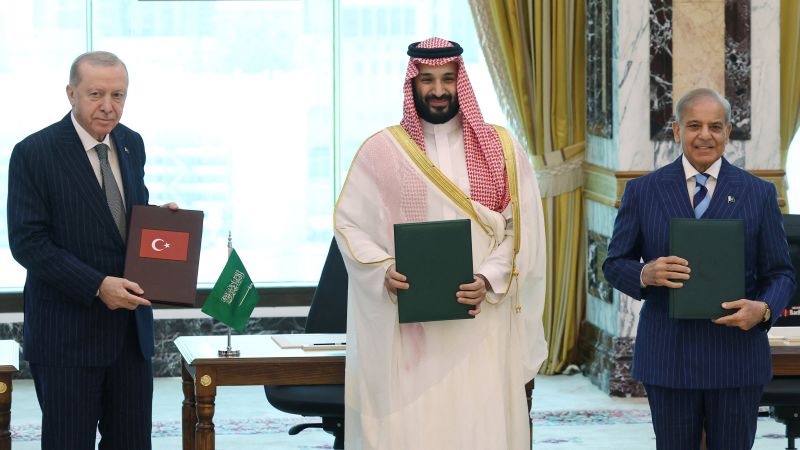

Saudi Arabia has forged a significant mutual defense pact with Pakistan and Turkey amid escalating tensions with Iran, marking a new chapter in regional security cooperation. The agreement, which draws two of the Muslim world’s military powers into a collective-defense alliance, aims to provide robust deterrence against potential Iranian aggression.
The New Defense Pact: Key Details
On July 29, 2026, during a meeting in Mecca, Pakistan and Turkey formalized a NATO-style mutual defense pact with Saudi Arabia. This alliance stipulates that an attack on any of the three nations “shall be regarded as an attack on them all.” The pact consolidates their longstanding security ties into a collaborative framework aimed at deterring aggression, particularly from Iran, which has historically targeted Saudi infrastructure during ongoing conflicts.
This agreement represents an unprecedented departure from traditional alliances, adding layers of security beyond the existing Saudi-U.S. partnership. It reflects growing doubts within the Gulf region regarding the reliability of U.S. protection in light of escalating regional hostilities and challenges posed by Iranian interventions in Iraq and Yemen.
Strategic Implications of Increased Military Cooperation
The pact enhances Saudi Arabia’s military capabilities by leveraging Turkey’s position as NATO’s second-largest military and Pakistan’s status as a nuclear-armed nation. This collective military front also suggests a united stance against the Iranian threat, which includes Iranian-backed militias in both Iraq and Yemen, posing significant risks to regional stability.
While the rationale behind this treaty centers on “strengthening collective deterrence,” its actual implications could potentially draw both Pakistan and Turkey into a conflict they have historically avoided. Analysts question the level of military commitment this agreement entails, noting that technical specifics have yet to be disclosed.
Tehran’s Reaction and Broader Regional Tensions
The Iranian response to the newly signed pact has been critical, with officials asserting that such agreements will not ensure Saudi security. Ebrahim Rezaei, a member of Iran’s parliament, remarked that “a paper agreement with Turkey and Pakistan will not bring them security,” alluding to the long-standing dependency of Saudi Arabia on U.S. support, which has often yielded limited results.
As the conflict in Yemen persists and Iranian-backed militants continue targeting Saudi territory, the risk of a major military confrontation looms large. The recent developments indicate that Tehran is likely to view this alliance as a direct challenge, potentially escalating its involvement against the backdrop of the ongoing war.
Why This Is Trending
Indians are currently searching for updates on this matter due to its implications for regional stability and their own national security interests. With strategic alliances influencing global dynamics, understanding the nature of these new military pacts is crucial. Furthermore, India’s historical ties with both Pakistan and Saudi Arabia add layers of complexity to the situation, compelling Indian analysts and policymakers to monitor developments actively.
Frequently Asked Questions
What does the mutual defense pact entail?
The pact establishes a collective defense framework among Saudi Arabia, Pakistan, and Turkey, wherein an attack on one will be considered an attack on all three, enhancing their military collaboration and deterrence capabilities.
Why are Pakistan and Turkey joining this pact with Saudi Arabia now?
The agreement comes in response to escalating tensions with Iran and aims to ensure mutual protection amidst increasing regional insecurities related to Iranian military actions.
How is Iran reacting to this development?
Iran has expressed dissatisfaction, with officials arguing that such agreements will not enhance Saudi security. They maintain that previous U.S. support has also failed to deliver deterrence against threats.
What are the broader implications of this pact?
This agreement could shift the balance of power in the Middle East, potentially leading to greater regional instability, especially if it draws Pakistan and Turkey into conflicts where they have previously maintained distance.