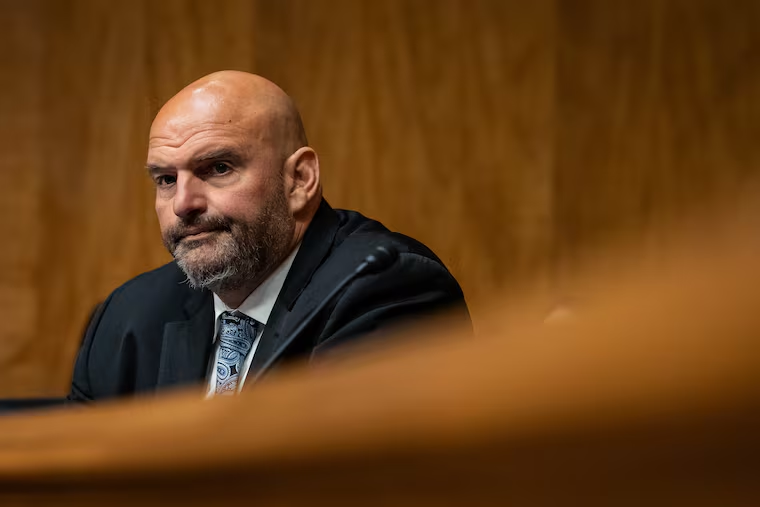

Senator John Fetterman recently engaged in a tough interview with comedian Jon Stewart, defending his controversial stance on Israel amidst the ongoing Gaza conflict. The exchange revealed Fetterman’s firm allegiance to Israel, despite significant moral concerns about civilian casualties, drawing criticism from Stewart and raising questions regarding his alignment within the Democratic Party.
Fetterman’s Position on Israel and Gaza Conflict
Sitting down for a detailed discussion on The Weekly Show with Jon Stewart, Fetterman, a Democrat from Pennsylvania, stood resolute in his support for Israel. He emphasized that the moral compass guiding U.S. support is imperative in countering Hamas following the attacks on October 7, 2023, which ignited the current conflict. Fetterman characterized civilian casualties as “collateral damage,” asserting that strikes against Hamas were justified despite the troubling impact on Palestinian civilians.
Jon Stewart, known for his candid critiques, countered Fetterman’s assertions by likening them to a “caricature” of the more progressive voices within the Democratic Party. He pressed the Senator on the implications of aligning closely with a foreign ally while substantial civilian suffering occurs as a consequence.
Fetterman’s Relationship with Democratic Party Ideals
Fetterman’s unwavering support for Israel contrasts sharply with a growing dissent among other Democrats who have begun distancing themselves from the Israeli government. The Senator has acknowledged that his stance has alienated him from his traditional base, stating, “I’m aware that if I happen to disagree with the party line, there’s a price to pay.” He pointed out that the divergence in views has had negative ramifications on his popularity within party circles.
During the interview, Stewart suggested that Fetterman’s focus on critiquing his own party might just reinforce Republican stereotypes about Democrats, asking why he refrained from harsher criticisms of Israel’s “ultra-right-wing government.” This differentiation plays a crucial role in understanding the current political landscape in the U.S. and the challenges that moderate politicians face.
The Dynamics of Political Discourse
The interview is notable for revisiting the discomfort many feel regarding the broader implications of U.S. foreign policy. As both Fetterman and Stewart discussed what they perceive as the Democratic Party’s brand issues, it becomes evident that navigating political rhetoric has become increasingly complex. Wading through these waters illustrates how deeply polarized opinions are on international issues like the Israeli-Palestinian conflict.
Fetterman’s self-proclaimed intent to tackle “extreme” elements within the Democratic Party highlights a critical struggle. He indicated that his aim is to bolster Democratic prospects in pivotal elections while avoiding the extremes that have recently characterized some party discourses. Yet, Stewart’s probing questions highlight the possible ramifications of this approach, as he urges Fetterman to consider fresh perspectives, including from the more left-leaning factions of the party.
Why This Is Trending
This interview has garnered significant attention in India as people become increasingly aware of global political climates and the interconnectedness of international relations. With rising awareness about humanitarian issues and foreign policy implications of Western countries, many Indians are seeking insights into U.S. political figures like Fetterman. The discussion of moral responsibility concerning international support, especially as it pertains to crises like the Gaza conflict, resonates with an audience sensitive to global humanitarian concerns. The intersection of American politics with global issues creates a fertile ground for debate and analysis, particularly among Indian audiences striving to comprehend the international implications of U.S. foreign policy.
Frequently Asked Questions
What did John Fetterman say about Israel’s military actions?
Fetterman maintained that supporting Israel’s actions against Hamas is critical, describing the civilian casualties as “collateral damage” but not a genocide.
Why did Jon Stewart criticize Fetterman during the interview?
Stewart challenged Fetterman for his strong support of Israel, arguing that it illustrated a disconnect with the moral responsibilities regarding the humanitarian crisis affecting Palestinians.
How has Fetterman’s position impacted his political standing?
Fetterman has acknowledged that his firm stance on Israel has resulted in losing support from segments of the Democratic base as his interests diverged from prevalent party lines.
What does the exchange imply about U.S. political dynamics?
The tension seen in the discussion underscores the complexities within U.S. political discourse, particularly as moderates navigate their positions amid increasing partisanship on crucial international issues.