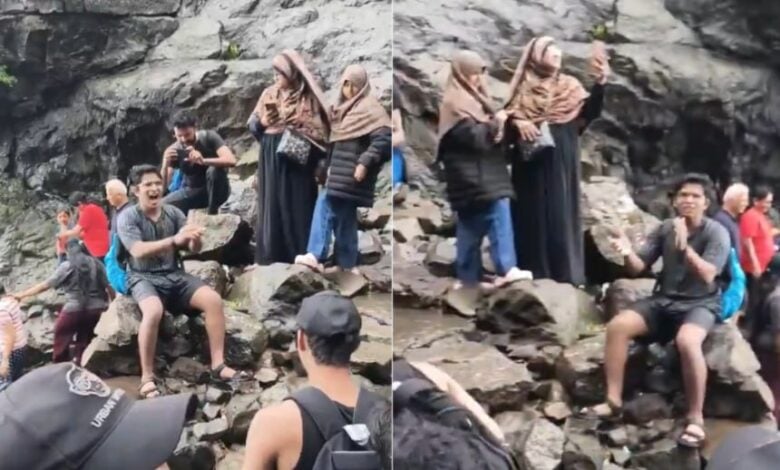

A recent incident at Naneghat Reverse Waterfalls in Maharashtra highlights ongoing tensions between various communities in India, particularly involving the expressions of nationalist sentiments. A Muslim family experienced discomfort due to Hindutva chants and poetry recitations at a popular tourist site, raising questions about cultural inclusivity and community dynamics in public spaces.
Incident Overview
The incident unfolded when a Muslim family, including children, visited the Naneghat Reverse Waterfalls, an area known for its scenic beauty and historical significance as an ancient trade route. During their visit, a group of Hindutva supporters began reciting “Haldighati,” a Hindi poem that romanticizes the 16th-century battle between Maharana Pratap of Mewar and Mughal forces. The poem, written by Shyam Narayan Pandey in the 1940s, reflects themes of valor and resistance, particularly against Mughal rule.
The recitation included evocative language linking to Maharana Pratap’s fight against the Mughals, aimed at glorifying past battles. Witness reports indicated that the Muslim family felt uneasy during this public display. Such expressions in communal spaces raise concerns regarding how cultural heritage is presented and how it impacts people from different backgrounds.
Cultural Context and Historical Significance
The Battle of Haldighati, fought on June 18, 1576, is not just a historical event but a significant touchstone for various socio-political narratives within India. Maharana Pratap represents resistance and pride for many in Rajasthan and broader Hindu communities. Conversely, the Mughal rulers, particularly Akbar, are often viewed through critical lenses by certain nationalistic factions, creating a complex tapestry of historical interpretation.
In recent years, various state actors, including the Bharatiya Janata Party (BJP) and affiliated organizations, have sought to promote a vision of Indian history that emphasizes Hindu heroism while downplaying or vilifying the contributions of other communities. This binary understanding can lead to social exclusion and marginalization of minority groups, prompting friction in shared spaces like public parks and tourist sites.
Impact on Community Relations
The discomfort felt by the visiting family serves as a microcosm of the broader societal divisions present in contemporary India. Nationalist expressions can at times overshadow the historical plurality that characterizes India’s past. This incident has prompted discussions on the appropriateness of communal and political expressions in spaces meant for leisure and relaxation.
Many community leaders and activists have voiced concerns that such displays can alienate non-Hindu visitors, potentially deterring them from experiencing culturally rich locations. The event underscores the need for dialogue and understanding in multicultural environments and suggests that public spaces should foster inclusivity rather than division.
Why It Matters
This incident speaks to critical undercurrents in the socio-political climate of India today. For developers and users in the AI industry, it emphasizes the need for sensitivity in algorithmic decisions around cultural representation and historical narratives. As communities increasingly engage with technology that shapes public understanding, developers must ensure that diverse perspectives are integrated and respected to prevent the entrenchment of bias and discrimination.
Frequently Asked Questions
What is Hindutva?
Hindutva is a political ideology that promotes Hindu nationalism, advocating for the establishment of India as a Hindu nation. It emphasizes the cultural and historical legacy of Hindu civilization.
What is the significance of the Battle of Haldighati?
The Battle of Haldighati is significant as it symbolizes resistance against Mughal domination and has been interpreted differently by various communities, often as a point of pride for those identifying with Maharana Pratap.
How are public spaces impacted by expressions of nationalism?
Expressions of nationalism in public spaces can create feelings of exclusion for minority communities, leading to tensions and discomfort, particularly during communal interactions in shared environments.
What are the implications for tourism in culturally diverse locations?
Incidents like this can deter visitors from diverse backgrounds, suggesting that the management of cultural narratives in tourist spaces must be approached with care to maintain inclusive experiences for all.