Leaders Unite for a Common Platform to Address Muslim Issues
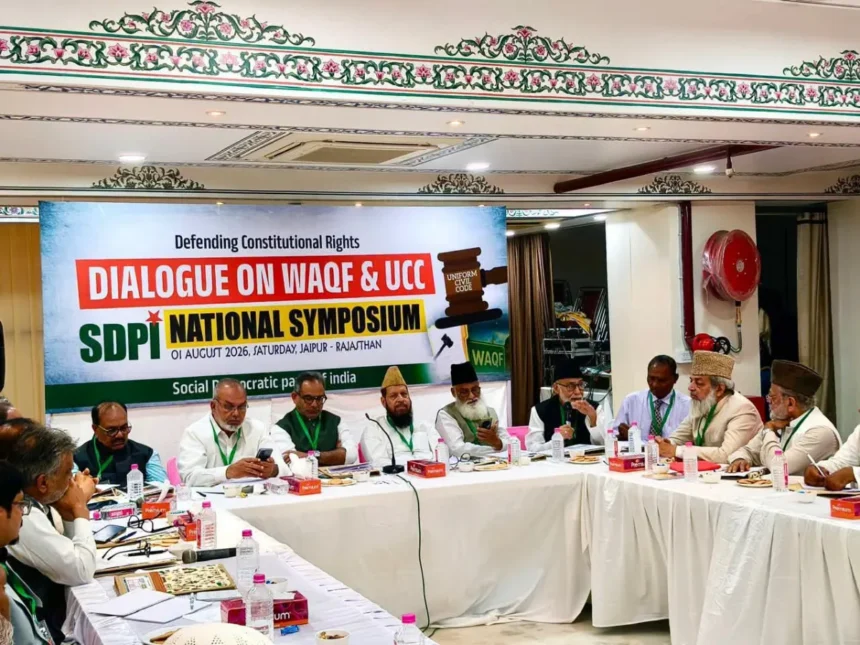
Prominent Muslim leaders in India have convened to create a unified national platform aimed at addressing the challenges facing the Muslim community. This decision emerged from a National Symposium titled “Dialogue on Waqf and Uniform Civil Code,” which centered on the theme “Defending Constitutional Rights” and took place at Hotel Arco Palace in Jaipur.
The proposed initiative, championed by Maulana Ubaidullah Khan Azmi and supported by many delegates, will focus on pivotal issues such as the Uniform Civil Code (UCC), Waqf rights, and various legislative bills that impact Muslims across the country.
Key Discussions and Proposed Actions
At the symposium, which attracted a diverse group of participants—including religious scholars, legal experts, and political leaders—discussions revolved around safeguarding constitutional rights. The assembly underscored the necessity for a collaborative effort to raise public awareness regarding these rights, particularly in light of increasing discrimination and social exclusion experienced by Muslims in recent years under the current BJP-led government.
A significant recommendation made during the event was the formation of specialized sub-committees. These committees will focus on specific areas such as Waqf issues, hate crimes, and legal affairs, allowing experts to provide targeted solutions. This strategic approach aims to tackle the multifaceted challenges the community faces in a more organized manner.
Additionally, Maulana Azmi proposed the establishment of a committee to determine a suitable name for this new platform, revealing a commitment to grassroots inclusivity that must resonate across various sectors of society. The emphasis on collective organization reflects a growing recognition that existing political and legal frameworks are often inadequate in addressing the unique needs of Indian Muslims.
Systemic Challenges Facing Indian Muslims
The growing backdrop of marginalization, discrimination, and economic disadvantages is underscored by policies enacted by the current government. Instances of communal violence and hateful rhetoric have contributed to a climate of fear and mistrust within the community. The lack of representation in political discourse and the sidelining of Muslim issues in mainstream narratives have only exacerbated these challenges.
The proposed national platform seeks to rejuvenate the dialogue around pressing concerns, using centralized coordination to tackle systemic discrimination effectively. In recent years, the targeting of Muslim institutions and businesses through economic boycotts and social exclusion has created an urgent need for unified action. The symposium addressed these critical issues, reinforcing the belief that concerted efforts are essential for ensuring justice and equality.
The involvement of notable figures such as M.K. Faizy, the SDPI National President, and representatives from various Muslim organizations signals a unified stand against the adversities posed by current governance. Their presence demonstrates a collective acknowledgment that the status quo must be challenged, not only for the welfare of Indian Muslims but for the preservation of India’s pluralistic fabric.
Why It Matters
The establishment of a cohesive platform for Indian Muslims holds significance in multiple dimensions. First, it indicates a desire for solidarity in a community that has faced increasing social exclusion. By coordinating efforts, these leaders aim to address the disparities in rights and opportunities, which are crucial for fostering equality in a diverse nation.
From a broader perspective, the initiative could influence how the AI landscape evolves in relation to social justice issues. With more individuals pressing for equitable policies and systems, developers and organizations that prioritize ethical considerations may find a more receptive audience in communities advocating for their rights. As the conversation around inclusivity in technology intensifies, this grassroots momentum could highlight the need for AI systems that reflect diverse realities and address societal biases.
Frequently Asked Questions
What prompted the creation of a national platform for Indian Muslims?
The rising concerns regarding discrimination, social exclusion, and legislative issues under the current government necessitated a collective response from Muslim leaders across India.
What are the main issues the platform aims to address?
The platform will focus on critical areas including the Uniform Civil Code (UCC), Waqf issues, hate crimes, and public awareness regarding constitutional rights affecting Indian Muslims.
Who are some of the key figures involved in this initiative?
Notable figures include Maulana Ubaidullah Khan Azmi, M.K. Faizy, and various representatives from Muslim personal law boards, legal professions, and civil society groups.
Why is public awareness important for the Muslim community in India?
Public awareness is crucial for protecting constitutional rights, promoting inclusiveness, and countering narratives that marginalize the community. It fosters a better understanding of communal issues and mobilizes support for necessary policy changes.