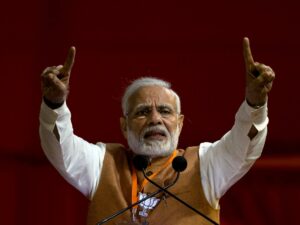
Recent commentary from political analyst @zoo_bear has highlighted the hypocrisy of political leaders who have remained silent amid years of online abuse directed at women and minorities in India. This commentary follows a statement from Prime Minister Narendra Modi emphasizing the need to address abusive behavior in public discourse.
Context of the Political Commentary
The online landscape in India has been marred by a culture of trolling and abuse, particularly targeting women and religious minorities. Over the past twelve years, social media users have increasingly faced threats and vile comments, with notable instances involving the auctioning of Muslim women in online forums. Critics argue that prominent figures, including political leaders, have either ignored these issues or tacitly endorsed such behavior through inaction.
Modi’s Recent Statement on Abuse
Amidst the growing scrutiny, Prime Minister Modi took to social media to voice his concern regarding the prevalence of abuses, stating that “abuses never solve anything.” He called for a collective effort to guide those he referred to as “misguided” and urged the public to work together for the betterment of India, or “Bharat.” While his message advocates for collaboration, it raises questions concerning the effectiveness of his administration’s response to years of online harassment and hate speech.
Unpacking the Hypocrisy Allegation
The heart of @zoo_bear’s argument lies in the perceived double standards of political leaders. Despite Modi’s recent condemnation of online abuse, critics note that he has historically failed to speak out against violence and threats against women, particularly those of specific religious backgrounds. This silence has led many to label his recent remarks as hypocritical, suggesting that calling for change now serves more as a public relations maneuver than a genuine commitment to addressing past inactions.
Why This Matters
The political significance of this discussion ripples beyond social media and into the fabric of Indian society. As the country navigates complex social dynamics and rising sectarian tensions, the failure of leaders to acknowledge or address issues of harassment may contribute to a divided public. Modi’s recent comments have sparked a debate about accountability and responsibility among those in power, highlighting the crucial need for leaders to take a firm stance against hate and abuse in all forms. In a country where digital spaces increasingly reflect real-world issues, how leaders respond to such challenges will influence public trust and societal cohesion moving forward.
Frequently Asked Questions
What is the main criticism against Prime Minister Modi regarding online abuse?
The primary criticism is that he has remained silent on issues of abuse directed at women and minorities while now speaking out against such behavior, which many see as hypocritical given the context of his silence during previous incidents.
What specific incidents of online abuse have been highlighted?
Notable incidents include the auctioning of Muslim women on social media platforms and the frequent targeting of women with threats of violence and sexual abuse—issues that have not been adequately addressed by political leaders.
How has the public reacted to Modi’s recent statement?
Public reaction has been mixed, with some applauding the call for unity and cooperation, while others condemn it as a mere “PR stunt” lacking real substance, especially given the history of inaction on such important issues.
Why is addressing online abuse important for Indian society?
Addressing online abuse is crucial for fostering a more inclusive and safe digital environment, which in turn reflects and affects broader societal norms regarding gender equality and minority rights in India.