
In 2023, the harrowing use of pellet guns against minors during protests in Manipur has raised serious concerns regarding police tactics in handling student demonstrations. Notably, 17-year-old Kishan Loitongbam suffered severe injuries, marking a troubling trend in the escalation of violence against young civilians in India.
Context of the Incident
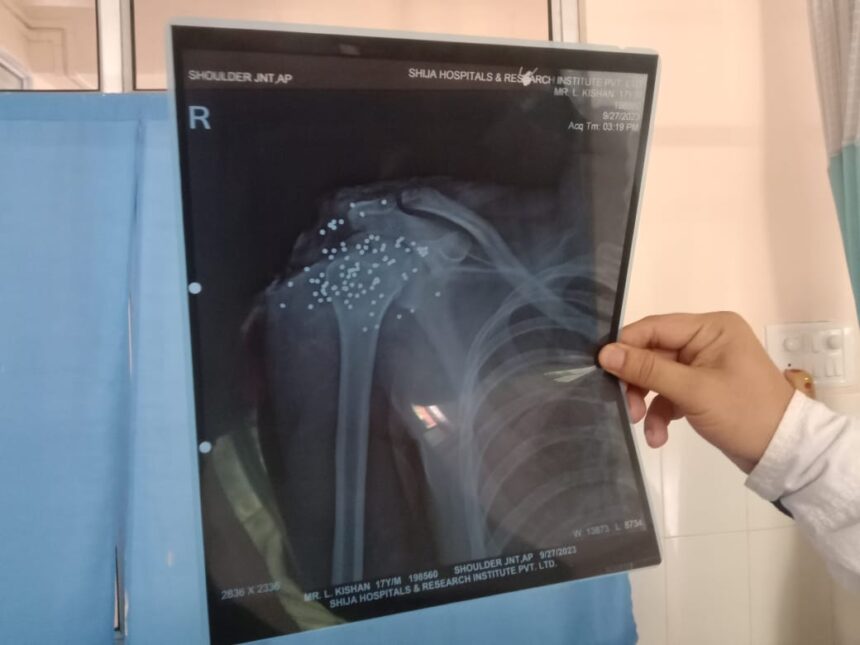
The events unfolded amid escalating tensions in Manipur following the tragic disappearance and subsequent deaths of two fellow students. In response, Kishan Loitongbam and his peers organized a protest demanding justice. However, the situation took a dire turn when Rapid Action Force (RAF) personnel employed pellet guns, resulting in grave injuries to Kishan and several other minors. Kishan’s injuries were particularly devastating, with approximately 90 pellets lodged in his shoulder, and doctors could only extract 60. Another student, Soaibam Uttam, also sustained serious injuries with over 50 pellets embedded in his head.
Historical Precedent of Excessive Force
Kishan’s father articulated a poignant question regarding the appropriateness of using pellet guns on student protesters: “Have pellet guns ever been used against school students protesting in Delhi, Mumbai, or other parts of mainland India? Then why only in Manipur?” At the time, the author had to affirm that such measures were indeed unprecedented in more populous regions like Delhi and Mumbai. However, in a striking shift, reports now indicate that similar methods have been deployed against protesters in these urban centers, if not against minors, then certainly against student groups.
The Dilemma of Police Authority
The Public outcry over the use of pellet guns raises crucial questions about the arbitrary definition of “exceptional situations” by police forces. If authorities interpret such situations at their discretion, there is potential for abuse, where any protest can be deemed exceptional, thereby justifying excessive force. This scenario poses a significant challenge for civil liberties and the right to peaceful protest in India. The Supreme Court’s acknowledgment that police are empowered to use such firearms in ‘exceptional situations’ could establish a dangerous precedent, undermining accountability and public trust in law enforcement.
Why This Matters
The repercussions of addressing or ignoring the violence against protesters extend beyond individual cases to touch upon broader civil rights and governance issues in India. The normalization of pellet gun usage reflects an escalating state response to dissent, suggesting a troubling erosion in the treatment of civilian protests. Political observers warn that if such tactics continue unchecked, it could lead to a chilling effect on democratic engagement and a growing sense of fear among citizens regarding their right to publicly express dissent.
Frequently Asked Questions
What led to the protests in Manipur?
The protests were primarily driven by the disappearance and subsequent deaths of two students, prompting their peers to demand justice and accountability.
What injuries did Kishan Loitongbam sustain?
Kishan sustained severe injuries to his right shoulder, with around 90 pellets shot into him by RAF personnel using a pellet gun. He underwent surgery, where only 60 pellets could be removed.
How have authorities justified the use of pellet guns?
Authorities have claimed that the use of pellet guns falls within their powers to manage ‘exceptional situations,’ though this has faced significant public scrutiny and criticism.
What is the current debate around the use of pellet guns in India?
The debate centers on the appropriateness and legality of using pellet guns against civilians, particularly in situations involving minors. Critics argue that such measures are excessive and detrimental to civil rights, while proponents might claim they are necessary for maintaining order.