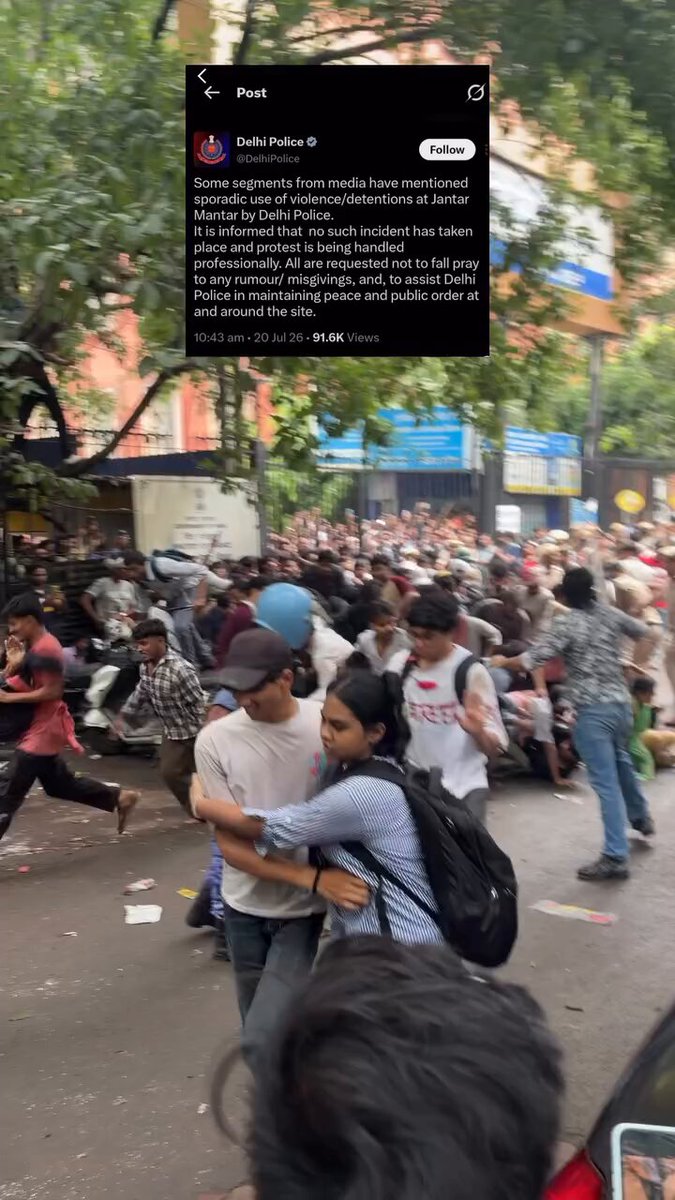

The recent unrest in Delhi’s Connaught Place has sparked significant political discourse, particularly concerning the nature of media coverage. Prominent news agency ANI shared a video capturing stone pelting during a protest, citing the Delhi Police as the source. However, critiques have emerged regarding the selective sharing of information, suggesting that the media landscape may be biased in favor of specific narratives.
Incident Overview
The protest at Connaught Place, which has drawn attention due to its chaotic nature, showcases the tensions surrounding current socio-political issues in India. The video shared by ANI depicts violent clashes where protesters reportedly engaged in stone pelting—an act that raises serious concerns regarding public safety and law and order. Videos like this can shape public perception and sway opinion toward how unrest is managed by authorities.
Media Bias Claims
In light of the events, accusations of media bias have surfaced. A political commentator, @zoo_bear, argued that while ANI’s video from the Delhi Police provides a perspective, it represents only one side of the narrative. Various other videos that remain unreported are said to highlight a different story, one that could reflect the students’ perspectives from the ground. This prompts a critical examination of how news outlets select and present information to the public, raising questions about transparency and accountability in journalistic practices.
Public Reaction and Ramifications
The public response to these events underscores the growing concern regarding freedom of expression in India. The protests reportedly aimed to voice dissent against governmental policies, particularly those perceived to infringe upon civil liberties. The manner in which these protests are portrayed in the media can significantly influence public sentiment—either galvanizing support or inciting further discontent. Critics fear a chilling effect on future protests if dissenting voices continue to be marginalized or misrepresented.
Why This Matters
The implications of this incident stretch beyond the immediate unrest. The media’s role in shaping narratives about protests and dissent is crucial in a vibrant democracy like India. With an increasing number of protests being met with police action, the public’s trust in media and law enforcement is at stake. Questions surrounding the integrity of media reporting raise broader concerns about the state of democracy, civic engagement, and the ability of citizens to peacefully protest without fear. This moment marks a pivotal juncture in Indian politics, where media representation could tilt future public discourse.
Frequently Asked Questions
What caused the protests at Connaught Place?
The protests were initiated in response to government policies that many view as infringing on civil liberties, illustrating public dissent on sensitive issues.
Why is there criticism of ANI and other news channels?
Critics argue that ANI’s portrayal of the protest favors official narratives while ignoring alternative perspectives shared by students and participants, highlighting potential media bias.
What is the significance of the videos shared by ANI?
The videos capture pivotal moments of the protests and can significantly influence public perception, contributing to broader discussions around law enforcement and civil rights.
How do these events affect public trust in the media?
Incidents like these may lead to diminished public trust in the media, particularly if perceptions of bias and selective reporting persist among citizens.