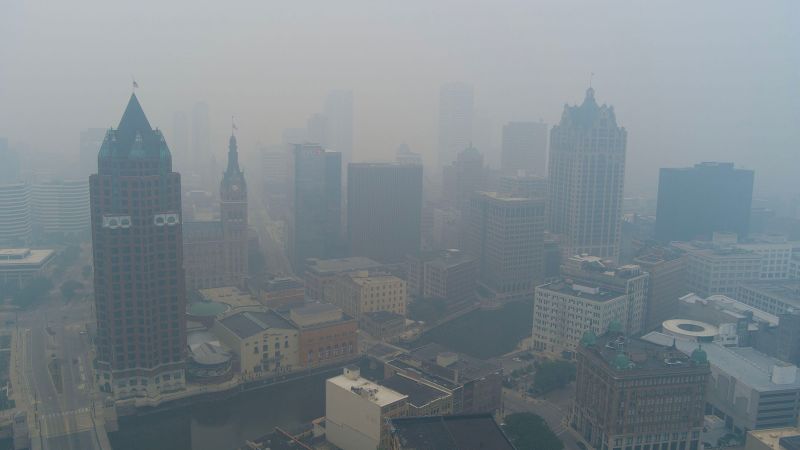

Thick smoke from wildfires in Canada is affecting air quality in major cities across North America, impacting over 100 million people. As this environmental crisis unfolds, it highlights the increasing challenges posed by climate change and air pollution.
The Impact of Canadian Wildfires
Smoke from Canadian wildfires has enveloped the Midwest, Northeast, and mid-Atlantic regions of the United States, leading to air quality alerts affecting 18 states and the District of Columbia. Cities such as Milwaukee, Chicago, and Detroit have reported some of the worst levels of air pollution, with conditions categorized as “very unhealthy” or “hazardous.” As air quality deteriorates, outdoor activities have been altered significantly, with numerous sporting events, concerts, and festivals being canceled.
In response to the hazardous conditions, local governments are urging residents to stay indoors. Cities like Chicago have declared the air quality crisis the worst in recorded history, prompting health officials to recommend masks for outdoor activities. Public health departments are also distributing N95 masks to vulnerable groups, including those working outdoors and the unhoused.
Community Responses and Health Concerns
The ongoing crisis has led to an increase in health issues among residents, particularly those with pre-existing conditions such as asthma. Vulnerable communities are experiencing the brunt of the hazardous air quality, making it crucial for organizations and health systems to respond proactively.
Community organizations are stepping up, with local non-profits providing additional support such as checking on unhoused individuals more frequently and distributing hygiene kits that include masks. Healthcare providers in regions affected by smoke are bracing for a surge in patients requiring treatment for respiratory symptoms exacerbated by the smoke.
Environmental Implications and Future Trends
This year alone, Canada has seen over 3,500 fires, burning more than 6 million acres. This intensifies concerns about climate change and its role in extending wildfire seasons. The smoke plaguing North America is a reminder of the broader implications of climate change, as fossil fuel pollution increases the likelihood of severe wildfire conditions becoming more frequent.
Health studies indicate that wildfire smoke, notably PM2.5 particles, can lead to severe respiratory issues and long-term health complications. The increase in unhealthy air quality alerts foreshadows a growing challenge that public health officials may face in the coming years, particularly if climate change continues to push the boundaries of wildfire seasons.
Why This Is Trending
The interplay between climate change, public health, and environmental awareness is at the forefront of conversations globally, including in India. With India grappling with its own climate challenges—ranging from air pollution to unpredictable weather patterns—this topic resonates strongly. As global awareness of these interconnected issues grows, Indian audiences are increasingly seeking information on air quality, environmental sustainability, and the impacts of climate change.
Frequently Asked Questions
What are the health risks associated with wildfire smoke?
Wildfire smoke contains harmful PM2.5 particles that can penetrate the respiratory system, leading to issues such as bronchitis, heart disease, and exacerbation of pre-existing conditions like asthma.
How are businesses coping with cancellations due to poor air quality?
While some businesses are forced to close temporarily, others are proceeding with events, hoping to provide a sense of normalcy amidst the crisis, as seen with art events still taking place in areas affected by smoke.
What is being done to help vulnerable communities?
Local organizations are stepping up support by checking on vulnerable populations and distributing masks and hygiene kits to those most affected by the hazardous air quality.
How is climate change influencing the frequency of wildfires?
Climate change has been linked to longer and more intense wildfire seasons, making severe air quality issues more frequent, which suggests we might see worsening conditions in the coming years without action to combat climate change.